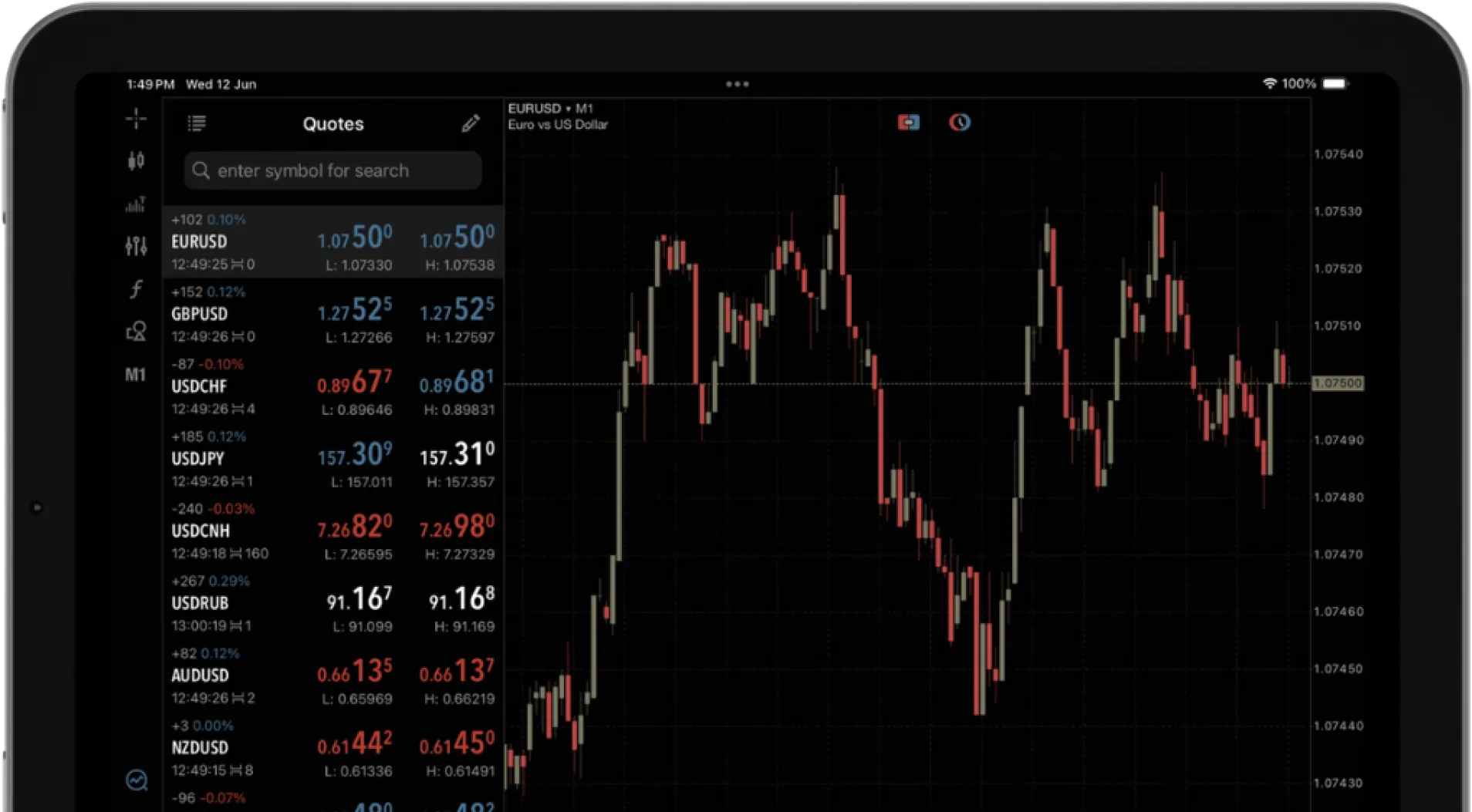



The financial trading industry continues to evolve at a remarkable pace, driven by advancements in technology, growing investor participation, and an increasing demand for smarter trading solutions. As these changes reshape global markets, industry events have become an important platform for collaboration, education, and innovation.
Among the companies participating in this year’s Money Expo Abu Dhabi 2026 is Stonefort Securities, joining the event as a Silver Sponsor. Taking place on 8–9 July 2026 at the Abu Dhabi National Exhibition Centre (ADNEC), the expo will bring together brokers, fintech companies, investors, introducing brokers, technology providers, and traders from across the MENA region and beyond.
For Stonefort Securities, the event represents an opportunity to connect with the trading community, demonstrate its latest technology, and exchange ideas with professionals shaping the future of financial markets.
Rather than focusing on a single trading product,
Stonefort Securities
has developed an ecosystem designed to support traders through different stages of their trading journey.
Visitors to the company’s booth will have the opportunity to explore several of its core solutions, including the StoneforTrader mobile application, Stonefort Social copy trading platform, and its MetaTrader 5 trading environment.
Together, these technologies are intended to provide traders with improved market access, analytical capabilities, and greater flexibility when managing their trading activities.
Modern trading requires speed, stability, and reliable market connectivity. Stonefort Securities continues to invest in trading infrastructure aimed at supporting efficient order execution and consistent platform performance.
The company’s trading environment is designed to facilitate access to multiple liquidity sources across a broad range of financial markets, including:
By continuously enhancing its infrastructure, Stonefort aims to provide traders with a stable trading experience under a variety of market conditions.
As mobile trading becomes increasingly important, Stonefort has focused on creating a platform that allows traders to monitor and manage their positions from virtually anywhere.
The StoneforTrader mobile application combines market analysis tools with account management features in a single interface. Among its capabilities are advanced charting, technical indicators, market scanners, currency heat maps, sentiment analysis, position-sizing calculators, portfolio monitoring, and real-time alerts.
The platform is designed to help traders make informed decisions while remaining connected to the markets throughout the trading day.
Another technology visitors can experience during the expo is Stonefort Social, the company’s copy trading platform.
The platform enables users to explore trading strategies through a transparent marketplace where performance history and risk information are available for review. Investors can choose strategies that align with their own objectives while maintaining control over capital allocation and risk preferences.
As interest in collaborative investing continues to grow, social trading has become an increasingly popular way for both experienced and newer traders to participate in financial markets.
Beyond trading technology, Stonefort Securities also places considerable attention on operational efficiency throughout the client journey.
The company continues to improve its payment infrastructure, account management processes, and operational systems to support a smoother client experience. Ongoing investments in technology and established payment partnerships are intended to help maintain reliable transaction processing while meeting regulatory and compliance requirements.
The Middle East continues to emerge as one of the fastest-growing regions for financial services and fintech innovation. Stonefort Securities views its participation at Money Expo Abu Dhabi as part of its broader commitment to supporting this evolving market.
By engaging with traders, introducing brokers, fintech companies, and institutional participants, the company hopes to build stronger partnerships while contributing to conversations around technology, market accessibility, and the future of online trading.

Throughout the two-day exhibition, visitors will be able to meet the Stonefort Securities team, watch live demonstrations of its trading solutions, discuss partnership opportunities, and learn more about the company’s technology-driven approach to online trading.
Whether attending as an active trader, investor, introducing broker, or fintech professional, visitors are invited to stop by Booth 69 to explore how Stonefort Securities is helping shape the next generation of trading technology.
Event: Money Expo Abu Dhabi 2026
Date: 8–9 July 2026
Venue: Abu Dhabi National Exhibition Centre (ADNEC)
Booth: 69
For More Information
Website: stonefortsecurities.com

In today’s markets, performance in Forex and CFD trading is no longer driven by strategy alone. The underlying technology of a trading platform plays an equally decisive role. Execution speed, liquidity depth, order routing architecture, and spread stability directly influence profitability.
A modern Forex CFD trading platform is not just a digital interface displaying charts. It is a technology-driven ecosystem built on servers, data feeds, risk engines, and liquidity networks. Institutional-grade infrastructure has reshaped expectations. Professional traders now evaluate latency, slippage control, liquidity aggregation, and execution transparency before considering trading conditions.
Understanding this infrastructure is essential for anyone seeking consistent performance.
A professional trading environment begins with its physical and digital infrastructure.
Trading servers are typically hosted in high-performance data centers located near financial hubs such as London and New York. Co-location services reduce latency by placing trading servers close to liquidity providers.
Direct cross-connect lines link the platform to liquidity providers. This reduces transmission delays and improves execution consistency.
Professional platforms maintain redundant servers and failover systems to ensure uptime during peak volatility or technical disruptions.
Advanced matching engines process orders in milliseconds. Smart routing algorithms determine whether orders are filled internally or passed to external liquidity pools.
Even millisecond delays can significantly affect scalping or high-frequency strategies. Server proximity and low-latency infrastructure are therefore not optional — they are structural necessities.
To understand how a structured environment functions in practice, explore how a professionally structured trading environment operates at Stonefort Securities’ Forex trading platform.
Execution model design directly impacts pricing and fill quality.
Orders may be matched internally. While this can provide fast fills, pricing transparency depends on the broker’s policy.
Orders are routed directly to liquidity providers without dealer intervention, reducing requote risk.
ECN platforms connect traders to a live order book, offering depth-of-market visibility and direct liquidity interaction.
Hybrid models combine elements of these systems. Professional traders review execution policy documents carefully to assess transparency, slippage risk, and order fill reliability during volatile sessions.
Liquidity is the backbone of stable pricing.
Modern platforms aggregate liquidity from:
Smart order routing algorithms scan available liquidity and execute trades at optimal prices. Deep liquidity reduces spread volatility and improves fill consistency during macroeconomic events.
Technical aspects include:
Aggregated liquidity pools allow tighter spreads and stronger execution resilience.
Spreads represent the cost difference between bid and ask prices.
Remain constant under normal conditions but may include embedded markups.
Adjust dynamically based on market liquidity and volatility.
During major news releases, spreads may widen due to liquidity reduction. Professional traders calculate total transaction costs by evaluating:
Advanced pricing engines apply spread compression technology during high-liquidity sessions, adjusting spreads dynamically to reflect interbank market conditions.
Latency is measured in milliseconds. It reflects the time between order submission and confirmation.
Key metrics include:
Slippage can occur in several forms:
Execution transparency is critical. Regulatory transparency standards, such as those promoted by the Financial Conduct Authority, emphasize reporting clarity and operational integrity.
Platforms that provide execution statistics and performance data allow traders to assess fill consistency objectively.
Risk engines operate independently from user interfaces to ensure account protection.
Core features include:
Leverage configuration systems and margin call mechanisms are automated to prevent uncontrolled risk accumulation.
Position netting, hedging functionality, and exposure dashboards further strengthen capital protection. Without a robust risk engine, even strong execution cannot compensate for structural account instability.
Accurate pricing data is fundamental for algorithmic trading and backtesting.
Professional platforms rely on:
Price smoothing mechanisms reduce anomalies while maintaining integrity. Historical data accuracy and tick-level granularity are crucial for strategy testing.
Professional traders often compare price feed consistency across platforms before committing capital.
Technology must go beyond execution speed and liquidity access. It must also provide functional, flexible tools that support different trading styles and workflows. A modern Forex CFD trading platform integrates compatibility, automation, and analytical precision to enhance performance.
Most professional platforms support MetaTrader 4 (MT4) and MetaTrader 5 (MT5). These industry-standard platforms offer advanced charting, multiple timeframes, built-in technical indicators, and automated trading capabilities.
In addition, web-based platforms allow traders to access markets directly through a browser. This removes installation barriers and enables secure access from any location.
For algorithmic and institutional traders, direct connectivity is essential. API integration allows customized strategy deployment and automated execution. Furthermore, FIX protocol access provides high-speed communication between trading systems and liquidity providers, reducing latency in order routing.
Custom indicators allow traders to tailor technical analysis to specific methodologies. Expert Advisor compatibility enables automated strategy execution. VPS hosting integration ensures stable, uninterrupted operation of trading algorithms.
Multi-device synchronization ensures seamless transitions between desktop and mobile trading. Advanced order types such as OCO and trailing stops improve risk control. Real-time economic calendars help traders anticipate volatility and manage positions proactively.
Security is foundational.
Professional platforms implement:
Compliance systems include:
Professional traders increasingly evaluate cybersecurity standards alongside pricing and execution quality.
| Technology Component | Why It Matters | What Professionals Evaluate | Risk If Weak |
| Execution Engine | Determines order speed and fill quality | Latency metrics, fill rate | Slippage and missed trades |
| Liquidity Aggregation | Impacts spread stability | Depth of market, LP diversity | Spread widening |
| Spread Model | Defines trading cost | Fixed vs floating comparison | Hidden transaction cost |
| Risk Engine | Protects account stability | Margin calculation accuracy | Forced liquidation |
| Data Feed Quality | Ensures price accuracy | Tick precision, historical data | Strategy distortion |
| Regulatory Framework | Ensures transparency | License verification | Counterparty risk |
Even the strongest strategy fails on weak infrastructure.
Institutional traders prioritize:
Retail traders increasingly adopt the same evaluation framework. Structural strength reduces non-strategy risk and improves performance consistency.
Stonefort Securities delivers a professionally structured Forex CFD trading platform built on advanced execution systems, liquidity aggregation, and spread optimization technology. The infrastructure is designed to support high-speed order processing, transparent pricing mechanisms, and consistent liquidity access across market conditions.
In addition, the platform integrates MetaTrader 5 (MT5), providing traders with advanced charting capabilities, multi-asset support, algorithmic trading functionality, and enhanced order management tools. MT5 compatibility ensures access to sophisticated technical indicators, Expert Advisors, and automated strategies within a stable and secure trading environment.
Traders seeking institutional-grade infrastructure can explore the trading environment through their dedicated Forex offering. The platform emphasizes transparent pricing, secure execution architecture, and reliable operational stability designed for serious market participants who prioritize execution quality, technological strength, and regulatory alignment.
Execution speed, liquidity quality, and spread stability are not optional features. They are foundational pillars of trading success.
Understanding the technological architecture behind a Forex CFD trading platform allows traders to reduce structural risk and improve consistency. Serious traders evaluate infrastructure, compliance, and cost transparency before deploying capital.
In modern markets, technology defines competitive edge. Platforms like Stonefort Securities meet institutional standards and provide the foundation required for disciplined, long-term trading performance. Visit the site now.
Risk Reminder: Forex and CFD trading involves significant risk, including potential loss of capital due to leverage, volatility, and liquidity gaps. Even with advanced technology and regulated environments, market movements can be unpredictable and may not suit all investors.
Even the strongest strategy can fail if execution speed, liquidity access, or spreads are unstable. A modern Forex CFD platform relies on low-latency servers, smart order routing, and deep liquidity aggregation. These factors directly affect slippage, fill quality, and overall profitability.
Each model determines how your orders are processed. STP and ECN models typically route orders to external liquidity providers, which can reduce requotes and improve transparency. Understanding the execution policy helps you assess pricing integrity and fill reliability.
Aggregated liquidity from multiple providers reduces spread widening during volatile sessions. Deeper order books improve price consistency and help manage transaction costs.
Automated margin monitoring, stop-out levels, and negative balance protection safeguard your account against excessive losses.
Regulated environments, such as those monitored by authorities like the CFTC and NFA, promote transparency, fair execution practices, and client fund protection.
Even the strongest strategy can fail if execution speed, liquidity access, or spreads are unstable. A modern Forex CFD platform relies on low-latency servers, smart order routing, and deep liquidity aggregation. These factors directly affect slippage, fill quality, and overall profitability.
Each model determines how your orders are processed. STP and ECN models typically route orders to external liquidity providers, which can reduce requotes and improve transparency. Understanding the execution policy helps you assess pricing integrity and fill reliability.
Aggregated liquidity from multiple providers reduces spread widening during volatile sessions. Deeper order books improve price consistency and help manage transaction costs.
Automated margin monitoring, stop-out levels, and negative balance protection safeguard your account against excessive losses.
Regulated environments, such as those monitored by authorities like the CFTC and NFA, promote transparency, fair execution practices, and client fund protection.

Platinum and palladium are gaining popularity among traders engaged in precious metals CFD trading, offering alternatives to gold and silver. From 2024 to 2026, platinum has reached its highest levels in years due to supply shortages and growing industrial demand. Palladium is more volatile, and is mostly influenced by the demand and recycling of the car industry.
These CFDs allow traders to invest in such metals in locations such as Dubai without owning the physical metal. By understanding market functioning, trading activity, and the factors influencing prices, traders can identify opportunities and develop informed strategies.
Palladium and platinum are traded through physical markets, futures exchanges and through Over-the-Counter (OTC) channels. The major futures contracts that have the effect of affecting CFD prices are London Metal Exchange (LME) and NYMEX. OTC markets have more options especially on personal contracts or bulk deals.
CFD prices are calculated by using benchmarks like LBMA IBA of platinum and COMEX quotes of palladium. Depending on the way the contract is set up such as contango or backwardation, the cost of holding a position may vary.
The trade of palladium and platinum is not the same as gold. Gold usually has smaller price gaps and more buyers and sellers, even during slow trading hours outside the US and Europe. Traders need to remember this to control the execution risks.
Understanding the supply and demand dynamics of platinum and palladium provides insight into long-term market behavior.
| Component | Platinum (2025) | Palladium (2025) |
| Annual Mine Supply | ~218 t refined | ~193 t mined |
| Above-ground Stocks | ~79 t | Not widely published |
| Automotive Demand | ~96 t | ~252 t (~83% total) |
| Market Balance | Deficit forecast | Shrinking deficit |
| Recycling Contribution | Low | Increasing |
Platinum has demonstrated strong price momentum relative to other metals, outperforming both gold and silver in 2025. Palladium shows higher volatility driven by automotive demand cycles and substitution effects between metals.
The impact of these regimes on implied volatility, futures roll yields, and term structure is a key consideration for CFD traders.
| Metric | Platinum | Palladium | Gold |
| 30-day HV | High | Very High | Medium |
| 90-day HV | Stabilizing | Elevated | Lower |
| Implied Volatility | Elevated | Elevated | Lower |
Global economic variables continue to shape precious metals markets. USD strength typically exerts an inverse correlation with metal prices, affecting CFD valuations. Interest rate expectations and liquidity conditions, particularly from the US Federal Reserve, influence speculative flows and funding costs.
Industrial production indices such as ISM and PMI provide further context for platinum and palladium demand, while geopolitical events, including tariffs and trade policies, can shift relative scarcity and impact market spreads.
Recent events have had material effects on market positioning and risk premiums. In 2026, platinum miners prioritized payouts over new projects, tightening forward supply expectations. Long-term forecasts indicate potential supply contraction of 15 to 20% by decade end. Palladium trade flows have been affected by antidumping and tariff investigations, influencing pricing spreads and liquidity availability.
These events affect CFD risk premiums, funding costs, and observed volatility, underscoring the importance of monitoring real-time market developments.
Platinum and palladium liquidity is thinner than gold, resulting in wider bid-ask spreads and increased slippage during high-impact news or economic data releases. Liquidity clusters during European and US session overlaps, while gaps in Asia-Pacific hours require attention for Dubai-based traders executing global strategies.
Futures roll behavior and backwardation can increase carry costs, making timing and session selection critical for execution. Typical spreads vary by session, with tighter spreads during peak overlap and wider spreads during off-peak hours.
Beyond trading, the metals ecosystem includes partnership opportunities. Many marketers and financial educators work as IB Gold Trading Affiliates, focusing on traders interested in gold price movements. This model rewards partners based on referred trading activity rather than simple sign-ups.
Similarly, an IB Silver Trading Affiliate targets audiences drawn to silver’s higher volatility and industrial demand. Silver often appeals to traders seeking faster price action, which can translate into higher engagement.
Choosing the best IB broker from Stonefort can influence both trader experience and affiliate outcomes. Platform reliability, execution quality, and regulatory standards all affect long-term performance.
Professional trading approaches often evaluate market structure, macro catalysts, and relative value opportunities, including platinum versus palladium differentials, to assess potential exposure and liquidity conditions. High-impact macroeconomic releases, such as industrial production data or Federal Reserve statements, influence market volatility, spreads, and execution risk, which should be monitored when analyzing CFD price behavior.
Risk discipline is essential. Strategies should incorporate volatility budgeting, stop placement based on realized volatility, and careful management of roll and funding costs for extended positions.
Stonefort Securities is a regulated, multi-jurisdictional broker offering access to platinum and palladium CFDs under CMA UAE Cat-5, FSC Mauritius, and SVG licenses. The MetaTrader 5 platform provides advanced charting, analytical tools, and real-time market data to support trading decisions. Professional traders have access to spreads, liquidity, and execution across LME, NYMEX, and OTC markets. Based in Dubai, the platform also supports integration of macroeconomic indicators, industrial demand trends, and geopolitical developments for market analysis.
Platinum’s supply constraints and structural demand imbalances contribute to observed price stability and liquidity patterns in the market over recent years. In the upcoming months, the palladium market may become more competitive due to supply and demand dynamics or trade regulations.
To participate effectively in precious metals CFD trading, one must understand how the market functions, when it is most active, how prices move, and what global factors influence it. Stonefort Securities provides a regulated, multi-jurisdictional platform that offers transparent access to liquidity, execution analytics, and market data to support professional trading of platinum and palladium CFDs.
Disclaimer: Trading CFDs involves significant risk and may not be suitable for all investors. Prices can fluctuate, and past market behavior is not indicative of future results. Stonefort Securities does not provide investment advice or guarantee outcomes. Clients should ensure they understand the instruments and risk exposure before trading.
Platinum and palladium CFDs typically exhibit wider spreads and higher volatility than gold, due to thinner liquidity and concentrated industrial demand. Unlike gold, platinum and palladium prices are heavily influenced by supply constraints, automotive demand, and recycling cycles. These factors can affect execution risk and overnight financing for CFD positions.
CFD prices are generally derived from benchmark markets. Platinum uses LBMA IBA quotations, while palladium follows COMEX and NYMEX prices. Factors such as contango, backwardation, and futures roll behavior influence holding costs and price behavior, making it essential to understand market structure when analyzing CFD positions.
Liquidity for platinum and palladium is thinner than gold, which can result in wider bid-ask spreads and increased slippage, especially during low-volume trading hours. Liquidity tends to concentrate during European and US session overlaps, while Asia-Pacific hours may exhibit higher execution costs. Futures roll schedules and backwardation can also impact the cost of carry.
Global economic variables, such as USD strength, interest rate expectations, and liquidity conditions, influence metal prices and CFD valuations. Industrial production data, automotive demand cycles, and geopolitical developments, including tariffs or trade policies, can also affect supply-demand dynamics and market spreads.
Professional traders often use platforms with advanced charting, real-time market data, execution analytics, and integrated macroeconomic indicators. These tools allow monitoring of spreads, liquidity, volatility, and funding costs across benchmark exchanges and OTC markets, supporting informed analysis without implying trading advice.
Platinum and palladium CFDs typically exhibit wider spreads and higher volatility than gold, due to thinner liquidity and concentrated industrial demand. Unlike gold, platinum and palladium prices are heavily influenced by supply constraints, automotive demand, and recycling cycles. These factors can affect execution risk and overnight financing for CFD positions.
CFD prices are generally derived from benchmark markets. Platinum uses LBMA IBA quotations, while palladium follows COMEX and NYMEX prices. Factors such as contango, backwardation, and futures roll behavior influence holding costs and price behavior, making it essential to understand market structure when analyzing CFD positions.
Liquidity for platinum and palladium is thinner than gold, which can result in wider bid-ask spreads and increased slippage, especially during low-volume trading hours. Liquidity tends to concentrate during European and US session overlaps, while Asia-Pacific hours may exhibit higher execution costs. Futures roll schedules and backwardation can also impact the cost of carry.
Global economic variables, such as USD strength, interest rate expectations, and liquidity conditions, influence metal prices and CFD valuations. Industrial production data, automotive demand cycles, and geopolitical developments, including tariffs or trade policies, can also affect supply-demand dynamics and market spreads.
Professional traders often use platforms with advanced charting, real-time market data, execution analytics, and integrated macroeconomic indicators. These tools allow monitoring of spreads, liquidity, volatility, and funding costs across benchmark exchanges and OTC markets, supporting informed analysis without implying trading advice.

Global liquidity drives modern crypto markets. Digital assets respond directly to monetary expansion and contraction across financial systems. Institutional capital now treats cryptocurrencies as liquidity-sensitive macro assets rather than speculative instruments. During global easing cycles, leverage expands rapidly. Risk capital flows into crypto derivatives markets. However, tightening policy immediately reverses this trend.
According to global market capitalization data
Aggressive global rate hikes triggered this contraction recently. When liquidity disappears, execution risk rises faster than volatility itself. Professional traders therefore prioritise crypto CFD secure execution to maintain trading precision under stressed conditions.
Liquidity tightening reflects structural capital withdrawal from financial markets.
Central banks implement tightening through
Between 2022 and 2023, the US Federal Reserve raised policy rates from 0.25% to above 5.25%, marking one of the fastest tightening cycles in decades.
Institutional traders monitor liquidity through measurable indicators
Higher yields attract capital toward bonds instead of speculative markets. Result:
Under these conditions, crypto CFD secure execution becomes essential rather than optional.
Liquidity contraction reshapes crypto market behaviour immediately. Institutional analytics show:
These shifts create unstable price discovery. Instead of smooth trends, markets experience:
Ethereum and Bitcoin, therefore, behave similarly to high-beta equity indices during risk-off environments. Professional traders focus less on prediction and more on execution survivability.
Liquidity stress directly impacts trade execution quality. During macro announcements such as CPI or Federal Reserve decisions:
Institutional desks evaluate execution using strict metrics:
A correct trading signal still fails without a strong execution infrastructure. Secure execution, therefore, functions as risk management.
Crypto CFD markets rely on continuous pricing aggregation from multiple liquidity sources. Execution quality depends on:
When liquidity tightens, fragmented pricing appears across exchanges. Weak execution models produce:
Secure Crypto CFD execution protects traders when liquidity providers temporarily withdraw during volatility spikes.
Professional traders prepare for liquidity shocks before they occur. Key macro catalysts include:
Historical market behaviour shows crypto assets frequently move following unexpected macro outcomes. Liquidity providers instantly adjust exposure after these events. Execution conditions, therefore, change within seconds. Professionals prepare execution models in advance rather than reacting emotionally.
Technology determines execution survival during tightening cycles. Institutional trading systems deploy:
Advanced routing models reduce slippage exposure compared with single-venue execution. Institutional traders, therefore, prioritise backend infrastructure over marketing claims. Execution technology becomes the decisive competitive advantage when global liquidity tightens.
Crypto CFD trading demands reliability when markets operate under pressure. Secure trading environments built for volatile macro conditions where execution stability determines outcomes. Stonefort Securities provides infrastructure that connects traders to globally aggregated liquidity pools designed to maintain execution consistency during tightening cycles. We focus on transparency, execution resilience, and professional trading conditions so we can navigate liquidity stress together with confidence.
Liquidity tightening remains an unavoidable phase of global financial markets. Professional traders succeed by prioritising execution security instead of directional speculation alone. Macro cycles continuously reshape crypto volatility and liquidity availability. Platforms delivering strong crypto CFD secure execution allow traders to preserve strategy performance even during extreme market stress. We, Stonefort Securities, combine institutional infrastructure and secure execution environments that help us operate confidently across changing global liquidity conditions.
Risk Warning: Trading on a secure crypto CFD execution platform carries high volatility and leverage risk. Market movements may result in substantial losses. Ensure full risk understanding before trading.
Secure Crypto CFD execution refers to fast, protected trade processing that reduces slippage and pricing risks during volatile market conditions.
When liquidity drops, price gaps increase. Secure Crypto CFD execution helps ensure orders execute accurately without unexpected losses.
Liquidity directly impacts spreads, slippage, and order fills. Lower liquidity conditions increase execution risk, making secure execution essential for maintaining pricing accuracy.
Yes. Reliable execution minimizes delays, improves pricing accuracy, and protects traders from sudden market fluctuations.
Active traders, institutional investors, and high-volume market participants benefit most from consistent and secure execution environments.
Secure Crypto CFD execution refers to fast, protected trade processing that reduces slippage and pricing risks during volatile market conditions.
When liquidity drops, price gaps increase. Secure Crypto CFD execution helps ensure orders execute accurately without unexpected losses.
Liquidity directly impacts spreads, slippage, and order fills. Lower liquidity conditions increase execution risk, making secure execution essential for maintaining pricing accuracy.
Yes. Reliable execution minimizes delays, improves pricing accuracy, and protects traders from sudden market fluctuations.
Active traders, institutional investors, and high-volume market participants benefit most from consistent and secure execution environments.

At 8:30 am New York time, you get a notification, saying the CPI number hits the wire. The forecast: 3.2% and the actual: 3.8%.
Within two to three minutes, you see that EUR/USD drops over 90 pips. Hence, Liquidity is gradually thinning. Spreads are widening, and stops are cascading.
Anyone positioned blindly before the release feels the damage immediately. Anyone prepared understands what just happened. High-impact forex CFD live news does not create ordinary price movement. It creates structural repricing.
Let’s take an example of the NFP report for March 2019. In contrast to the anticipated 180,000 new jobs, the figures that day showed a very disappointing 20,000 new jobs produced. Typically, this data would hurt the USD and increase EUR/USD.
Hence, ignoring live news in leveraged CFD trading is not neutral. It is costly.
For serious traders, live forex news trading is not about chasing headlines. It is about anticipating liquidity shifts, volatility expansion, and order-flow imbalance before the crowd reacts emotionally.
Traders can speculate on price changes using a Contract for Difference (CFD) without actually owning the underlying asset. Traders use margin to increase their exposure to currency pairs in forex CFDs.
Unlike spot forex through prime brokerage structures, CFDs operate through broker-based liquidity aggregation. Pricing references the underlying interbank market, but execution occurs within the broker’s framework.
This difference matters during news.
CFDs are leveraged products. A 1% move in the underlying pair can translate into a significant percentage change in account equity. Leverage risk is immediately increased by volatility when significant economic news occurs.
Reacting to pronouncements from central banks, macroeconomic data releases, and FX market updates in real time is known as “live news trading.” Profitability in CFDs is frequently more influenced by execution quality and reaction time than by directional bias.
Technical analysis works well in stable liquidity regimes. Here, patterns form and structures hold. However, a forex CFD live news event can disrupt structure.
Central bank announcements in forex markets shift interest rate expectations. CPI data reshapes inflation outlook. Employment data alters growth projections. These are not minor fluctuations. They are macro re-evaluations.
During such releases, algorithms reprice currency pairs in milliseconds. Liquidity providers widen spreads. Order books thin.
Trading around NFP or CPI without awareness of these mechanics exposes traders to slippage and margin stress.
Volatility is not random during news. It is information-driven.
Not all headlines deserve action. Experienced traders categorize events.
In general, impactful economic news has:
In the FX markets, central bank pronouncements can lead to multi-session trends. Employment data frequently generates sharp intraday spikes. Inflation releases influence bond yields, which then cascade into currency repricing.
Therefore, understanding hierarchy prevents overreaction to minor releases.
Technical indicators reflect historical data. News alters forward expectations.
During sudden policy surprises, technical levels break decisively. Moving averages lag. Oscillators provide late signals.
For example, when the Federal Reserve signals an unexpected hawkish stance, USD strength may invalidate existing chart patterns instantly.
However, live news on forex CFD and technicals should not compete. They should complement each other. A structured news trading strategy combines macro catalyst awareness with technical confirmation. News provides direction. Technicals refine timing.
The currency market is now worth $3.5 quadrillion, up from $2.73 quadrillion in 2022. So, it’s common that financial media produce constant headlines. Most is noise.
Actionable signals meet three conditions:
For example, if CPI prints significantly above forecast, bond yields rise. The US Dollar strengthens. Risk assets weaken.
That is structural repricing. By contrast, a minor revision within expectations rarely sustains directional follow-through.
Professional traders generally rely on process, not impulse.
Check the economic calendar before London opens. Identify high-impact economic news events.
Mark support and resistance zones on higher timeframes. Define liquidity pools.
Assess prevailing macro narrative. Inflation trend? Monetary tightening? Risk-on sentiment?
After release, you should permit the first volatility spike to settle. Enter on pullback confirmation or structure break with retest.
This framework reduces emotional entries during peak spread expansion.
Reliable real-time CFD live news regarding Forex is critical. Traders monitor:
Speed matters. However, disciplined reaction matters more. Entering trades seconds before release exposes traders to unpredictable slippage.
Volatility risk increases exponentially during macro releases. Spreads widen. Liquidity thins. Stop orders may execute at worse prices due to slippage.
Whereas CFDs are leveraged instruments. Margin calls occur when equity falls below maintenance requirements. Responsible news trading includes:
Note that risk awareness builds longevity.
Even experienced participants fall into predictable traps.
News creates opportunity. It also punishes impatience.
Disclaimer:
Trading foreign exchange and CFDs involves substantial risk and may not be suitable for all investors. Past performance is not indicative of future results. Prices can move rapidly, and leveraged products can expose traders to losses exceeding their initial investment. This material is for educational purposes only and does not constitute financial advice.
Live forex news by Stonefort Securities is not about speed alone. It is about interpretation, preparation, and controlled execution. High-impact economic news reshapes expectations. That repricing drives volatility, not randomness.
Traders who integrate forex CFD live news analysis into their workflow gain structural awareness. Those who ignore it operate blindly during the most consequential moments of the trading week.
In leveraged CFD markets, awareness is protection. Preparation is the edge. Used responsibly, live news does not represent chaos. It represents an opportunity structured by discipline.
It can be profitable if structured. However, volatility increases risk dramatically. Execution quality and discipline determine outcomes.
Reaction occurs within milliseconds. Algorithms adjust pricing immediately after data hits the wire.
The most reliable information comes from official central bank communications and trustworthy economic calendars.
Beginners should observe the forex CFD live news rather than participate. High volatility amplifies emotional and financial risk.
Spreads often widen temporarily due to liquidity withdrawal. Slippage risk increases significantly.
It can be profitable if structured. However, volatility increases risk dramatically. Execution quality and discipline determine outcomes.
Reaction occurs within milliseconds. Algorithms adjust pricing immediately after data hits the wire.
The most reliable information comes from official central bank communications and trustworthy economic calendars.
Beginners should observe the forex CFD live news rather than participate. High volatility amplifies emotional and financial risk.
Spreads often widen temporarily due to liquidity withdrawal. Slippage risk increases significantly.

The silver market in 2026 is navigating a period of exceptional volatility, underscoring the importance of liquidity, spreads, and execution risk for those engaged in silver CFD trading online. These movements of silver trading are shaped by a confluence of macroeconomic pressures, including the ongoing uncertainty surrounding Federal Reserve policy, geopolitical tensions impacting trade flows, and the weaker U.S. dollar.
Structural shifts in market mechanics further amplify risks. CME Group’s recent double margin hikes aimed at risk management and instances of volatile physical deliveries highlight the susceptibility of silver markets to sudden liquidity stress. For CFD traders, these developments are particularly relevant: liquidity squeezes, fluctuating spreads, and execution delays can materially affect trading outcomes compared to underlying physical or futures markets.
The purpose of this analysis is to provide a comprehensive view of the current silver market landscape, contextualize the implications for CFD trading silver contracts for difference, and offer practical insights for risk-conscious participants navigating a turbulent 2026 environment.
Understanding online silver CFD trading execution requires a grounding in the underlying metal’s market dynamics. Silver rallied approximately 130% over 2025, fueled by speculative inflows, industrial demand, and macroeconomic uncertainty. As of early 2026, JP Morgan anticipates an average trading range near ~$81/oz, though this remains contingent on shifts in supply-demand fundamentals and broader market liquidity conditions.
Registered silver inventories on COMEX have declined sharply, now below 90 million ounces, a roughly 31% drop since October 2025. This contraction reflects both tighter physical supply and increased industrial absorption, notably in solar energy and electric vehicle applications. Structural deficits are expected to persist into 2026, providing an underlying backdrop for elevated price swings.
For CFD traders, these conditions translate to higher likelihoods of slippage, rapid spread widening, and execution delays. The combination of limited inventory, active speculative participation, and macro uncertainty sets the stage for understanding why liquidity and spreads are critical in silver CFD execution.
Liquidity represents the ease with which digital silver CFD positions can be entered or exited without materially affecting price. In the underlying silver market, liquidity is smaller and more fragmented than in gold, and it can evaporate rapidly during periods of stress. Physical inventory scarcity compounds this effect; with COMEX registered stocks hovering near 88 million ounces, supply constraints exacerbate market sensitivity to large orders or speculative flows.
Silver CFD trading online introduces additional layers of liquidity complexity. Brokers typically aggregate pricing from multiple sources, exchange quotes, over-the-counter desks, and institutional liquidity providers. Consequently, liquidity experienced by retail CFD participants may diverge significantly from spot or futures markets, especially during rapid market moves. Retail-driven speculation and large institutional ETF flows further amplify these disparities, creating potential execution bottlenecks even when the broader market appears liquid.
Spreads, the difference between bid and ask prices, represent a hidden cost in silver CFD trading online. In tranquil markets, spreads remain relatively narrow, reflecting low dealer risk. During periods of heightened volatility, however, spreads can widen dramatically as liquidity providers hedge against execution uncertainty.
Several drivers contribute to this widening:
Execution risk encompasses the potential for trade outcomes to diverge from expectations due to market conditions. Key dimensions include:
Quantifying execution risk allows traders to anticipate potential exposure. Bid-ask spread analysis, intraday volatility indexes, and COMEX inventory ratios relative to open interest provide practical metrics to gauge market stress.
| Metric | Calm Market | Stressed Market | Source |
| COMEX Registered Stocks | ~100M oz | ~88M oz | Livemint |
| Average Bid-Ask Spread | 0.12% | 0.45% | WisdomTree |
| Intraday Volatility | 3–5% | 26–38% | GoldPriceForecast |
| Open Interest / Inventory Ratio | 1.2 | 2.1 | Livemint |
These metrics demonstrate how fundamental scarcity, leveraged flows, and volatility converge to magnify execution risk for trading silver CFDs via online platforms.
Institutional-grade traders employ frameworks that account for liquidity and execution risk when structuring trades:
Trading silver CFDs on digital platforms increasingly incorporates features designed to help traders manage liquidity and execution risk:
These instruments allow active participants to maintain control even during flash events or periods of structural inventory stress.
Silver CFD trading online in 2026 demands heightened vigilance around liquidity, spreads, and execution risk. Extreme volatility, declining COMEX inventories, and sudden macroeconomic shocks can trigger slippage, requotes, and widened spreads, materially impacting trading outcomes. Traders who monitor bid-ask spreads, intraday volatility, and session overlaps can better anticipate market stress.
For UAE-based traders seeking professional support, partnering with a regulated broker like us at Stonefort Securities offers significant advantages. Our platforms provide access to Silver CFDs with robust liquidity feeds, advanced analytical tools like autochartists, and risk management features like guaranteed stops. Combined with 24/5 execution support, these resources enable traders to navigate volatile markets effectively.
Risk Warning: Trading silver CFDs involves leverage and carries a high level of risk to your capital. Prices can fluctuate rapidly, and you may lose more than your initial investment. This content is for educational purposes only and does not constitute financial advice. Always ensure you fully understand the risks and seek independent professional guidance before trading.
Silver CFD trading online allows traders to speculate on silver price movements without owning the physical metal, using contracts for difference via digital trading platforms.
Liquidity ensures trades are executed quickly at predictable prices. Low liquidity can widen spreads, increase slippage, and elevate execution risk in volatile silver markets.
Spreads are the difference between bid and ask prices. Wider spreads during volatility increase trading costs and can reduce profitability for CFD traders.
Execution risk arises from slippage, partial fills, requotes, or latency, especially during thin liquidity periods or sharp price movements in the silver market.
Traders can use limit orders, adaptive position sizing, event-driven strategies, and broker tools like guaranteed stops to mitigate liquidity and execution risk effectively.
Yes. Silver CFD prices are highly sensitive to global economic developments, geopolitical tensions, and central bank policies. Traders should monitor news calendars and factor such events into their trading strategies to manage risk effectively.
Silver CFD trading online allows traders to speculate on silver price movements without owning the physical metal, using contracts for difference via digital trading platforms.
Liquidity ensures trades are executed quickly at predictable prices. Low liquidity can widen spreads, increase slippage, and elevate execution risk in volatile silver markets.
Spreads are the difference between bid and ask prices. Wider spreads during volatility increase trading costs and can reduce profitability for CFD traders.
Execution risk arises from slippage, partial fills, requotes, or latency, especially during thin liquidity periods or sharp price movements in the silver market.
Traders can use limit orders, adaptive position sizing, event-driven strategies, and broker tools like guaranteed stops to mitigate liquidity and execution risk effectively.
Yes. Silver CFD prices are highly sensitive to global economic developments, geopolitical tensions, and central bank policies. Traders should monitor news calendars and factor such events into their trading strategies to manage risk effectively.

Copy trading in gold and silver has evolved from a retail novelty into a structurally significant method of distributed exposure. Yet its mechanics are often misunderstood. Rather than evaluating it through marketing narratives, this paper examines how replicated strategies interact with the global precious metals infrastructure, regulatory oversight systems, liquidity regimes, volatility cycles, and multi-layered risk structures.
The objective is threefold. First, to clarify how copy trade gold and silver integrates with the structural architecture of gold and silver markets. Second, to identify the regulatory standards that govern leveraged precious metals trading across major jurisdictions. Third, to evaluate liquidity, volatility, and systemic risk considerations before capital allocation.
This framework is intended for advanced retail traders, compliance-aware investors, risk managers, and institutional participants assessing mirrored commodity strategies within a broader portfolio construction process.
Gold and silver exposure is accessed through instruments embedded within distinct regulatory and liquidity frameworks. The over-the-counter (OTC) spot market forms the interbank pricing foundation. Exchange-traded futures, primarily on COMEX and ICE, provide standardised and centrally cleared exposure. Contracts for Difference (CFDs) deliver leveraged synthetic access via broker infrastructure, while Exchange-Traded Funds (ETFs) offer physically backed or derivative-based exposure within regulated securities markets.
Retail copy trading typically operates through CFD infrastructure within broker-managed liquidity pools. Institutional replication more commonly occurs in regulated futures markets under exchange margin systems. Futures provide centralised clearing and transparency, whereas CFD execution depends on broker internalisation or external liquidity routing. ETFs remain secondary in retail replication networks.
Copy platforms connect strategy providers and followers via API-based signal broadcasting. Execution may be automated or manually confirmed, with orders routed through aggregated broker liquidity. Execution architecture influences slippage, latency, and replication precision, particularly during macro shocks or liquidity gaps.
| Instrument Type | Primary Regulator | Liquidity Depth | Leverage Model | Settlement Mechanism | Typical Copy Trade Usage |
| Spot (OTC) | Broker jurisdiction | Deep interbank | Broker-defined | Cash-settled | Limited |
| Futures (COMEX) | CFTC / Exchange | Institutional depth | Exchange margin | Physical/Cash | Institutional replication |
| CFDs | FCA / ASIC / CySEC, etc. | Broker liquidity pools | High leverage | Cash-settled | Retail-dominant |
| ETFs | SEC (US) | High | Margin optional | Physically backed | Rare |
Gold and silver copy trading is regulated based on three factors: the instrument traded, the broker’s jurisdiction, and how the service is classified. Key regulators include the Financial Conduct Authority (UK), Australian Securities and Investments Commission, Cyprus Securities and Exchange Commission, Commodity Futures Trading Commission (US), and the European Securities and Markets Authority.
These bodies impose leverage caps, disclosure rules, capital requirements, and client fund segregation standards. In the UK and EU, retail precious metals CFDs are typically capped at 1:20 leverage with mandatory negative balance protection. The United States restricts retail CFDs, limiting access to exchange-regulated futures. Offshore regions may offer higher leverage, but often with reduced investor safeguards.
Copy trading may be categorised as portfolio management, advisory, signal provision, or execution-only brokerage. This classification determines fiduciary responsibility, disclosure obligations, and overall legal risk exposure.
| Jurisdiction | Copy Trading Classification | Metals Leverage Cap | Client Fund Segregation | Negative Balance Protection |
| United Kingdom | Managed / Advisory (contextual) | 1:20 | Mandatory | Yes |
| European Union | Investment service | 1:20 | Mandatory | Yes |
| Australia | Financial service | 1:20 | Required | Yes |
| United States | Futures regulated only | Exchange-defined | Required | No retail CFDs |
| Offshore Regions | Variable | Often higher | Limited | Rare |
Regulatory asymmetry creates capital safety differentials. Higher leverage does not equate to superior opportunity if capital protection frameworks are weakened.
Gold maintains deep structural liquidity driven by central bank reserves, institutional hedging flows, sovereign demand, and high global turnover. Its derivatives market is highly developed, enabling consistent pricing across spot and futures venues.
During systemic stress regimes, gold often retains liquidity even as other asset classes deteriorate. This structural resilience stabilises execution conditions for replicated strategies.
Silver differs materially. Its market depth is thinner, and industrial demand constitutes a significant portion of total consumption. As a result, silver demonstrates higher price elasticity and stronger sensitivity to macroeconomic cycles.
Thinner liquidity amplifies execution risk. In copy trading environments, this means follower orders may experience greater slippage relative to master accounts, particularly during rapid directional moves.
Execution risk manifests through slippage during macro announcements, liquidity gaps during geopolitical shocks, and latency across broker routing systems. Internalisation practices may reduce external market exposure but can introduce pricing transparency concerns.
When large numbers of retail participants simultaneously copy identical positions, short-term liquidity distortions may emerge. Crowded positioning can exacerbate order flow imbalances, particularly in silver.
Gold and silver volatility is shaped by US dollar strength, Federal Reserve policy shifts, real yields, inflation expectations, and geopolitical stress. Gold generally functions as a macro hedge, moving inversely to real yields and the dollar.
Silver, with both monetary and industrial demand characteristics, shows amplified directional swings. During tightening cycles or yield spikes, both metals may decline sharply. In risk-off environments, gold often leads defensive flows, while silver tends to follow with higher volatility.
VIX correlation, Commitment of Traders data, and retail positioning highlight vulnerability. Copy trading in volatile phases increases synchronised drawdown risk and leverage-driven loss acceleration.
Copy trading introduces layered risk exposure beyond traditional commodity risk. Market risk remains primary, but leverage risk compounds price movement. Execution risk arises from slippage and latency. Counterparty risk depends on the broker’s solvency and the regulatory framework. Strategy dependency risk emerges when followers rely excessively on a single signal provider. Behavioural herding risk intensifies when traders cluster around leaderboard leaders.
These risks stack rather than substitute. Replicated exposure does not eliminate commodity volatility; it distributes it across a network.
The gold-silver ratio may diverge materially during macro regime shifts. Overweighting one metal through multiple copied traders increases concentration risk. If several strategy providers hold identical positions, portfolio diversification may be illusory.
Under stress conditions, concentrated replication magnifies volatility. Leaderboard herding can create structural vulnerability when positions unwind simultaneously.
Crowded trade formation can lead to forced liquidation cascades if margin thresholds are breached. Volatility spikes compress available margin buffers. Cross-asset contagion may occur if traders liquidate metals positions to meet losses elsewhere.
Although precious metals are often considered safe havens, leveraged replication under mismanaged exposure can produce destabilising outcomes within retail networks.
API-based order mirroring forms the technological backbone of copy platforms. Latency control systems aim to reduce replication gaps between master and follower accounts. Risk auto-close parameters attempt to limit drawdowns at predefined thresholds.
Real-time sentiment monitoring and margin alert systems provide additional oversight. However, infrastructure quality directly impacts replication accuracy. Poor execution architecture converts minor market movement into disproportionate slippage.
Technology is not a peripheral consideration; it is central to structural integrity in leveraged metals replication.
In regulated environments, copy trading must operate within strict disclosure, execution transparency, and capital protection standards. Governance structures determine whether leverage exposure is controlled and whether client funds remain segregated from operational capital.
Firms such as Stonefort Securities operate within structured regulatory systems that emphasise client fund segregation, controlled leverage exposure, and compliant execution standards. This governance becomes particularly critical in leveraged gold and silver derivatives, where volatility and liquidity shifts can rapidly alter risk profiles.
Governance does not eliminate market risk, but it reduces structural fragility.
Gold CFDs are often used during periods of currency instability. When confidence in fiat weakens, gold demand typically rises. Traders can express this view without buying physical metal.
Silver CFDs, on the other hand, combine precious metal appeal with industrial demand factors. This dual nature creates unique price behaviour. Experienced traders use silver to diversify metals exposure while seeking higher volatility.
Copy trading allows you to automatically replicate another trader’s positions in gold or silver through your brokerage platform. When the strategy provider opens, modifies, or closes a trade, your account mirrors those actions proportionally. Execution depends on the instrument used, typically CFDs for retail traders, and on your broker’s liquidity routing and leverage settings.
Yes, but regulation depends on jurisdiction and instrument type. In the UK, EU, and Australia, regulators impose leverage caps, client fund segregation, and negative balance protection. In the US, retail CFDs are restricted to exchange-regulated futures markets. Offshore brokers may offer higher leverage but weaker safeguards.
Key risks include market volatility, leverage amplification, execution slippage, counterparty exposure, and regulatory differences. Copy trading adds strategy dependency and herding risk on top of normal commodity price fluctuations.
Liquidity affects execution quality. Gold generally has deeper liquidity than silver, reducing slippage. In thinner markets like silver, rapid price moves can widen spreads and increase replication gaps.
Copy trading distributes exposure but does not eliminate risk. Losses can still occur, especially during volatile macro events or when many traders hold identical leveraged positions. Proper risk controls and leverage discipline remain essential.
Copy trading allows you to automatically replicate another trader’s positions in gold or silver through your brokerage platform. When the strategy provider opens, modifies, or closes a trade, your account mirrors those actions proportionally. Execution depends on the instrument used, typically CFDs for retail traders, and on your broker’s liquidity routing and leverage settings.
Yes, but regulation depends on jurisdiction and instrument type. In the UK, EU, and Australia, regulators impose leverage caps, client fund segregation, and negative balance protection. In the US, retail CFDs are restricted to exchange-regulated futures markets. Offshore brokers may offer higher leverage but weaker safeguards.
Key risks include market volatility, leverage amplification, execution slippage, counterparty exposure, and regulatory differences. Copy trading adds strategy dependency and herding risk on top of normal commodity price fluctuations.
Liquidity affects execution quality. Gold generally has deeper liquidity than silver, reducing slippage. In thinner markets like silver, rapid price moves can widen spreads and increase replication gaps.
Copy trading distributes exposure but does not eliminate risk. Losses can still occur, especially during volatile macro events or when many traders hold identical leveraged positions. Proper risk controls and leverage discipline remain essential.

A long time ago, our markets had to close at night — but these days, many traders don’t want to sleep either. Let’s take a look at the numbers: 24 hours per day times 5 days a week equals 120 hours (24 × 5) of trading time, 24 hours a day times 7 days a week equals 168 hours (24 × 7) of trading time. Subtracting 120 from 168 gives you an extra 48 hours of possible trading in total.
This represents an average increase of approximately 40% more time for all traders to trade every week. An extra 48 hours equals nearly 2 additional full days of market access in highly volatile global markets — so this isn’t just a mere increase: it’s revolutionary!
Modern multi-asset trading platforms make this possible makes this possible by enabling diversified traders to trade throughout the day, enabling access to Forex, crypto, commodities, and indices in every time zone.
Quick Data Overview:
| Trading Model | Weekly Hours | % Increase vs 24/5 |
| 24/5 | 120 | Base |
| 24/7 | 168 | +40% |
= 48 additional hours of trading, which is a 30% to 40% increase in available market time.
Historically, the forex market (and most CFD markets) has been available Monday through Friday, in line with the global banking system. However, as geopolitical events occur 24/7 (regardless of whether the actual exchanges are open), the gap between markets is continually closing.
For example, if a geopolitical shock event occurs on a Saturday, and/or if a cryptocurrency spikes in price on Sunday evening, traders who trade the traditional 24/5 markets must wait; traders who trade 24/7 will be able to respond to the shock immediately.
While Retail CFD products cannot be offered in the U.S. Market. Traders can have similar exposure through Futures, Options, Institutional CFD engines, and Crypto-related derivative products.
The data shows there is a high demand for extended hours Trading, Retail accounts account for 20% to 35% of daily volume in the U.S., Crypto Futures have reached an average daily volume (ADV) recently of over 407.200 Contracts, which is an approximate increase of 46% year over year within Major U.S. derivative platforms, U.S. Equities have millions of shares traded during overnight U.S. Equity sessions outside of traditional hours.
Despite regulatory constraints in certain jurisdictions, demand for extended-hours trading continues to grow among retail and institutional participants globally.
For example, peak levels of Volume data from overnight US equity sessions have shown a record volume of approximately 2.94 million shares traded during one nightly US equity session.
The benefit of having cryptocurrency and forex open 24/6 rather than just 24/5 is that some of the price discovery process occurs during the 48 hours before the 24/5 sessions start, and you’re unable to participate.
With additional hours of trading by the regulated CFD broker UAE, the markets can attract more participants from around the world.
No longer is liquidity concentrated only during the market overlaps between London and New York – now the Asian and cryptocurrency markets and cross-border institutional flows are adding to the overall liquidity story across the extended trade day.
Institutional research supports that price formation is happening across all sessions and not just one geographical block. Extended trading hours of the forex and CFD broker allow traders to capture these cycles of liquidity, rather than missing an opportunity to participate.
Directional movements of open markets are typically induced by weekend/overnight news events, including:
Traders in a 24/5 trading model typically have to deal with reopening gaps. Traders trading in a 24/7 model can dynamically manage their positions in real-time
The difference in the two models provides a clear distinction as to how well traders may control/define their own risk exposure.
The strength of extended access comes when there’s a broad range of assets available to trade. How 24/7 Access Benefits You
This flexibility appeals to diverse traders who operate globally vs regionally.
The following section discusses the evidence (dv) of the 24/7 trading timezone:
The above-mentioned data shows that there is one clear trend: demand for continuous access is increasing.
Extended Access is Powerful – But Requires a Disciplined Approach.
Continuous Markets Do Not Require Continuous Screen Time
Ways to Protect Yourself While Trading Continuously
Modern platforms allow traders to stay protected without constant monitoring.
Bottom Line
The shift from 24/5 (120 hours) to 24/7 (168 hours) isn’t simply a scheduling upgrade. Those additional 48 hours per week translate to roughly +40% more market access — a structural advantage in modern trading.
As global markets continue evolving, extended-hours access is becoming the expectation rather than the exception. If you’re searching for a regulated global multi-asset broker with extended market access, Stonefort Securities provides diversified trading across FX, crypto, commodities, and indices through one unified account.
Disclaimer: Trading CFDs, forex, cryptocurrencies, and other derivatives involves significant risk and may not be suitable for all investors. Always ensure you understand the risks involved and seek independent financial advice if necessary.
24/5 equals 120 trading hours per week, while 24/7 equals 168 hours per week. The difference is 48 additional hours, enabling continuous access to markets.
Retail CFDs face restrictions in the U.S., but traders access similar exposure through regulated derivatives such as futures and options. Global brokers operate within compliant frameworks depending on jurisdiction.
Cryptocurrencies trade 24/7. Major FX markets operate nearly continuously during weekdays. Some brokers extend index and commodity access via structured pricing models.
Extended sessions contribute meaningful trading volume. Crypto futures ADV growth of ~46% Y/Y highlights increasing demand for round-the-clock liquidity.
Look for regulation, competitive spreads, asset diversity, strong infrastructure, and reliable execution. The Global Multi-Asset CFD Broker combines these elements with extended trading access.
24/5 equals 120 trading hours per week, while 24/7 equals 168 hours per week. The difference is 48 additional hours, enabling continuous access to markets.
Retail CFDs face restrictions in the U.S., but traders access similar exposure through regulated derivatives such as futures and options. Global brokers operate within compliant frameworks depending on jurisdiction.
Cryptocurrencies trade 24/7. Major FX markets operate nearly continuously during weekdays. Some brokers extend index and commodity access via structured pricing models.
Extended sessions contribute meaningful trading volume. Crypto futures ADV growth of ~46% Y/Y highlights increasing demand for round-the-clock liquidity.
Look for regulation, competitive spreads, asset diversity, strong infrastructure, and reliable execution. The Global Multi-Asset CFD Broker combines these elements with extended trading access.

In 2025–2026, the cryptocurrency landscape has shifted from euphoric rallies to heightened volatility and structural recalibration. In the UAE financial hub, a Crypto CFD Broker UAE serves as a bridge between global crypto markets and traders seeking regulated access with robust risk controls, analytical tools, and personalised execution frameworks.
CFDs provide leveraged exposure, allowing traders to control larger positions relative to their capital. Major digital assets such as Bitcoin (BTC) and Ethereum (ETH) have witnessed significant price swings, with Bitcoin losing roughly half its late‑2025 peak and stabilising within a broad range before dipping toward the $60,000–$90,000 band in early 2026. This environment underscores why integrating real market insights with strategic execution is critical for traders, particularly in the UAE CFD ecosystem.
For beginners, understanding these market drivers equips traders with context around price action and volatility. For seasoned professionals, blending macro forces with technical frameworks enhances disciplined execution when trading Crypto CFDs offered by brokers in the UAE, vehicles that allow leveraged exposure to BTC and ETH without owning the actual coins.
Bitcoin and Ethereum markets operate primarily over global spot and derivatives venues such as Binance, Coinbase, and institutional desks, which shape real‑time pricing, liquidity depth, and volatility dynamics. Brokers providing reliable crypto CFDs support in the UAE aggregate these feeds to create accurate quote streams and trading pricing mechanisms for CFD clients.
Unlike owning the underlying asset, crypto CFD prices are derivatives that mirror market movements, with the CFD broker setting bid/ask spreads, leverage parameters, and margin requirements. Traders speculate on price directions, long or short, without needing a digital wallet or custodial setup.
Trusted UAE Crypto CFD Broker for BTC/ETH traders extends leveraged exposure typically ranging from 1:10 up to 1:20 (or higher depending on regulation and client classification), enabling traders to control larger positions relative to deposited capital. This magnifies both potential gains and losses, making risk management essential.
Holding positions overnight can incur financing or swap costs, which reflect interest differentials and futures basis rates. These funding dynamics affect strategic decisions, especially for positions maintained across macro events or volatility spikes.
BTC historically boasts deeper liquidity than ETH, resulting in tighter spreads and lower slippage. ETH, though also liquid, can experience wider spreads during stress periods. These nuances directly impact execution quality, a key consideration for CFD traders. ETH price consolidating near $3,300 with forecasts up to $7,500 (institutional commentary) indicates growth potential and structural dynamics.
Access to platforms such as MetaTrader 5, broker‑specific environments, and analytics tools like Autochartist allows traders to visualise order flows, volatility profiles, and market structure in real‑time.
| Component | BTC | ETH |
| Market Cap (2026) | ~$1.8T | ~$370B |
| Dominance | ~58% | ~12% |
| Liquidity Depth | Very High | High |
| Volatility Profile | High | Moderately High |
| Funding Rate Sensitivity | High | Medium |
Crypto markets transitioned from robust rallies through extended volatility regimes in 2024 and 2025, into a risk‑off climate in early 2026. Indicators such as the Fear & Greed Index show deep fear phases, reflecting traders’ risk aversion and potential for choppy price behaviour. Elevated volatility widens CFD spreads and increases hedging costs, factors CFD traders must consider when timing entries and exits.
Traders using technical clustering, pattern recognition, and realised volatility models are better positioned to avoid friction and slippage, key in a high‑frequency crypto CFD Broker UAE with 24/5 customer support.
BTC and ETH do not exist in isolation. U.S. monetary policy shifts, especially rate decisions and macro risk data, influence global risk appetite and correlate with crypto trading CFD demand. Slower inflows into Bitcoin ETFs and cautious sentiment around macro catalysts have contributed to stalled momentum in 2026, with BTC struggling to hold past major resistance zones around the upper $60Ks.
Regulatory dialogues globally also shape sentiment. For example, discussions around lending suitabilities and compliance issues heighten uncertainty, factors traders must weigh in structural demand hypotheses.
For event‑driven strategies, traders monitor:
Understanding spread structures is crucial when selecting a crypto CFD broker in the UAE. During peak overlaps, liquidity is deeper, reducing spreads. Conversely, during quieter periods, ETH and other altcoin CFDs may widen, increasing transaction costs.
Integration of real‑time indicators on execution platforms helps traders anticipate slippage and refine stop placement. Tools like Autochartist flag key levels and pattern shifts, vital for institutional-grade execution.
A disciplined risk framework, especially on heightened volatility, separates consistent traders from reactive ones.
Stonefort Securities provides crypto CFD access supported by advanced trading platforms and structured risk management tools. With access to advanced platforms like MetaTrader 5 and Stonefort Trader, integrated Autochartist analytics, and real-time liquidity feeds, traders gain unparalleled insight into market trends and volatility patterns.
The brokerage offers multi-asset CFD access, comprehensive educational resources, and 24/5 professional support, ensuring that every trade is backed by robust execution infrastructure and expert guidance. Whether you are capitalizing on short-term volatility or executing long-term strategies, Stonefort Securities equips you with the tools, insights, and support needed to trade crypto CFDs efficiently and strategically.
BTC/ETH price dynamics remain shaped by macro trends, on‑chain forces, and global event drivers. Liquidity structures and volatility regimes demand comprehensive frameworks, blending risk discipline with analytical depth.
Traders partnered with a reputable Crypto CFD Broker UAE can harness integrated insights, platform tools, and execution support to navigate dynamic markets. By marrying market foresight with disciplined risk protocols, traders enhance informed decision‑making and position themselves for tactical opportunities amid uncertainty.
Risk Warning: CFD trading involves leverage and carries a high level of risk to your capital. You may lose more than your initial investment. Ensure you fully understand the risks involved, including funding costs, liquidity constraints, and market volatility, before trading
A: A regulated brokerage in the UAE facilitating cryptocurrency CFD trading, allowing traders to speculate on assets like BTC and ETH without owning the actual coins.
A: CFDs are derivative contracts that track price movements without requiring ownership or storage of the underlying tokens. Leveraged exposure is possible.
A: Yes. UAE brokers typically offer leverage (e.g., 1:10 or up to 1:20 for professional clients), amplifying exposure.
A: Leverage increases both potential gains and losses. Liquidation, funding costs, and widened spreads during volatility are key considerations.
A: Macro data, regulatory news, and sentiment shifts influence volatility, liquidity, and price direction, all of which CFD traders monitor for strategic timing.
A: Yes, beginners can trade crypto CFDs with the right guidance and risk management. However, beginners should start with small positions and focus on learning disciplined strategies to manage risk effectively.
A: A regulated brokerage in the UAE facilitating cryptocurrency CFD trading, allowing traders to speculate on assets like BTC and ETH without owning the actual coins.
A: CFDs are derivative contracts that track price movements without requiring ownership or storage of the underlying tokens. Leveraged exposure is possible.
A: Yes. UAE brokers typically offer leverage (e.g., 1:10 or up to 1:20 for professional clients), amplifying exposure.
A: Leverage increases both potential gains and losses. Liquidation, funding costs, and widened spreads during volatility are key considerations.
A: Macro data, regulatory news, and sentiment shifts influence volatility, liquidity, and price direction, all of which CFD traders monitor for strategic timing.
A: Yes, beginners can trade crypto CFDs with the right guidance and risk management. However, beginners should start with small positions and focus on learning disciplined strategies to manage risk effectively.

Ethereum trading today sits firmly inside the global macroeconomic ecosystem. Institutional traders no longer treat ETH as speculative digital enthusiasm. Instead, markets increasingly classify Ethereum as a liquidity-sensitive risk asset influenced by monetary policy and capital flows. According to market data tracking global crypto valuations, Ethereum’s market capitalization has exceeded $350 billion during strong liquidity expansion cycles, confirming its transition into an institutional-grade trading asset.
Professional traders analyse macro liquidity conditions before choosing an Ethereum CFD trading platform. Price direction often reflects interest rate expectations, global leverage availability, and cross-asset capital allocation rather than retail sentiment.
Institutional traders understand a simple reality: Ethereum volatility is largely driven by macro liquidity, not social momentum.
Ethereum increasingly trades in alignment with growth-focused financial assets. During monetary tightening phases, ETH has demonstrated correlations approaching 0.60–0.65 with major technology equity indices, highlighting its sensitivity to global risk appetite.
When liquidity expands:
However, tightening financial conditions reverse this flow.
Professional traders closely monitor:
A stronger US dollar historically pressures Ethereum prices because global liquidity contracts. Institutional desks, therefore, evaluate Ethereum exposure through macro positioning models before executing trades via an Ethereum CFD trade platform.
Federal Reserve policy decisions remain one of the strongest catalysts for Ethereum price movement.
Institutional traders assess:
During these macro releases, execution risk increases significantly. Liquidity providers widen spreads, market depth declines, and price gaps emerge across trading venues.
This is precisely when execution infrastructure matters most. A professional Ethereum CFD trading platform must maintain order stability even when volatility accelerates immediately after macro announcements.
Institutional traders rarely enter Ethereum positions without analysing the derivatives market structure.
Key professional signals include:
These metrics reveal how large capital allocates risk before price movement becomes visible in spot markets.
A well-structured Ethereum CFD trading platform reflects institutional positioning through pricing behaviour, spread stability, and liquidity responsiveness rather than delayed retail-driven movements.
Liquidity conditions change rapidly during macroeconomic stress events.
During inflation releases or unexpected policy commentary:
Even highly liquid assets such as Ethereum experience temporary liquidity fragmentation.
Institutional traders, therefore, prioritise broker infrastructure capable of aggregating liquidity across multiple venues. Execution quality directly determines whether macro-driven opportunities translate into realised performance.
Reliable execution depends on:
Without these capabilities, macro trading advantages can disappear through execution inefficiency.
Ethereum CFD pricing must continuously align with global spot and futures markets to remain institutionally viable. Recent derivatives market activity shows regulated Ethereum futures trading volumes rising significantly, with the increasing average daily contract activity, reflecting expanding institutional participation.
Professional traders expect CFD pricing to mirror aggregated global liquidity conditions rather than isolated exchange feeds.
Pricing alignment ensures:
A robust trade Ethereum CFD platform integrates pricing from multiple liquidity sources to maintain institutional execution standards.
Institutional Ethereum traders operate using structured economic calendars rather than reactive market behaviour.
Key macro drivers include:
These variables reshape volatility regimes and directly influence liquidity availability. When macro expectations shift, Ethereum pricing adjusts rapidly across derivatives markets, affecting execution conditions within seconds.
Professional traders evaluate platforms using institutional benchmarks similar to those applied across leading global brokerage environments.
Core expectations include:
Serious traders understand that execution stability during macro stress matters more than simplified trading interfaces.
Institutional-grade infrastructure allows traders to operate confidently when markets move fastest.
Institutional participants require a secure infrastructure capable of performing during liquidity shocks and macro-driven volatility. Together with crypto CFD offering, Stonefort Securities provides exposure to Ethereum without requiring asset custody, allowing traders to speculate efficiently while maintaining operational flexibility.
These platforms connect traders to globally sourced liquidity while maintaining consistent pricing even during major economic announcements.
Ethereum now trades as a globally integrated macro asset influenced by monetary policy, liquidity cycles, and institutional positioning. Successful trading increasingly depends on understanding how global economic forces drive volatility rather than relying solely on technical signals. Macro awareness combined with execution reliability ultimately determines performance outcomes. Choosing the right trade Ethereum CFD platform, therefore, becomes a strategic institutional decision.
At Stonefort Securities, we support traders with infrastructure designed to help us navigate volatile liquidity environments together — enabling disciplined execution when global markets move fastest.
Risk Warning: Trading on an Ethereum CFD platform involves leverage and high market risk. Prices can move rapidly, and losses may exceed your initial investment capital.
Institutional traders prefer an Ethereum CFD trading platform because it provides leveraged exposure without holding the underlying asset. It also enables faster execution during macro-driven volatility.
Events such as Federal Reserve rate decisions, inflation data, and treasury yield movements directly influence liquidity and Ethereum price volatility across CFD markets.
Professional traders expect deep liquidity access, tight spreads, stable pricing feeds, risk management tools, and reliable execution during high-impact economic releases.
CFD pricing aggregates liquidity from spot and derivatives markets, ensuring prices reflect real-time institutional positioning and global trading activity.
Yes. Strong risk management tools such as stop-loss orders, margin monitoring, and exposure controls help traders manage volatility effectively.
Institutional traders prefer an Ethereum CFD trading platform because it provides leveraged exposure without holding the underlying asset. It also enables faster execution during macro-driven volatility.
Events such as Federal Reserve rate decisions, inflation data, and treasury yield movements directly influence liquidity and Ethereum price volatility across CFD markets.
Professional traders expect deep liquidity access, tight spreads, stable pricing feeds, risk management tools, and reliable execution during high-impact economic releases.
CFD pricing aggregates liquidity from spot and derivatives markets, ensuring prices reflect real-time institutional positioning and global trading activity.
Yes. Strong risk management tools such as stop-loss orders, margin monitoring, and exposure controls help traders manage volatility effectively.
The financial trading industry continues to evolve at a remarkable pace, driven by advancements in technology, growing investor participation, and an increasing demand for smarter trading solutions. As these changes reshape global markets, industry events have become an important platform for collaboration, education, and innovation.
Among the companies participating in this year’s Money Expo Abu Dhabi 2026 is Stonefort Securities, joining the event as a Silver Sponsor. Taking place on 8–9 July 2026 at the Abu Dhabi National Exhibition Centre (ADNEC), the expo will bring together brokers, fintech companies, investors, introducing brokers, technology providers, and traders from across the MENA region and beyond.
For Stonefort Securities, the event represents an opportunity to connect with the trading community, demonstrate its latest technology, and exchange ideas with professionals shaping the future of financial markets.
Rather than focusing on a single trading product,
Stonefort Securities
has developed an ecosystem designed to support traders through different stages of their trading journey.
Visitors to the company’s booth will have the opportunity to explore several of its core solutions, including the StoneforTrader mobile application, Stonefort Social copy trading platform, and its MetaTrader 5 trading environment.
Together, these technologies are intended to provide traders with improved market access, analytical capabilities, and greater flexibility when managing their trading activities.
Modern trading requires speed, stability, and reliable market connectivity. Stonefort Securities continues to invest in trading infrastructure aimed at supporting efficient order execution and consistent platform performance.
The company’s trading environment is designed to facilitate access to multiple liquidity sources across a broad range of financial markets, including:
By continuously enhancing its infrastructure, Stonefort aims to provide traders with a stable trading experience under a variety of market conditions.
As mobile trading becomes increasingly important, Stonefort has focused on creating a platform that allows traders to monitor and manage their positions from virtually anywhere.
The StoneforTrader mobile application combines market analysis tools with account management features in a single interface. Among its capabilities are advanced charting, technical indicators, market scanners, currency heat maps, sentiment analysis, position-sizing calculators, portfolio monitoring, and real-time alerts.
The platform is designed to help traders make informed decisions while remaining connected to the markets throughout the trading day.
Another technology visitors can experience during the expo is Stonefort Social, the company’s copy trading platform.
The platform enables users to explore trading strategies through a transparent marketplace where performance history and risk information are available for review. Investors can choose strategies that align with their own objectives while maintaining control over capital allocation and risk preferences.
As interest in collaborative investing continues to grow, social trading has become an increasingly popular way for both experienced and newer traders to participate in financial markets.
Beyond trading technology, Stonefort Securities also places considerable attention on operational efficiency throughout the client journey.
The company continues to improve its payment infrastructure, account management processes, and operational systems to support a smoother client experience. Ongoing investments in technology and established payment partnerships are intended to help maintain reliable transaction processing while meeting regulatory and compliance requirements.
The Middle East continues to emerge as one of the fastest-growing regions for financial services and fintech innovation. Stonefort Securities views its participation at Money Expo Abu Dhabi as part of its broader commitment to supporting this evolving market.
By engaging with traders, introducing brokers, fintech companies, and institutional participants, the company hopes to build stronger partnerships while contributing to conversations around technology, market accessibility, and the future of online trading.
Throughout the two-day exhibition, visitors will be able to meet the Stonefort Securities team, watch live demonstrations of its trading solutions, discuss partnership opportunities, and learn more about the company’s technology-driven approach to online trading.
Whether attending as an active trader, investor, introducing broker, or fintech professional, visitors are invited to stop by Booth 69 to explore how Stonefort Securities is helping shape the next generation of trading technology.
Event: Money Expo Abu Dhabi 2026
Date: 8–9 July 2026
Venue: Abu Dhabi National Exhibition Centre (ADNEC)
Booth: 69
For More Information
Website: stonefortsecurities.com
In today’s markets, performance in Forex and CFD trading is no longer driven by strategy alone. The underlying technology of a trading platform plays an equally decisive role. Execution speed, liquidity depth, order routing architecture, and spread stability directly influence profitability.
A modern Forex CFD trading platform is not just a digital interface displaying charts. It is a technology-driven ecosystem built on servers, data feeds, risk engines, and liquidity networks. Institutional-grade infrastructure has reshaped expectations. Professional traders now evaluate latency, slippage control, liquidity aggregation, and execution transparency before considering trading conditions.
Understanding this infrastructure is essential for anyone seeking consistent performance.
A professional trading environment begins with its physical and digital infrastructure.
Trading servers are typically hosted in high-performance data centers located near financial hubs such as London and New York. Co-location services reduce latency by placing trading servers close to liquidity providers.
Direct cross-connect lines link the platform to liquidity providers. This reduces transmission delays and improves execution consistency.
Professional platforms maintain redundant servers and failover systems to ensure uptime during peak volatility or technical disruptions.
Advanced matching engines process orders in milliseconds. Smart routing algorithms determine whether orders are filled internally or passed to external liquidity pools.
Even millisecond delays can significantly affect scalping or high-frequency strategies. Server proximity and low-latency infrastructure are therefore not optional — they are structural necessities.
To understand how a structured environment functions in practice, explore how a professionally structured trading environment operates at Stonefort Securities’ Forex trading platform.
Execution model design directly impacts pricing and fill quality.
Orders may be matched internally. While this can provide fast fills, pricing transparency depends on the broker’s policy.
Orders are routed directly to liquidity providers without dealer intervention, reducing requote risk.
ECN platforms connect traders to a live order book, offering depth-of-market visibility and direct liquidity interaction.
Hybrid models combine elements of these systems. Professional traders review execution policy documents carefully to assess transparency, slippage risk, and order fill reliability during volatile sessions.
Liquidity is the backbone of stable pricing.
Modern platforms aggregate liquidity from:
Smart order routing algorithms scan available liquidity and execute trades at optimal prices. Deep liquidity reduces spread volatility and improves fill consistency during macroeconomic events.
Technical aspects include:
Aggregated liquidity pools allow tighter spreads and stronger execution resilience.
Spreads represent the cost difference between bid and ask prices.
Remain constant under normal conditions but may include embedded markups.
Adjust dynamically based on market liquidity and volatility.
During major news releases, spreads may widen due to liquidity reduction. Professional traders calculate total transaction costs by evaluating:
Advanced pricing engines apply spread compression technology during high-liquidity sessions, adjusting spreads dynamically to reflect interbank market conditions.
Latency is measured in milliseconds. It reflects the time between order submission and confirmation.
Key metrics include:
Slippage can occur in several forms:
Execution transparency is critical. Regulatory transparency standards, such as those promoted by the Financial Conduct Authority, emphasize reporting clarity and operational integrity.
Platforms that provide execution statistics and performance data allow traders to assess fill consistency objectively.
Risk engines operate independently from user interfaces to ensure account protection.
Core features include:
Leverage configuration systems and margin call mechanisms are automated to prevent uncontrolled risk accumulation.
Position netting, hedging functionality, and exposure dashboards further strengthen capital protection. Without a robust risk engine, even strong execution cannot compensate for structural account instability.
Accurate pricing data is fundamental for algorithmic trading and backtesting.
Professional platforms rely on:
Price smoothing mechanisms reduce anomalies while maintaining integrity. Historical data accuracy and tick-level granularity are crucial for strategy testing.
Professional traders often compare price feed consistency across platforms before committing capital.
Technology must go beyond execution speed and liquidity access. It must also provide functional, flexible tools that support different trading styles and workflows. A modern Forex CFD trading platform integrates compatibility, automation, and analytical precision to enhance performance.
Most professional platforms support MetaTrader 4 (MT4) and MetaTrader 5 (MT5). These industry-standard platforms offer advanced charting, multiple timeframes, built-in technical indicators, and automated trading capabilities.
In addition, web-based platforms allow traders to access markets directly through a browser. This removes installation barriers and enables secure access from any location.
For algorithmic and institutional traders, direct connectivity is essential. API integration allows customized strategy deployment and automated execution. Furthermore, FIX protocol access provides high-speed communication between trading systems and liquidity providers, reducing latency in order routing.
Custom indicators allow traders to tailor technical analysis to specific methodologies. Expert Advisor compatibility enables automated strategy execution. VPS hosting integration ensures stable, uninterrupted operation of trading algorithms.
Multi-device synchronization ensures seamless transitions between desktop and mobile trading. Advanced order types such as OCO and trailing stops improve risk control. Real-time economic calendars help traders anticipate volatility and manage positions proactively.
Security is foundational.
Professional platforms implement:
Compliance systems include:
Professional traders increasingly evaluate cybersecurity standards alongside pricing and execution quality.
| Technology Component | Why It Matters | What Professionals Evaluate | Risk If Weak |
| Execution Engine | Determines order speed and fill quality | Latency metrics, fill rate | Slippage and missed trades |
| Liquidity Aggregation | Impacts spread stability | Depth of market, LP diversity | Spread widening |
| Spread Model | Defines trading cost | Fixed vs floating comparison | Hidden transaction cost |
| Risk Engine | Protects account stability | Margin calculation accuracy | Forced liquidation |
| Data Feed Quality | Ensures price accuracy | Tick precision, historical data | Strategy distortion |
| Regulatory Framework | Ensures transparency | License verification | Counterparty risk |
Even the strongest strategy fails on weak infrastructure.
Institutional traders prioritize:
Retail traders increasingly adopt the same evaluation framework. Structural strength reduces non-strategy risk and improves performance consistency.
Stonefort Securities delivers a professionally structured Forex CFD trading platform built on advanced execution systems, liquidity aggregation, and spread optimization technology. The infrastructure is designed to support high-speed order processing, transparent pricing mechanisms, and consistent liquidity access across market conditions.
In addition, the platform integrates MetaTrader 5 (MT5), providing traders with advanced charting capabilities, multi-asset support, algorithmic trading functionality, and enhanced order management tools. MT5 compatibility ensures access to sophisticated technical indicators, Expert Advisors, and automated strategies within a stable and secure trading environment.
Traders seeking institutional-grade infrastructure can explore the trading environment through their dedicated Forex offering. The platform emphasizes transparent pricing, secure execution architecture, and reliable operational stability designed for serious market participants who prioritize execution quality, technological strength, and regulatory alignment.
Execution speed, liquidity quality, and spread stability are not optional features. They are foundational pillars of trading success.
Understanding the technological architecture behind a Forex CFD trading platform allows traders to reduce structural risk and improve consistency. Serious traders evaluate infrastructure, compliance, and cost transparency before deploying capital.
In modern markets, technology defines competitive edge. Platforms like Stonefort Securities meet institutional standards and provide the foundation required for disciplined, long-term trading performance. Visit the site now.
Risk Reminder: Forex and CFD trading involves significant risk, including potential loss of capital due to leverage, volatility, and liquidity gaps. Even with advanced technology and regulated environments, market movements can be unpredictable and may not suit all investors.
Even the strongest strategy can fail if execution speed, liquidity access, or spreads are unstable. A modern Forex CFD platform relies on low-latency servers, smart order routing, and deep liquidity aggregation. These factors directly affect slippage, fill quality, and overall profitability.
Each model determines how your orders are processed. STP and ECN models typically route orders to external liquidity providers, which can reduce requotes and improve transparency. Understanding the execution policy helps you assess pricing integrity and fill reliability.
Aggregated liquidity from multiple providers reduces spread widening during volatile sessions. Deeper order books improve price consistency and help manage transaction costs.
Automated margin monitoring, stop-out levels, and negative balance protection safeguard your account against excessive losses.
Regulated environments, such as those monitored by authorities like the CFTC and NFA, promote transparency, fair execution practices, and client fund protection.
Even the strongest strategy can fail if execution speed, liquidity access, or spreads are unstable. A modern Forex CFD platform relies on low-latency servers, smart order routing, and deep liquidity aggregation. These factors directly affect slippage, fill quality, and overall profitability.
Each model determines how your orders are processed. STP and ECN models typically route orders to external liquidity providers, which can reduce requotes and improve transparency. Understanding the execution policy helps you assess pricing integrity and fill reliability.
Aggregated liquidity from multiple providers reduces spread widening during volatile sessions. Deeper order books improve price consistency and help manage transaction costs.
Automated margin monitoring, stop-out levels, and negative balance protection safeguard your account against excessive losses.
Regulated environments, such as those monitored by authorities like the CFTC and NFA, promote transparency, fair execution practices, and client fund protection.
Platinum and palladium are gaining popularity among traders engaged in precious metals CFD trading, offering alternatives to gold and silver. From 2024 to 2026, platinum has reached its highest levels in years due to supply shortages and growing industrial demand. Palladium is more volatile, and is mostly influenced by the demand and recycling of the car industry.
These CFDs allow traders to invest in such metals in locations such as Dubai without owning the physical metal. By understanding market functioning, trading activity, and the factors influencing prices, traders can identify opportunities and develop informed strategies.
Palladium and platinum are traded through physical markets, futures exchanges and through Over-the-Counter (OTC) channels. The major futures contracts that have the effect of affecting CFD prices are London Metal Exchange (LME) and NYMEX. OTC markets have more options especially on personal contracts or bulk deals.
CFD prices are calculated by using benchmarks like LBMA IBA of platinum and COMEX quotes of palladium. Depending on the way the contract is set up such as contango or backwardation, the cost of holding a position may vary.
The trade of palladium and platinum is not the same as gold. Gold usually has smaller price gaps and more buyers and sellers, even during slow trading hours outside the US and Europe. Traders need to remember this to control the execution risks.
Understanding the supply and demand dynamics of platinum and palladium provides insight into long-term market behavior.
| Component | Platinum (2025) | Palladium (2025) |
| Annual Mine Supply | ~218 t refined | ~193 t mined |
| Above-ground Stocks | ~79 t | Not widely published |
| Automotive Demand | ~96 t | ~252 t (~83% total) |
| Market Balance | Deficit forecast | Shrinking deficit |
| Recycling Contribution | Low | Increasing |
Platinum has demonstrated strong price momentum relative to other metals, outperforming both gold and silver in 2025. Palladium shows higher volatility driven by automotive demand cycles and substitution effects between metals.
The impact of these regimes on implied volatility, futures roll yields, and term structure is a key consideration for CFD traders.
| Metric | Platinum | Palladium | Gold |
| 30-day HV | High | Very High | Medium |
| 90-day HV | Stabilizing | Elevated | Lower |
| Implied Volatility | Elevated | Elevated | Lower |
Global economic variables continue to shape precious metals markets. USD strength typically exerts an inverse correlation with metal prices, affecting CFD valuations. Interest rate expectations and liquidity conditions, particularly from the US Federal Reserve, influence speculative flows and funding costs.
Industrial production indices such as ISM and PMI provide further context for platinum and palladium demand, while geopolitical events, including tariffs and trade policies, can shift relative scarcity and impact market spreads.
Recent events have had material effects on market positioning and risk premiums. In 2026, platinum miners prioritized payouts over new projects, tightening forward supply expectations. Long-term forecasts indicate potential supply contraction of 15 to 20% by decade end. Palladium trade flows have been affected by antidumping and tariff investigations, influencing pricing spreads and liquidity availability.
These events affect CFD risk premiums, funding costs, and observed volatility, underscoring the importance of monitoring real-time market developments.
Platinum and palladium liquidity is thinner than gold, resulting in wider bid-ask spreads and increased slippage during high-impact news or economic data releases. Liquidity clusters during European and US session overlaps, while gaps in Asia-Pacific hours require attention for Dubai-based traders executing global strategies.
Futures roll behavior and backwardation can increase carry costs, making timing and session selection critical for execution. Typical spreads vary by session, with tighter spreads during peak overlap and wider spreads during off-peak hours.
Beyond trading, the metals ecosystem includes partnership opportunities. Many marketers and financial educators work as IB Gold Trading Affiliates, focusing on traders interested in gold price movements. This model rewards partners based on referred trading activity rather than simple sign-ups.
Similarly, an IB Silver Trading Affiliate targets audiences drawn to silver’s higher volatility and industrial demand. Silver often appeals to traders seeking faster price action, which can translate into higher engagement.
Choosing the best IB broker from Stonefort can influence both trader experience and affiliate outcomes. Platform reliability, execution quality, and regulatory standards all affect long-term performance.
Professional trading approaches often evaluate market structure, macro catalysts, and relative value opportunities, including platinum versus palladium differentials, to assess potential exposure and liquidity conditions. High-impact macroeconomic releases, such as industrial production data or Federal Reserve statements, influence market volatility, spreads, and execution risk, which should be monitored when analyzing CFD price behavior.
Risk discipline is essential. Strategies should incorporate volatility budgeting, stop placement based on realized volatility, and careful management of roll and funding costs for extended positions.
Stonefort Securities is a regulated, multi-jurisdictional broker offering access to platinum and palladium CFDs under CMA UAE Cat-5, FSC Mauritius, and SVG licenses. The MetaTrader 5 platform provides advanced charting, analytical tools, and real-time market data to support trading decisions. Professional traders have access to spreads, liquidity, and execution across LME, NYMEX, and OTC markets. Based in Dubai, the platform also supports integration of macroeconomic indicators, industrial demand trends, and geopolitical developments for market analysis.
Platinum’s supply constraints and structural demand imbalances contribute to observed price stability and liquidity patterns in the market over recent years. In the upcoming months, the palladium market may become more competitive due to supply and demand dynamics or trade regulations.
To participate effectively in precious metals CFD trading, one must understand how the market functions, when it is most active, how prices move, and what global factors influence it. Stonefort Securities provides a regulated, multi-jurisdictional platform that offers transparent access to liquidity, execution analytics, and market data to support professional trading of platinum and palladium CFDs.
Disclaimer: Trading CFDs involves significant risk and may not be suitable for all investors. Prices can fluctuate, and past market behavior is not indicative of future results. Stonefort Securities does not provide investment advice or guarantee outcomes. Clients should ensure they understand the instruments and risk exposure before trading.
Platinum and palladium CFDs typically exhibit wider spreads and higher volatility than gold, due to thinner liquidity and concentrated industrial demand. Unlike gold, platinum and palladium prices are heavily influenced by supply constraints, automotive demand, and recycling cycles. These factors can affect execution risk and overnight financing for CFD positions.
CFD prices are generally derived from benchmark markets. Platinum uses LBMA IBA quotations, while palladium follows COMEX and NYMEX prices. Factors such as contango, backwardation, and futures roll behavior influence holding costs and price behavior, making it essential to understand market structure when analyzing CFD positions.
Liquidity for platinum and palladium is thinner than gold, which can result in wider bid-ask spreads and increased slippage, especially during low-volume trading hours. Liquidity tends to concentrate during European and US session overlaps, while Asia-Pacific hours may exhibit higher execution costs. Futures roll schedules and backwardation can also impact the cost of carry.
Global economic variables, such as USD strength, interest rate expectations, and liquidity conditions, influence metal prices and CFD valuations. Industrial production data, automotive demand cycles, and geopolitical developments, including tariffs or trade policies, can also affect supply-demand dynamics and market spreads.
Professional traders often use platforms with advanced charting, real-time market data, execution analytics, and integrated macroeconomic indicators. These tools allow monitoring of spreads, liquidity, volatility, and funding costs across benchmark exchanges and OTC markets, supporting informed analysis without implying trading advice.
Platinum and palladium CFDs typically exhibit wider spreads and higher volatility than gold, due to thinner liquidity and concentrated industrial demand. Unlike gold, platinum and palladium prices are heavily influenced by supply constraints, automotive demand, and recycling cycles. These factors can affect execution risk and overnight financing for CFD positions.
CFD prices are generally derived from benchmark markets. Platinum uses LBMA IBA quotations, while palladium follows COMEX and NYMEX prices. Factors such as contango, backwardation, and futures roll behavior influence holding costs and price behavior, making it essential to understand market structure when analyzing CFD positions.
Liquidity for platinum and palladium is thinner than gold, which can result in wider bid-ask spreads and increased slippage, especially during low-volume trading hours. Liquidity tends to concentrate during European and US session overlaps, while Asia-Pacific hours may exhibit higher execution costs. Futures roll schedules and backwardation can also impact the cost of carry.
Global economic variables, such as USD strength, interest rate expectations, and liquidity conditions, influence metal prices and CFD valuations. Industrial production data, automotive demand cycles, and geopolitical developments, including tariffs or trade policies, can also affect supply-demand dynamics and market spreads.
Professional traders often use platforms with advanced charting, real-time market data, execution analytics, and integrated macroeconomic indicators. These tools allow monitoring of spreads, liquidity, volatility, and funding costs across benchmark exchanges and OTC markets, supporting informed analysis without implying trading advice.
Global liquidity drives modern crypto markets. Digital assets respond directly to monetary expansion and contraction across financial systems. Institutional capital now treats cryptocurrencies as liquidity-sensitive macro assets rather than speculative instruments. During global easing cycles, leverage expands rapidly. Risk capital flows into crypto derivatives markets. However, tightening policy immediately reverses this trend.
According to global market capitalization data
Aggressive global rate hikes triggered this contraction recently. When liquidity disappears, execution risk rises faster than volatility itself. Professional traders therefore prioritise crypto CFD secure execution to maintain trading precision under stressed conditions.
Liquidity tightening reflects structural capital withdrawal from financial markets.
Central banks implement tightening through
Between 2022 and 2023, the US Federal Reserve raised policy rates from 0.25% to above 5.25%, marking one of the fastest tightening cycles in decades.
Institutional traders monitor liquidity through measurable indicators
Higher yields attract capital toward bonds instead of speculative markets. Result:
Under these conditions, crypto CFD secure execution becomes essential rather than optional.
Liquidity contraction reshapes crypto market behaviour immediately. Institutional analytics show:
These shifts create unstable price discovery. Instead of smooth trends, markets experience:
Ethereum and Bitcoin, therefore, behave similarly to high-beta equity indices during risk-off environments. Professional traders focus less on prediction and more on execution survivability.
Liquidity stress directly impacts trade execution quality. During macro announcements such as CPI or Federal Reserve decisions:
Institutional desks evaluate execution using strict metrics:
A correct trading signal still fails without a strong execution infrastructure. Secure execution, therefore, functions as risk management.
Crypto CFD markets rely on continuous pricing aggregation from multiple liquidity sources. Execution quality depends on:
When liquidity tightens, fragmented pricing appears across exchanges. Weak execution models produce:
Secure Crypto CFD execution protects traders when liquidity providers temporarily withdraw during volatility spikes.
Professional traders prepare for liquidity shocks before they occur. Key macro catalysts include:
Historical market behaviour shows crypto assets frequently move following unexpected macro outcomes. Liquidity providers instantly adjust exposure after these events. Execution conditions, therefore, change within seconds. Professionals prepare execution models in advance rather than reacting emotionally.
Technology determines execution survival during tightening cycles. Institutional trading systems deploy:
Advanced routing models reduce slippage exposure compared with single-venue execution. Institutional traders, therefore, prioritise backend infrastructure over marketing claims. Execution technology becomes the decisive competitive advantage when global liquidity tightens.
Crypto CFD trading demands reliability when markets operate under pressure. Secure trading environments built for volatile macro conditions where execution stability determines outcomes. Stonefort Securities provides infrastructure that connects traders to globally aggregated liquidity pools designed to maintain execution consistency during tightening cycles. We focus on transparency, execution resilience, and professional trading conditions so we can navigate liquidity stress together with confidence.
Liquidity tightening remains an unavoidable phase of global financial markets. Professional traders succeed by prioritising execution security instead of directional speculation alone. Macro cycles continuously reshape crypto volatility and liquidity availability. Platforms delivering strong crypto CFD secure execution allow traders to preserve strategy performance even during extreme market stress. We, Stonefort Securities, combine institutional infrastructure and secure execution environments that help us operate confidently across changing global liquidity conditions.
Risk Warning: Trading on a secure crypto CFD execution platform carries high volatility and leverage risk. Market movements may result in substantial losses. Ensure full risk understanding before trading.
Secure Crypto CFD execution refers to fast, protected trade processing that reduces slippage and pricing risks during volatile market conditions.
When liquidity drops, price gaps increase. Secure Crypto CFD execution helps ensure orders execute accurately without unexpected losses.
Liquidity directly impacts spreads, slippage, and order fills. Lower liquidity conditions increase execution risk, making secure execution essential for maintaining pricing accuracy.
Yes. Reliable execution minimizes delays, improves pricing accuracy, and protects traders from sudden market fluctuations.
Active traders, institutional investors, and high-volume market participants benefit most from consistent and secure execution environments.
Secure Crypto CFD execution refers to fast, protected trade processing that reduces slippage and pricing risks during volatile market conditions.
When liquidity drops, price gaps increase. Secure Crypto CFD execution helps ensure orders execute accurately without unexpected losses.
Liquidity directly impacts spreads, slippage, and order fills. Lower liquidity conditions increase execution risk, making secure execution essential for maintaining pricing accuracy.
Yes. Reliable execution minimizes delays, improves pricing accuracy, and protects traders from sudden market fluctuations.
Active traders, institutional investors, and high-volume market participants benefit most from consistent and secure execution environments.
At 8:30 am New York time, you get a notification, saying the CPI number hits the wire. The forecast: 3.2% and the actual: 3.8%.
Within two to three minutes, you see that EUR/USD drops over 90 pips. Hence, Liquidity is gradually thinning. Spreads are widening, and stops are cascading.
Anyone positioned blindly before the release feels the damage immediately. Anyone prepared understands what just happened. High-impact forex CFD live news does not create ordinary price movement. It creates structural repricing.
Let’s take an example of the NFP report for March 2019. In contrast to the anticipated 180,000 new jobs, the figures that day showed a very disappointing 20,000 new jobs produced. Typically, this data would hurt the USD and increase EUR/USD.
Hence, ignoring live news in leveraged CFD trading is not neutral. It is costly.
For serious traders, live forex news trading is not about chasing headlines. It is about anticipating liquidity shifts, volatility expansion, and order-flow imbalance before the crowd reacts emotionally.
Traders can speculate on price changes using a Contract for Difference (CFD) without actually owning the underlying asset. Traders use margin to increase their exposure to currency pairs in forex CFDs.
Unlike spot forex through prime brokerage structures, CFDs operate through broker-based liquidity aggregation. Pricing references the underlying interbank market, but execution occurs within the broker’s framework.
This difference matters during news.
CFDs are leveraged products. A 1% move in the underlying pair can translate into a significant percentage change in account equity. Leverage risk is immediately increased by volatility when significant economic news occurs.
Reacting to pronouncements from central banks, macroeconomic data releases, and FX market updates in real time is known as “live news trading.” Profitability in CFDs is frequently more influenced by execution quality and reaction time than by directional bias.
Technical analysis works well in stable liquidity regimes. Here, patterns form and structures hold. However, a forex CFD live news event can disrupt structure.
Central bank announcements in forex markets shift interest rate expectations. CPI data reshapes inflation outlook. Employment data alters growth projections. These are not minor fluctuations. They are macro re-evaluations.
During such releases, algorithms reprice currency pairs in milliseconds. Liquidity providers widen spreads. Order books thin.
Trading around NFP or CPI without awareness of these mechanics exposes traders to slippage and margin stress.
Volatility is not random during news. It is information-driven.
Not all headlines deserve action. Experienced traders categorize events.
In general, impactful economic news has:
In the FX markets, central bank pronouncements can lead to multi-session trends. Employment data frequently generates sharp intraday spikes. Inflation releases influence bond yields, which then cascade into currency repricing.
Therefore, understanding hierarchy prevents overreaction to minor releases.
Technical indicators reflect historical data. News alters forward expectations.
During sudden policy surprises, technical levels break decisively. Moving averages lag. Oscillators provide late signals.
For example, when the Federal Reserve signals an unexpected hawkish stance, USD strength may invalidate existing chart patterns instantly.
However, live news on forex CFD and technicals should not compete. They should complement each other. A structured news trading strategy combines macro catalyst awareness with technical confirmation. News provides direction. Technicals refine timing.
The currency market is now worth $3.5 quadrillion, up from $2.73 quadrillion in 2022. So, it’s common that financial media produce constant headlines. Most is noise.
Actionable signals meet three conditions:
For example, if CPI prints significantly above forecast, bond yields rise. The US Dollar strengthens. Risk assets weaken.
That is structural repricing. By contrast, a minor revision within expectations rarely sustains directional follow-through.
Professional traders generally rely on process, not impulse.
Check the economic calendar before London opens. Identify high-impact economic news events.
Mark support and resistance zones on higher timeframes. Define liquidity pools.
Assess prevailing macro narrative. Inflation trend? Monetary tightening? Risk-on sentiment?
After release, you should permit the first volatility spike to settle. Enter on pullback confirmation or structure break with retest.
This framework reduces emotional entries during peak spread expansion.
Reliable real-time CFD live news regarding Forex is critical. Traders monitor:
Speed matters. However, disciplined reaction matters more. Entering trades seconds before release exposes traders to unpredictable slippage.
Volatility risk increases exponentially during macro releases. Spreads widen. Liquidity thins. Stop orders may execute at worse prices due to slippage.
Whereas CFDs are leveraged instruments. Margin calls occur when equity falls below maintenance requirements. Responsible news trading includes:
Note that risk awareness builds longevity.
Even experienced participants fall into predictable traps.
News creates opportunity. It also punishes impatience.
Disclaimer:
Trading foreign exchange and CFDs involves substantial risk and may not be suitable for all investors. Past performance is not indicative of future results. Prices can move rapidly, and leveraged products can expose traders to losses exceeding their initial investment. This material is for educational purposes only and does not constitute financial advice.
Live forex news by Stonefort Securities is not about speed alone. It is about interpretation, preparation, and controlled execution. High-impact economic news reshapes expectations. That repricing drives volatility, not randomness.
Traders who integrate forex CFD live news analysis into their workflow gain structural awareness. Those who ignore it operate blindly during the most consequential moments of the trading week.
In leveraged CFD markets, awareness is protection. Preparation is the edge. Used responsibly, live news does not represent chaos. It represents an opportunity structured by discipline.
It can be profitable if structured. However, volatility increases risk dramatically. Execution quality and discipline determine outcomes.
Reaction occurs within milliseconds. Algorithms adjust pricing immediately after data hits the wire.
The most reliable information comes from official central bank communications and trustworthy economic calendars.
Beginners should observe the forex CFD live news rather than participate. High volatility amplifies emotional and financial risk.
Spreads often widen temporarily due to liquidity withdrawal. Slippage risk increases significantly.
It can be profitable if structured. However, volatility increases risk dramatically. Execution quality and discipline determine outcomes.
Reaction occurs within milliseconds. Algorithms adjust pricing immediately after data hits the wire.
The most reliable information comes from official central bank communications and trustworthy economic calendars.
Beginners should observe the forex CFD live news rather than participate. High volatility amplifies emotional and financial risk.
Spreads often widen temporarily due to liquidity withdrawal. Slippage risk increases significantly.
The silver market in 2026 is navigating a period of exceptional volatility, underscoring the importance of liquidity, spreads, and execution risk for those engaged in silver CFD trading online. These movements of silver trading are shaped by a confluence of macroeconomic pressures, including the ongoing uncertainty surrounding Federal Reserve policy, geopolitical tensions impacting trade flows, and the weaker U.S. dollar.
Structural shifts in market mechanics further amplify risks. CME Group’s recent double margin hikes aimed at risk management and instances of volatile physical deliveries highlight the susceptibility of silver markets to sudden liquidity stress. For CFD traders, these developments are particularly relevant: liquidity squeezes, fluctuating spreads, and execution delays can materially affect trading outcomes compared to underlying physical or futures markets.
The purpose of this analysis is to provide a comprehensive view of the current silver market landscape, contextualize the implications for CFD trading silver contracts for difference, and offer practical insights for risk-conscious participants navigating a turbulent 2026 environment.
Understanding online silver CFD trading execution requires a grounding in the underlying metal’s market dynamics. Silver rallied approximately 130% over 2025, fueled by speculative inflows, industrial demand, and macroeconomic uncertainty. As of early 2026, JP Morgan anticipates an average trading range near ~$81/oz, though this remains contingent on shifts in supply-demand fundamentals and broader market liquidity conditions.
Registered silver inventories on COMEX have declined sharply, now below 90 million ounces, a roughly 31% drop since October 2025. This contraction reflects both tighter physical supply and increased industrial absorption, notably in solar energy and electric vehicle applications. Structural deficits are expected to persist into 2026, providing an underlying backdrop for elevated price swings.
For CFD traders, these conditions translate to higher likelihoods of slippage, rapid spread widening, and execution delays. The combination of limited inventory, active speculative participation, and macro uncertainty sets the stage for understanding why liquidity and spreads are critical in silver CFD execution.
Liquidity represents the ease with which digital silver CFD positions can be entered or exited without materially affecting price. In the underlying silver market, liquidity is smaller and more fragmented than in gold, and it can evaporate rapidly during periods of stress. Physical inventory scarcity compounds this effect; with COMEX registered stocks hovering near 88 million ounces, supply constraints exacerbate market sensitivity to large orders or speculative flows.
Silver CFD trading online introduces additional layers of liquidity complexity. Brokers typically aggregate pricing from multiple sources, exchange quotes, over-the-counter desks, and institutional liquidity providers. Consequently, liquidity experienced by retail CFD participants may diverge significantly from spot or futures markets, especially during rapid market moves. Retail-driven speculation and large institutional ETF flows further amplify these disparities, creating potential execution bottlenecks even when the broader market appears liquid.
Spreads, the difference between bid and ask prices, represent a hidden cost in silver CFD trading online. In tranquil markets, spreads remain relatively narrow, reflecting low dealer risk. During periods of heightened volatility, however, spreads can widen dramatically as liquidity providers hedge against execution uncertainty.
Several drivers contribute to this widening:
Execution risk encompasses the potential for trade outcomes to diverge from expectations due to market conditions. Key dimensions include:
Quantifying execution risk allows traders to anticipate potential exposure. Bid-ask spread analysis, intraday volatility indexes, and COMEX inventory ratios relative to open interest provide practical metrics to gauge market stress.
| Metric | Calm Market | Stressed Market | Source |
| COMEX Registered Stocks | ~100M oz | ~88M oz | Livemint |
| Average Bid-Ask Spread | 0.12% | 0.45% | WisdomTree |
| Intraday Volatility | 3–5% | 26–38% | GoldPriceForecast |
| Open Interest / Inventory Ratio | 1.2 | 2.1 | Livemint |
These metrics demonstrate how fundamental scarcity, leveraged flows, and volatility converge to magnify execution risk for trading silver CFDs via online platforms.
Institutional-grade traders employ frameworks that account for liquidity and execution risk when structuring trades:
Trading silver CFDs on digital platforms increasingly incorporates features designed to help traders manage liquidity and execution risk:
These instruments allow active participants to maintain control even during flash events or periods of structural inventory stress.
Silver CFD trading online in 2026 demands heightened vigilance around liquidity, spreads, and execution risk. Extreme volatility, declining COMEX inventories, and sudden macroeconomic shocks can trigger slippage, requotes, and widened spreads, materially impacting trading outcomes. Traders who monitor bid-ask spreads, intraday volatility, and session overlaps can better anticipate market stress.
For UAE-based traders seeking professional support, partnering with a regulated broker like us at Stonefort Securities offers significant advantages. Our platforms provide access to Silver CFDs with robust liquidity feeds, advanced analytical tools like autochartists, and risk management features like guaranteed stops. Combined with 24/5 execution support, these resources enable traders to navigate volatile markets effectively.
Risk Warning: Trading silver CFDs involves leverage and carries a high level of risk to your capital. Prices can fluctuate rapidly, and you may lose more than your initial investment. This content is for educational purposes only and does not constitute financial advice. Always ensure you fully understand the risks and seek independent professional guidance before trading.
Silver CFD trading online allows traders to speculate on silver price movements without owning the physical metal, using contracts for difference via digital trading platforms.
Liquidity ensures trades are executed quickly at predictable prices. Low liquidity can widen spreads, increase slippage, and elevate execution risk in volatile silver markets.
Spreads are the difference between bid and ask prices. Wider spreads during volatility increase trading costs and can reduce profitability for CFD traders.
Execution risk arises from slippage, partial fills, requotes, or latency, especially during thin liquidity periods or sharp price movements in the silver market.
Traders can use limit orders, adaptive position sizing, event-driven strategies, and broker tools like guaranteed stops to mitigate liquidity and execution risk effectively.
Yes. Silver CFD prices are highly sensitive to global economic developments, geopolitical tensions, and central bank policies. Traders should monitor news calendars and factor such events into their trading strategies to manage risk effectively.
Silver CFD trading online allows traders to speculate on silver price movements without owning the physical metal, using contracts for difference via digital trading platforms.
Liquidity ensures trades are executed quickly at predictable prices. Low liquidity can widen spreads, increase slippage, and elevate execution risk in volatile silver markets.
Spreads are the difference between bid and ask prices. Wider spreads during volatility increase trading costs and can reduce profitability for CFD traders.
Execution risk arises from slippage, partial fills, requotes, or latency, especially during thin liquidity periods or sharp price movements in the silver market.
Traders can use limit orders, adaptive position sizing, event-driven strategies, and broker tools like guaranteed stops to mitigate liquidity and execution risk effectively.
Yes. Silver CFD prices are highly sensitive to global economic developments, geopolitical tensions, and central bank policies. Traders should monitor news calendars and factor such events into their trading strategies to manage risk effectively.
Copy trading in gold and silver has evolved from a retail novelty into a structurally significant method of distributed exposure. Yet its mechanics are often misunderstood. Rather than evaluating it through marketing narratives, this paper examines how replicated strategies interact with the global precious metals infrastructure, regulatory oversight systems, liquidity regimes, volatility cycles, and multi-layered risk structures.
The objective is threefold. First, to clarify how copy trade gold and silver integrates with the structural architecture of gold and silver markets. Second, to identify the regulatory standards that govern leveraged precious metals trading across major jurisdictions. Third, to evaluate liquidity, volatility, and systemic risk considerations before capital allocation.
This framework is intended for advanced retail traders, compliance-aware investors, risk managers, and institutional participants assessing mirrored commodity strategies within a broader portfolio construction process.
Gold and silver exposure is accessed through instruments embedded within distinct regulatory and liquidity frameworks. The over-the-counter (OTC) spot market forms the interbank pricing foundation. Exchange-traded futures, primarily on COMEX and ICE, provide standardised and centrally cleared exposure. Contracts for Difference (CFDs) deliver leveraged synthetic access via broker infrastructure, while Exchange-Traded Funds (ETFs) offer physically backed or derivative-based exposure within regulated securities markets.
Retail copy trading typically operates through CFD infrastructure within broker-managed liquidity pools. Institutional replication more commonly occurs in regulated futures markets under exchange margin systems. Futures provide centralised clearing and transparency, whereas CFD execution depends on broker internalisation or external liquidity routing. ETFs remain secondary in retail replication networks.
Copy platforms connect strategy providers and followers via API-based signal broadcasting. Execution may be automated or manually confirmed, with orders routed through aggregated broker liquidity. Execution architecture influences slippage, latency, and replication precision, particularly during macro shocks or liquidity gaps.
| Instrument Type | Primary Regulator | Liquidity Depth | Leverage Model | Settlement Mechanism | Typical Copy Trade Usage |
| Spot (OTC) | Broker jurisdiction | Deep interbank | Broker-defined | Cash-settled | Limited |
| Futures (COMEX) | CFTC / Exchange | Institutional depth | Exchange margin | Physical/Cash | Institutional replication |
| CFDs | FCA / ASIC / CySEC, etc. | Broker liquidity pools | High leverage | Cash-settled | Retail-dominant |
| ETFs | SEC (US) | High | Margin optional | Physically backed | Rare |
Gold and silver copy trading is regulated based on three factors: the instrument traded, the broker’s jurisdiction, and how the service is classified. Key regulators include the Financial Conduct Authority (UK), Australian Securities and Investments Commission, Cyprus Securities and Exchange Commission, Commodity Futures Trading Commission (US), and the European Securities and Markets Authority.
These bodies impose leverage caps, disclosure rules, capital requirements, and client fund segregation standards. In the UK and EU, retail precious metals CFDs are typically capped at 1:20 leverage with mandatory negative balance protection. The United States restricts retail CFDs, limiting access to exchange-regulated futures. Offshore regions may offer higher leverage, but often with reduced investor safeguards.
Copy trading may be categorised as portfolio management, advisory, signal provision, or execution-only brokerage. This classification determines fiduciary responsibility, disclosure obligations, and overall legal risk exposure.
| Jurisdiction | Copy Trading Classification | Metals Leverage Cap | Client Fund Segregation | Negative Balance Protection |
| United Kingdom | Managed / Advisory (contextual) | 1:20 | Mandatory | Yes |
| European Union | Investment service | 1:20 | Mandatory | Yes |
| Australia | Financial service | 1:20 | Required | Yes |
| United States | Futures regulated only | Exchange-defined | Required | No retail CFDs |
| Offshore Regions | Variable | Often higher | Limited | Rare |
Regulatory asymmetry creates capital safety differentials. Higher leverage does not equate to superior opportunity if capital protection frameworks are weakened.
Gold maintains deep structural liquidity driven by central bank reserves, institutional hedging flows, sovereign demand, and high global turnover. Its derivatives market is highly developed, enabling consistent pricing across spot and futures venues.
During systemic stress regimes, gold often retains liquidity even as other asset classes deteriorate. This structural resilience stabilises execution conditions for replicated strategies.
Silver differs materially. Its market depth is thinner, and industrial demand constitutes a significant portion of total consumption. As a result, silver demonstrates higher price elasticity and stronger sensitivity to macroeconomic cycles.
Thinner liquidity amplifies execution risk. In copy trading environments, this means follower orders may experience greater slippage relative to master accounts, particularly during rapid directional moves.
Execution risk manifests through slippage during macro announcements, liquidity gaps during geopolitical shocks, and latency across broker routing systems. Internalisation practices may reduce external market exposure but can introduce pricing transparency concerns.
When large numbers of retail participants simultaneously copy identical positions, short-term liquidity distortions may emerge. Crowded positioning can exacerbate order flow imbalances, particularly in silver.
Gold and silver volatility is shaped by US dollar strength, Federal Reserve policy shifts, real yields, inflation expectations, and geopolitical stress. Gold generally functions as a macro hedge, moving inversely to real yields and the dollar.
Silver, with both monetary and industrial demand characteristics, shows amplified directional swings. During tightening cycles or yield spikes, both metals may decline sharply. In risk-off environments, gold often leads defensive flows, while silver tends to follow with higher volatility.
VIX correlation, Commitment of Traders data, and retail positioning highlight vulnerability. Copy trading in volatile phases increases synchronised drawdown risk and leverage-driven loss acceleration.
Copy trading introduces layered risk exposure beyond traditional commodity risk. Market risk remains primary, but leverage risk compounds price movement. Execution risk arises from slippage and latency. Counterparty risk depends on the broker’s solvency and the regulatory framework. Strategy dependency risk emerges when followers rely excessively on a single signal provider. Behavioural herding risk intensifies when traders cluster around leaderboard leaders.
These risks stack rather than substitute. Replicated exposure does not eliminate commodity volatility; it distributes it across a network.
The gold-silver ratio may diverge materially during macro regime shifts. Overweighting one metal through multiple copied traders increases concentration risk. If several strategy providers hold identical positions, portfolio diversification may be illusory.
Under stress conditions, concentrated replication magnifies volatility. Leaderboard herding can create structural vulnerability when positions unwind simultaneously.
Crowded trade formation can lead to forced liquidation cascades if margin thresholds are breached. Volatility spikes compress available margin buffers. Cross-asset contagion may occur if traders liquidate metals positions to meet losses elsewhere.
Although precious metals are often considered safe havens, leveraged replication under mismanaged exposure can produce destabilising outcomes within retail networks.
API-based order mirroring forms the technological backbone of copy platforms. Latency control systems aim to reduce replication gaps between master and follower accounts. Risk auto-close parameters attempt to limit drawdowns at predefined thresholds.
Real-time sentiment monitoring and margin alert systems provide additional oversight. However, infrastructure quality directly impacts replication accuracy. Poor execution architecture converts minor market movement into disproportionate slippage.
Technology is not a peripheral consideration; it is central to structural integrity in leveraged metals replication.
In regulated environments, copy trading must operate within strict disclosure, execution transparency, and capital protection standards. Governance structures determine whether leverage exposure is controlled and whether client funds remain segregated from operational capital.
Firms such as Stonefort Securities operate within structured regulatory systems that emphasise client fund segregation, controlled leverage exposure, and compliant execution standards. This governance becomes particularly critical in leveraged gold and silver derivatives, where volatility and liquidity shifts can rapidly alter risk profiles.
Governance does not eliminate market risk, but it reduces structural fragility.
Gold CFDs are often used during periods of currency instability. When confidence in fiat weakens, gold demand typically rises. Traders can express this view without buying physical metal.
Silver CFDs, on the other hand, combine precious metal appeal with industrial demand factors. This dual nature creates unique price behaviour. Experienced traders use silver to diversify metals exposure while seeking higher volatility.
Copy trading allows you to automatically replicate another trader’s positions in gold or silver through your brokerage platform. When the strategy provider opens, modifies, or closes a trade, your account mirrors those actions proportionally. Execution depends on the instrument used, typically CFDs for retail traders, and on your broker’s liquidity routing and leverage settings.
Yes, but regulation depends on jurisdiction and instrument type. In the UK, EU, and Australia, regulators impose leverage caps, client fund segregation, and negative balance protection. In the US, retail CFDs are restricted to exchange-regulated futures markets. Offshore brokers may offer higher leverage but weaker safeguards.
Key risks include market volatility, leverage amplification, execution slippage, counterparty exposure, and regulatory differences. Copy trading adds strategy dependency and herding risk on top of normal commodity price fluctuations.
Liquidity affects execution quality. Gold generally has deeper liquidity than silver, reducing slippage. In thinner markets like silver, rapid price moves can widen spreads and increase replication gaps.
Copy trading distributes exposure but does not eliminate risk. Losses can still occur, especially during volatile macro events or when many traders hold identical leveraged positions. Proper risk controls and leverage discipline remain essential.
Copy trading allows you to automatically replicate another trader’s positions in gold or silver through your brokerage platform. When the strategy provider opens, modifies, or closes a trade, your account mirrors those actions proportionally. Execution depends on the instrument used, typically CFDs for retail traders, and on your broker’s liquidity routing and leverage settings.
Yes, but regulation depends on jurisdiction and instrument type. In the UK, EU, and Australia, regulators impose leverage caps, client fund segregation, and negative balance protection. In the US, retail CFDs are restricted to exchange-regulated futures markets. Offshore brokers may offer higher leverage but weaker safeguards.
Key risks include market volatility, leverage amplification, execution slippage, counterparty exposure, and regulatory differences. Copy trading adds strategy dependency and herding risk on top of normal commodity price fluctuations.
Liquidity affects execution quality. Gold generally has deeper liquidity than silver, reducing slippage. In thinner markets like silver, rapid price moves can widen spreads and increase replication gaps.
Copy trading distributes exposure but does not eliminate risk. Losses can still occur, especially during volatile macro events or when many traders hold identical leveraged positions. Proper risk controls and leverage discipline remain essential.
A long time ago, our markets had to close at night — but these days, many traders don’t want to sleep either. Let’s take a look at the numbers: 24 hours per day times 5 days a week equals 120 hours (24 × 5) of trading time, 24 hours a day times 7 days a week equals 168 hours (24 × 7) of trading time. Subtracting 120 from 168 gives you an extra 48 hours of possible trading in total.
This represents an average increase of approximately 40% more time for all traders to trade every week. An extra 48 hours equals nearly 2 additional full days of market access in highly volatile global markets — so this isn’t just a mere increase: it’s revolutionary!
Modern multi-asset trading platforms make this possible makes this possible by enabling diversified traders to trade throughout the day, enabling access to Forex, crypto, commodities, and indices in every time zone.
Quick Data Overview:
| Trading Model | Weekly Hours | % Increase vs 24/5 |
| 24/5 | 120 | Base |
| 24/7 | 168 | +40% |
= 48 additional hours of trading, which is a 30% to 40% increase in available market time.
Historically, the forex market (and most CFD markets) has been available Monday through Friday, in line with the global banking system. However, as geopolitical events occur 24/7 (regardless of whether the actual exchanges are open), the gap between markets is continually closing.
For example, if a geopolitical shock event occurs on a Saturday, and/or if a cryptocurrency spikes in price on Sunday evening, traders who trade the traditional 24/5 markets must wait; traders who trade 24/7 will be able to respond to the shock immediately.
While Retail CFD products cannot be offered in the U.S. Market. Traders can have similar exposure through Futures, Options, Institutional CFD engines, and Crypto-related derivative products.
The data shows there is a high demand for extended hours Trading, Retail accounts account for 20% to 35% of daily volume in the U.S., Crypto Futures have reached an average daily volume (ADV) recently of over 407.200 Contracts, which is an approximate increase of 46% year over year within Major U.S. derivative platforms, U.S. Equities have millions of shares traded during overnight U.S. Equity sessions outside of traditional hours.
Despite regulatory constraints in certain jurisdictions, demand for extended-hours trading continues to grow among retail and institutional participants globally.
For example, peak levels of Volume data from overnight US equity sessions have shown a record volume of approximately 2.94 million shares traded during one nightly US equity session.
The benefit of having cryptocurrency and forex open 24/6 rather than just 24/5 is that some of the price discovery process occurs during the 48 hours before the 24/5 sessions start, and you’re unable to participate.
With additional hours of trading by the regulated CFD broker UAE, the markets can attract more participants from around the world.
No longer is liquidity concentrated only during the market overlaps between London and New York – now the Asian and cryptocurrency markets and cross-border institutional flows are adding to the overall liquidity story across the extended trade day.
Institutional research supports that price formation is happening across all sessions and not just one geographical block. Extended trading hours of the forex and CFD broker allow traders to capture these cycles of liquidity, rather than missing an opportunity to participate.
Directional movements of open markets are typically induced by weekend/overnight news events, including:
Traders in a 24/5 trading model typically have to deal with reopening gaps. Traders trading in a 24/7 model can dynamically manage their positions in real-time
The difference in the two models provides a clear distinction as to how well traders may control/define their own risk exposure.
The strength of extended access comes when there’s a broad range of assets available to trade. How 24/7 Access Benefits You
This flexibility appeals to diverse traders who operate globally vs regionally.
The following section discusses the evidence (dv) of the 24/7 trading timezone:
The above-mentioned data shows that there is one clear trend: demand for continuous access is increasing.
Extended Access is Powerful – But Requires a Disciplined Approach.
Continuous Markets Do Not Require Continuous Screen Time
Ways to Protect Yourself While Trading Continuously
Modern platforms allow traders to stay protected without constant monitoring.
Bottom Line
The shift from 24/5 (120 hours) to 24/7 (168 hours) isn’t simply a scheduling upgrade. Those additional 48 hours per week translate to roughly +40% more market access — a structural advantage in modern trading.
As global markets continue evolving, extended-hours access is becoming the expectation rather than the exception. If you’re searching for a regulated global multi-asset broker with extended market access, Stonefort Securities provides diversified trading across FX, crypto, commodities, and indices through one unified account.
Disclaimer: Trading CFDs, forex, cryptocurrencies, and other derivatives involves significant risk and may not be suitable for all investors. Always ensure you understand the risks involved and seek independent financial advice if necessary.
24/5 equals 120 trading hours per week, while 24/7 equals 168 hours per week. The difference is 48 additional hours, enabling continuous access to markets.
Retail CFDs face restrictions in the U.S., but traders access similar exposure through regulated derivatives such as futures and options. Global brokers operate within compliant frameworks depending on jurisdiction.
Cryptocurrencies trade 24/7. Major FX markets operate nearly continuously during weekdays. Some brokers extend index and commodity access via structured pricing models.
Extended sessions contribute meaningful trading volume. Crypto futures ADV growth of ~46% Y/Y highlights increasing demand for round-the-clock liquidity.
Look for regulation, competitive spreads, asset diversity, strong infrastructure, and reliable execution. The Global Multi-Asset CFD Broker combines these elements with extended trading access.
24/5 equals 120 trading hours per week, while 24/7 equals 168 hours per week. The difference is 48 additional hours, enabling continuous access to markets.
Retail CFDs face restrictions in the U.S., but traders access similar exposure through regulated derivatives such as futures and options. Global brokers operate within compliant frameworks depending on jurisdiction.
Cryptocurrencies trade 24/7. Major FX markets operate nearly continuously during weekdays. Some brokers extend index and commodity access via structured pricing models.
Extended sessions contribute meaningful trading volume. Crypto futures ADV growth of ~46% Y/Y highlights increasing demand for round-the-clock liquidity.
Look for regulation, competitive spreads, asset diversity, strong infrastructure, and reliable execution. The Global Multi-Asset CFD Broker combines these elements with extended trading access.
In 2025–2026, the cryptocurrency landscape has shifted from euphoric rallies to heightened volatility and structural recalibration. In the UAE financial hub, a Crypto CFD Broker UAE serves as a bridge between global crypto markets and traders seeking regulated access with robust risk controls, analytical tools, and personalised execution frameworks.
CFDs provide leveraged exposure, allowing traders to control larger positions relative to their capital. Major digital assets such as Bitcoin (BTC) and Ethereum (ETH) have witnessed significant price swings, with Bitcoin losing roughly half its late‑2025 peak and stabilising within a broad range before dipping toward the $60,000–$90,000 band in early 2026. This environment underscores why integrating real market insights with strategic execution is critical for traders, particularly in the UAE CFD ecosystem.
For beginners, understanding these market drivers equips traders with context around price action and volatility. For seasoned professionals, blending macro forces with technical frameworks enhances disciplined execution when trading Crypto CFDs offered by brokers in the UAE, vehicles that allow leveraged exposure to BTC and ETH without owning the actual coins.
Bitcoin and Ethereum markets operate primarily over global spot and derivatives venues such as Binance, Coinbase, and institutional desks, which shape real‑time pricing, liquidity depth, and volatility dynamics. Brokers providing reliable crypto CFDs support in the UAE aggregate these feeds to create accurate quote streams and trading pricing mechanisms for CFD clients.
Unlike owning the underlying asset, crypto CFD prices are derivatives that mirror market movements, with the CFD broker setting bid/ask spreads, leverage parameters, and margin requirements. Traders speculate on price directions, long or short, without needing a digital wallet or custodial setup.
Trusted UAE Crypto CFD Broker for BTC/ETH traders extends leveraged exposure typically ranging from 1:10 up to 1:20 (or higher depending on regulation and client classification), enabling traders to control larger positions relative to deposited capital. This magnifies both potential gains and losses, making risk management essential.
Holding positions overnight can incur financing or swap costs, which reflect interest differentials and futures basis rates. These funding dynamics affect strategic decisions, especially for positions maintained across macro events or volatility spikes.
BTC historically boasts deeper liquidity than ETH, resulting in tighter spreads and lower slippage. ETH, though also liquid, can experience wider spreads during stress periods. These nuances directly impact execution quality, a key consideration for CFD traders. ETH price consolidating near $3,300 with forecasts up to $7,500 (institutional commentary) indicates growth potential and structural dynamics.
Access to platforms such as MetaTrader 5, broker‑specific environments, and analytics tools like Autochartist allows traders to visualise order flows, volatility profiles, and market structure in real‑time.
| Component | BTC | ETH |
| Market Cap (2026) | ~$1.8T | ~$370B |
| Dominance | ~58% | ~12% |
| Liquidity Depth | Very High | High |
| Volatility Profile | High | Moderately High |
| Funding Rate Sensitivity | High | Medium |
Crypto markets transitioned from robust rallies through extended volatility regimes in 2024 and 2025, into a risk‑off climate in early 2026. Indicators such as the Fear & Greed Index show deep fear phases, reflecting traders’ risk aversion and potential for choppy price behaviour. Elevated volatility widens CFD spreads and increases hedging costs, factors CFD traders must consider when timing entries and exits.
Traders using technical clustering, pattern recognition, and realised volatility models are better positioned to avoid friction and slippage, key in a high‑frequency crypto CFD Broker UAE with 24/5 customer support.
BTC and ETH do not exist in isolation. U.S. monetary policy shifts, especially rate decisions and macro risk data, influence global risk appetite and correlate with crypto trading CFD demand. Slower inflows into Bitcoin ETFs and cautious sentiment around macro catalysts have contributed to stalled momentum in 2026, with BTC struggling to hold past major resistance zones around the upper $60Ks.
Regulatory dialogues globally also shape sentiment. For example, discussions around lending suitabilities and compliance issues heighten uncertainty, factors traders must weigh in structural demand hypotheses.
For event‑driven strategies, traders monitor:
Understanding spread structures is crucial when selecting a crypto CFD broker in the UAE. During peak overlaps, liquidity is deeper, reducing spreads. Conversely, during quieter periods, ETH and other altcoin CFDs may widen, increasing transaction costs.
Integration of real‑time indicators on execution platforms helps traders anticipate slippage and refine stop placement. Tools like Autochartist flag key levels and pattern shifts, vital for institutional-grade execution.
A disciplined risk framework, especially on heightened volatility, separates consistent traders from reactive ones.
Stonefort Securities provides crypto CFD access supported by advanced trading platforms and structured risk management tools. With access to advanced platforms like MetaTrader 5 and Stonefort Trader, integrated Autochartist analytics, and real-time liquidity feeds, traders gain unparalleled insight into market trends and volatility patterns.
The brokerage offers multi-asset CFD access, comprehensive educational resources, and 24/5 professional support, ensuring that every trade is backed by robust execution infrastructure and expert guidance. Whether you are capitalizing on short-term volatility or executing long-term strategies, Stonefort Securities equips you with the tools, insights, and support needed to trade crypto CFDs efficiently and strategically.
BTC/ETH price dynamics remain shaped by macro trends, on‑chain forces, and global event drivers. Liquidity structures and volatility regimes demand comprehensive frameworks, blending risk discipline with analytical depth.
Traders partnered with a reputable Crypto CFD Broker UAE can harness integrated insights, platform tools, and execution support to navigate dynamic markets. By marrying market foresight with disciplined risk protocols, traders enhance informed decision‑making and position themselves for tactical opportunities amid uncertainty.
Risk Warning: CFD trading involves leverage and carries a high level of risk to your capital. You may lose more than your initial investment. Ensure you fully understand the risks involved, including funding costs, liquidity constraints, and market volatility, before trading
A: A regulated brokerage in the UAE facilitating cryptocurrency CFD trading, allowing traders to speculate on assets like BTC and ETH without owning the actual coins.
A: CFDs are derivative contracts that track price movements without requiring ownership or storage of the underlying tokens. Leveraged exposure is possible.
A: Yes. UAE brokers typically offer leverage (e.g., 1:10 or up to 1:20 for professional clients), amplifying exposure.
A: Leverage increases both potential gains and losses. Liquidation, funding costs, and widened spreads during volatility are key considerations.
A: Macro data, regulatory news, and sentiment shifts influence volatility, liquidity, and price direction, all of which CFD traders monitor for strategic timing.
A: Yes, beginners can trade crypto CFDs with the right guidance and risk management. However, beginners should start with small positions and focus on learning disciplined strategies to manage risk effectively.
A: A regulated brokerage in the UAE facilitating cryptocurrency CFD trading, allowing traders to speculate on assets like BTC and ETH without owning the actual coins.
A: CFDs are derivative contracts that track price movements without requiring ownership or storage of the underlying tokens. Leveraged exposure is possible.
A: Yes. UAE brokers typically offer leverage (e.g., 1:10 or up to 1:20 for professional clients), amplifying exposure.
A: Leverage increases both potential gains and losses. Liquidation, funding costs, and widened spreads during volatility are key considerations.
A: Macro data, regulatory news, and sentiment shifts influence volatility, liquidity, and price direction, all of which CFD traders monitor for strategic timing.
A: Yes, beginners can trade crypto CFDs with the right guidance and risk management. However, beginners should start with small positions and focus on learning disciplined strategies to manage risk effectively.
Ethereum trading today sits firmly inside the global macroeconomic ecosystem. Institutional traders no longer treat ETH as speculative digital enthusiasm. Instead, markets increasingly classify Ethereum as a liquidity-sensitive risk asset influenced by monetary policy and capital flows. According to market data tracking global crypto valuations, Ethereum’s market capitalization has exceeded $350 billion during strong liquidity expansion cycles, confirming its transition into an institutional-grade trading asset.
Professional traders analyse macro liquidity conditions before choosing an Ethereum CFD trading platform. Price direction often reflects interest rate expectations, global leverage availability, and cross-asset capital allocation rather than retail sentiment.
Institutional traders understand a simple reality: Ethereum volatility is largely driven by macro liquidity, not social momentum.
Ethereum increasingly trades in alignment with growth-focused financial assets. During monetary tightening phases, ETH has demonstrated correlations approaching 0.60–0.65 with major technology equity indices, highlighting its sensitivity to global risk appetite.
When liquidity expands:
However, tightening financial conditions reverse this flow.
Professional traders closely monitor:
A stronger US dollar historically pressures Ethereum prices because global liquidity contracts. Institutional desks, therefore, evaluate Ethereum exposure through macro positioning models before executing trades via an Ethereum CFD trade platform.
Federal Reserve policy decisions remain one of the strongest catalysts for Ethereum price movement.
Institutional traders assess:
During these macro releases, execution risk increases significantly. Liquidity providers widen spreads, market depth declines, and price gaps emerge across trading venues.
This is precisely when execution infrastructure matters most. A professional Ethereum CFD trading platform must maintain order stability even when volatility accelerates immediately after macro announcements.
Institutional traders rarely enter Ethereum positions without analysing the derivatives market structure.
Key professional signals include:
These metrics reveal how large capital allocates risk before price movement becomes visible in spot markets.
A well-structured Ethereum CFD trading platform reflects institutional positioning through pricing behaviour, spread stability, and liquidity responsiveness rather than delayed retail-driven movements.
Liquidity conditions change rapidly during macroeconomic stress events.
During inflation releases or unexpected policy commentary:
Even highly liquid assets such as Ethereum experience temporary liquidity fragmentation.
Institutional traders, therefore, prioritise broker infrastructure capable of aggregating liquidity across multiple venues. Execution quality directly determines whether macro-driven opportunities translate into realised performance.
Reliable execution depends on:
Without these capabilities, macro trading advantages can disappear through execution inefficiency.
Ethereum CFD pricing must continuously align with global spot and futures markets to remain institutionally viable. Recent derivatives market activity shows regulated Ethereum futures trading volumes rising significantly, with the increasing average daily contract activity, reflecting expanding institutional participation.
Professional traders expect CFD pricing to mirror aggregated global liquidity conditions rather than isolated exchange feeds.
Pricing alignment ensures:
A robust trade Ethereum CFD platform integrates pricing from multiple liquidity sources to maintain institutional execution standards.
Institutional Ethereum traders operate using structured economic calendars rather than reactive market behaviour.
Key macro drivers include:
These variables reshape volatility regimes and directly influence liquidity availability. When macro expectations shift, Ethereum pricing adjusts rapidly across derivatives markets, affecting execution conditions within seconds.
Professional traders evaluate platforms using institutional benchmarks similar to those applied across leading global brokerage environments.
Core expectations include:
Serious traders understand that execution stability during macro stress matters more than simplified trading interfaces.
Institutional-grade infrastructure allows traders to operate confidently when markets move fastest.
Institutional participants require a secure infrastructure capable of performing during liquidity shocks and macro-driven volatility. Together with crypto CFD offering, Stonefort Securities provides exposure to Ethereum without requiring asset custody, allowing traders to speculate efficiently while maintaining operational flexibility.
These platforms connect traders to globally sourced liquidity while maintaining consistent pricing even during major economic announcements.
Ethereum now trades as a globally integrated macro asset influenced by monetary policy, liquidity cycles, and institutional positioning. Successful trading increasingly depends on understanding how global economic forces drive volatility rather than relying solely on technical signals. Macro awareness combined with execution reliability ultimately determines performance outcomes. Choosing the right trade Ethereum CFD platform, therefore, becomes a strategic institutional decision.
At Stonefort Securities, we support traders with infrastructure designed to help us navigate volatile liquidity environments together — enabling disciplined execution when global markets move fastest.
Risk Warning: Trading on an Ethereum CFD platform involves leverage and high market risk. Prices can move rapidly, and losses may exceed your initial investment capital.
Institutional traders prefer an Ethereum CFD trading platform because it provides leveraged exposure without holding the underlying asset. It also enables faster execution during macro-driven volatility.
Events such as Federal Reserve rate decisions, inflation data, and treasury yield movements directly influence liquidity and Ethereum price volatility across CFD markets.
Professional traders expect deep liquidity access, tight spreads, stable pricing feeds, risk management tools, and reliable execution during high-impact economic releases.
CFD pricing aggregates liquidity from spot and derivatives markets, ensuring prices reflect real-time institutional positioning and global trading activity.
Yes. Strong risk management tools such as stop-loss orders, margin monitoring, and exposure controls help traders manage volatility effectively.
Institutional traders prefer an Ethereum CFD trading platform because it provides leveraged exposure without holding the underlying asset. It also enables faster execution during macro-driven volatility.
Events such as Federal Reserve rate decisions, inflation data, and treasury yield movements directly influence liquidity and Ethereum price volatility across CFD markets.
Professional traders expect deep liquidity access, tight spreads, stable pricing feeds, risk management tools, and reliable execution during high-impact economic releases.
CFD pricing aggregates liquidity from spot and derivatives markets, ensuring prices reflect real-time institutional positioning and global trading activity.
Yes. Strong risk management tools such as stop-loss orders, margin monitoring, and exposure controls help traders manage volatility effectively.
The financial trading industry continues to evolve at a remarkable pace, driven by advancements in technology, growing investor participation, and an increasing demand for smarter trading solutions. As these changes reshape global markets, industry events have become an important platform for collaboration, education, and innovation.
Among the companies participating in this year’s Money Expo Abu Dhabi 2026 is Stonefort Securities, joining the event as a Silver Sponsor. Taking place on 8–9 July 2026 at the Abu Dhabi National Exhibition Centre (ADNEC), the expo will bring together brokers, fintech companies, investors, introducing brokers, technology providers, and traders from across the MENA region and beyond.
For Stonefort Securities, the event represents an opportunity to connect with the trading community, demonstrate its latest technology, and exchange ideas with professionals shaping the future of financial markets.
Rather than focusing on a single trading product,
Stonefort Securities
has developed an ecosystem designed to support traders through different stages of their trading journey.
Visitors to the company’s booth will have the opportunity to explore several of its core solutions, including the StoneforTrader mobile application, Stonefort Social copy trading platform, and its MetaTrader 5 trading environment.
Together, these technologies are intended to provide traders with improved market access, analytical capabilities, and greater flexibility when managing their trading activities.
Modern trading requires speed, stability, and reliable market connectivity. Stonefort Securities continues to invest in trading infrastructure aimed at supporting efficient order execution and consistent platform performance.
The company’s trading environment is designed to facilitate access to multiple liquidity sources across a broad range of financial markets, including:
By continuously enhancing its infrastructure, Stonefort aims to provide traders with a stable trading experience under a variety of market conditions.
As mobile trading becomes increasingly important, Stonefort has focused on creating a platform that allows traders to monitor and manage their positions from virtually anywhere.
The StoneforTrader mobile application combines market analysis tools with account management features in a single interface. Among its capabilities are advanced charting, technical indicators, market scanners, currency heat maps, sentiment analysis, position-sizing calculators, portfolio monitoring, and real-time alerts.
The platform is designed to help traders make informed decisions while remaining connected to the markets throughout the trading day.
Another technology visitors can experience during the expo is Stonefort Social, the company’s copy trading platform.
The platform enables users to explore trading strategies through a transparent marketplace where performance history and risk information are available for review. Investors can choose strategies that align with their own objectives while maintaining control over capital allocation and risk preferences.
As interest in collaborative investing continues to grow, social trading has become an increasingly popular way for both experienced and newer traders to participate in financial markets.
Beyond trading technology, Stonefort Securities also places considerable attention on operational efficiency throughout the client journey.
The company continues to improve its payment infrastructure, account management processes, and operational systems to support a smoother client experience. Ongoing investments in technology and established payment partnerships are intended to help maintain reliable transaction processing while meeting regulatory and compliance requirements.
The Middle East continues to emerge as one of the fastest-growing regions for financial services and fintech innovation. Stonefort Securities views its participation at Money Expo Abu Dhabi as part of its broader commitment to supporting this evolving market.
By engaging with traders, introducing brokers, fintech companies, and institutional participants, the company hopes to build stronger partnerships while contributing to conversations around technology, market accessibility, and the future of online trading.
Throughout the two-day exhibition, visitors will be able to meet the Stonefort Securities team, watch live demonstrations of its trading solutions, discuss partnership opportunities, and learn more about the company’s technology-driven approach to online trading.
Whether attending as an active trader, investor, introducing broker, or fintech professional, visitors are invited to stop by Booth 69 to explore how Stonefort Securities is helping shape the next generation of trading technology.
Event: Money Expo Abu Dhabi 2026
Date: 8–9 July 2026
Venue: Abu Dhabi National Exhibition Centre (ADNEC)
Booth: 69
For More Information
Website: stonefortsecurities.com
In today’s markets, performance in Forex and CFD trading is no longer driven by strategy alone. The underlying technology of a trading platform plays an equally decisive role. Execution speed, liquidity depth, order routing architecture, and spread stability directly influence profitability.
A modern Forex CFD trading platform is not just a digital interface displaying charts. It is a technology-driven ecosystem built on servers, data feeds, risk engines, and liquidity networks. Institutional-grade infrastructure has reshaped expectations. Professional traders now evaluate latency, slippage control, liquidity aggregation, and execution transparency before considering trading conditions.
Understanding this infrastructure is essential for anyone seeking consistent performance.
A professional trading environment begins with its physical and digital infrastructure.
Trading servers are typically hosted in high-performance data centers located near financial hubs such as London and New York. Co-location services reduce latency by placing trading servers close to liquidity providers.
Direct cross-connect lines link the platform to liquidity providers. This reduces transmission delays and improves execution consistency.
Professional platforms maintain redundant servers and failover systems to ensure uptime during peak volatility or technical disruptions.
Advanced matching engines process orders in milliseconds. Smart routing algorithms determine whether orders are filled internally or passed to external liquidity pools.
Even millisecond delays can significantly affect scalping or high-frequency strategies. Server proximity and low-latency infrastructure are therefore not optional — they are structural necessities.
To understand how a structured environment functions in practice, explore how a professionally structured trading environment operates at Stonefort Securities’ Forex trading platform.
Execution model design directly impacts pricing and fill quality.
Orders may be matched internally. While this can provide fast fills, pricing transparency depends on the broker’s policy.
Orders are routed directly to liquidity providers without dealer intervention, reducing requote risk.
ECN platforms connect traders to a live order book, offering depth-of-market visibility and direct liquidity interaction.
Hybrid models combine elements of these systems. Professional traders review execution policy documents carefully to assess transparency, slippage risk, and order fill reliability during volatile sessions.
Liquidity is the backbone of stable pricing.
Modern platforms aggregate liquidity from:
Smart order routing algorithms scan available liquidity and execute trades at optimal prices. Deep liquidity reduces spread volatility and improves fill consistency during macroeconomic events.
Technical aspects include:
Aggregated liquidity pools allow tighter spreads and stronger execution resilience.
Spreads represent the cost difference between bid and ask prices.
Remain constant under normal conditions but may include embedded markups.
Adjust dynamically based on market liquidity and volatility.
During major news releases, spreads may widen due to liquidity reduction. Professional traders calculate total transaction costs by evaluating:
Advanced pricing engines apply spread compression technology during high-liquidity sessions, adjusting spreads dynamically to reflect interbank market conditions.
Latency is measured in milliseconds. It reflects the time between order submission and confirmation.
Key metrics include:
Slippage can occur in several forms:
Execution transparency is critical. Regulatory transparency standards, such as those promoted by the Financial Conduct Authority, emphasize reporting clarity and operational integrity.
Platforms that provide execution statistics and performance data allow traders to assess fill consistency objectively.
Risk engines operate independently from user interfaces to ensure account protection.
Core features include:
Leverage configuration systems and margin call mechanisms are automated to prevent uncontrolled risk accumulation.
Position netting, hedging functionality, and exposure dashboards further strengthen capital protection. Without a robust risk engine, even strong execution cannot compensate for structural account instability.
Accurate pricing data is fundamental for algorithmic trading and backtesting.
Professional platforms rely on:
Price smoothing mechanisms reduce anomalies while maintaining integrity. Historical data accuracy and tick-level granularity are crucial for strategy testing.
Professional traders often compare price feed consistency across platforms before committing capital.
Technology must go beyond execution speed and liquidity access. It must also provide functional, flexible tools that support different trading styles and workflows. A modern Forex CFD trading platform integrates compatibility, automation, and analytical precision to enhance performance.
Most professional platforms support MetaTrader 4 (MT4) and MetaTrader 5 (MT5). These industry-standard platforms offer advanced charting, multiple timeframes, built-in technical indicators, and automated trading capabilities.
In addition, web-based platforms allow traders to access markets directly through a browser. This removes installation barriers and enables secure access from any location.
For algorithmic and institutional traders, direct connectivity is essential. API integration allows customized strategy deployment and automated execution. Furthermore, FIX protocol access provides high-speed communication between trading systems and liquidity providers, reducing latency in order routing.
Custom indicators allow traders to tailor technical analysis to specific methodologies. Expert Advisor compatibility enables automated strategy execution. VPS hosting integration ensures stable, uninterrupted operation of trading algorithms.
Multi-device synchronization ensures seamless transitions between desktop and mobile trading. Advanced order types such as OCO and trailing stops improve risk control. Real-time economic calendars help traders anticipate volatility and manage positions proactively.
Security is foundational.
Professional platforms implement:
Compliance systems include:
Professional traders increasingly evaluate cybersecurity standards alongside pricing and execution quality.
| Technology Component | Why It Matters | What Professionals Evaluate | Risk If Weak |
| Execution Engine | Determines order speed and fill quality | Latency metrics, fill rate | Slippage and missed trades |
| Liquidity Aggregation | Impacts spread stability | Depth of market, LP diversity | Spread widening |
| Spread Model | Defines trading cost | Fixed vs floating comparison | Hidden transaction cost |
| Risk Engine | Protects account stability | Margin calculation accuracy | Forced liquidation |
| Data Feed Quality | Ensures price accuracy | Tick precision, historical data | Strategy distortion |
| Regulatory Framework | Ensures transparency | License verification | Counterparty risk |
Even the strongest strategy fails on weak infrastructure.
Institutional traders prioritize:
Retail traders increasingly adopt the same evaluation framework. Structural strength reduces non-strategy risk and improves performance consistency.
Stonefort Securities delivers a professionally structured Forex CFD trading platform built on advanced execution systems, liquidity aggregation, and spread optimization technology. The infrastructure is designed to support high-speed order processing, transparent pricing mechanisms, and consistent liquidity access across market conditions.
In addition, the platform integrates MetaTrader 5 (MT5), providing traders with advanced charting capabilities, multi-asset support, algorithmic trading functionality, and enhanced order management tools. MT5 compatibility ensures access to sophisticated technical indicators, Expert Advisors, and automated strategies within a stable and secure trading environment.
Traders seeking institutional-grade infrastructure can explore the trading environment through their dedicated Forex offering. The platform emphasizes transparent pricing, secure execution architecture, and reliable operational stability designed for serious market participants who prioritize execution quality, technological strength, and regulatory alignment.
Execution speed, liquidity quality, and spread stability are not optional features. They are foundational pillars of trading success.
Understanding the technological architecture behind a Forex CFD trading platform allows traders to reduce structural risk and improve consistency. Serious traders evaluate infrastructure, compliance, and cost transparency before deploying capital.
In modern markets, technology defines competitive edge. Platforms like Stonefort Securities meet institutional standards and provide the foundation required for disciplined, long-term trading performance. Visit the site now.
Risk Reminder: Forex and CFD trading involves significant risk, including potential loss of capital due to leverage, volatility, and liquidity gaps. Even with advanced technology and regulated environments, market movements can be unpredictable and may not suit all investors.
Even the strongest strategy can fail if execution speed, liquidity access, or spreads are unstable. A modern Forex CFD platform relies on low-latency servers, smart order routing, and deep liquidity aggregation. These factors directly affect slippage, fill quality, and overall profitability.
Each model determines how your orders are processed. STP and ECN models typically route orders to external liquidity providers, which can reduce requotes and improve transparency. Understanding the execution policy helps you assess pricing integrity and fill reliability.
Aggregated liquidity from multiple providers reduces spread widening during volatile sessions. Deeper order books improve price consistency and help manage transaction costs.
Automated margin monitoring, stop-out levels, and negative balance protection safeguard your account against excessive losses.
Regulated environments, such as those monitored by authorities like the CFTC and NFA, promote transparency, fair execution practices, and client fund protection.
Even the strongest strategy can fail if execution speed, liquidity access, or spreads are unstable. A modern Forex CFD platform relies on low-latency servers, smart order routing, and deep liquidity aggregation. These factors directly affect slippage, fill quality, and overall profitability.
Each model determines how your orders are processed. STP and ECN models typically route orders to external liquidity providers, which can reduce requotes and improve transparency. Understanding the execution policy helps you assess pricing integrity and fill reliability.
Aggregated liquidity from multiple providers reduces spread widening during volatile sessions. Deeper order books improve price consistency and help manage transaction costs.
Automated margin monitoring, stop-out levels, and negative balance protection safeguard your account against excessive losses.
Regulated environments, such as those monitored by authorities like the CFTC and NFA, promote transparency, fair execution practices, and client fund protection.
Platinum and palladium are gaining popularity among traders engaged in precious metals CFD trading, offering alternatives to gold and silver. From 2024 to 2026, platinum has reached its highest levels in years due to supply shortages and growing industrial demand. Palladium is more volatile, and is mostly influenced by the demand and recycling of the car industry.
These CFDs allow traders to invest in such metals in locations such as Dubai without owning the physical metal. By understanding market functioning, trading activity, and the factors influencing prices, traders can identify opportunities and develop informed strategies.
Palladium and platinum are traded through physical markets, futures exchanges and through Over-the-Counter (OTC) channels. The major futures contracts that have the effect of affecting CFD prices are London Metal Exchange (LME) and NYMEX. OTC markets have more options especially on personal contracts or bulk deals.
CFD prices are calculated by using benchmarks like LBMA IBA of platinum and COMEX quotes of palladium. Depending on the way the contract is set up such as contango or backwardation, the cost of holding a position may vary.
The trade of palladium and platinum is not the same as gold. Gold usually has smaller price gaps and more buyers and sellers, even during slow trading hours outside the US and Europe. Traders need to remember this to control the execution risks.
Understanding the supply and demand dynamics of platinum and palladium provides insight into long-term market behavior.
| Component | Platinum (2025) | Palladium (2025) |
| Annual Mine Supply | ~218 t refined | ~193 t mined |
| Above-ground Stocks | ~79 t | Not widely published |
| Automotive Demand | ~96 t | ~252 t (~83% total) |
| Market Balance | Deficit forecast | Shrinking deficit |
| Recycling Contribution | Low | Increasing |
Platinum has demonstrated strong price momentum relative to other metals, outperforming both gold and silver in 2025. Palladium shows higher volatility driven by automotive demand cycles and substitution effects between metals.
The impact of these regimes on implied volatility, futures roll yields, and term structure is a key consideration for CFD traders.
| Metric | Platinum | Palladium | Gold |
| 30-day HV | High | Very High | Medium |
| 90-day HV | Stabilizing | Elevated | Lower |
| Implied Volatility | Elevated | Elevated | Lower |
Global economic variables continue to shape precious metals markets. USD strength typically exerts an inverse correlation with metal prices, affecting CFD valuations. Interest rate expectations and liquidity conditions, particularly from the US Federal Reserve, influence speculative flows and funding costs.
Industrial production indices such as ISM and PMI provide further context for platinum and palladium demand, while geopolitical events, including tariffs and trade policies, can shift relative scarcity and impact market spreads.
Recent events have had material effects on market positioning and risk premiums. In 2026, platinum miners prioritized payouts over new projects, tightening forward supply expectations. Long-term forecasts indicate potential supply contraction of 15 to 20% by decade end. Palladium trade flows have been affected by antidumping and tariff investigations, influencing pricing spreads and liquidity availability.
These events affect CFD risk premiums, funding costs, and observed volatility, underscoring the importance of monitoring real-time market developments.
Platinum and palladium liquidity is thinner than gold, resulting in wider bid-ask spreads and increased slippage during high-impact news or economic data releases. Liquidity clusters during European and US session overlaps, while gaps in Asia-Pacific hours require attention for Dubai-based traders executing global strategies.
Futures roll behavior and backwardation can increase carry costs, making timing and session selection critical for execution. Typical spreads vary by session, with tighter spreads during peak overlap and wider spreads during off-peak hours.
Beyond trading, the metals ecosystem includes partnership opportunities. Many marketers and financial educators work as IB Gold Trading Affiliates, focusing on traders interested in gold price movements. This model rewards partners based on referred trading activity rather than simple sign-ups.
Similarly, an IB Silver Trading Affiliate targets audiences drawn to silver’s higher volatility and industrial demand. Silver often appeals to traders seeking faster price action, which can translate into higher engagement.
Choosing the best IB broker from Stonefort can influence both trader experience and affiliate outcomes. Platform reliability, execution quality, and regulatory standards all affect long-term performance.
Professional trading approaches often evaluate market structure, macro catalysts, and relative value opportunities, including platinum versus palladium differentials, to assess potential exposure and liquidity conditions. High-impact macroeconomic releases, such as industrial production data or Federal Reserve statements, influence market volatility, spreads, and execution risk, which should be monitored when analyzing CFD price behavior.
Risk discipline is essential. Strategies should incorporate volatility budgeting, stop placement based on realized volatility, and careful management of roll and funding costs for extended positions.
Stonefort Securities is a regulated, multi-jurisdictional broker offering access to platinum and palladium CFDs under CMA UAE Cat-5, FSC Mauritius, and SVG licenses. The MetaTrader 5 platform provides advanced charting, analytical tools, and real-time market data to support trading decisions. Professional traders have access to spreads, liquidity, and execution across LME, NYMEX, and OTC markets. Based in Dubai, the platform also supports integration of macroeconomic indicators, industrial demand trends, and geopolitical developments for market analysis.
Platinum’s supply constraints and structural demand imbalances contribute to observed price stability and liquidity patterns in the market over recent years. In the upcoming months, the palladium market may become more competitive due to supply and demand dynamics or trade regulations.
To participate effectively in precious metals CFD trading, one must understand how the market functions, when it is most active, how prices move, and what global factors influence it. Stonefort Securities provides a regulated, multi-jurisdictional platform that offers transparent access to liquidity, execution analytics, and market data to support professional trading of platinum and palladium CFDs.
Disclaimer: Trading CFDs involves significant risk and may not be suitable for all investors. Prices can fluctuate, and past market behavior is not indicative of future results. Stonefort Securities does not provide investment advice or guarantee outcomes. Clients should ensure they understand the instruments and risk exposure before trading.
Platinum and palladium CFDs typically exhibit wider spreads and higher volatility than gold, due to thinner liquidity and concentrated industrial demand. Unlike gold, platinum and palladium prices are heavily influenced by supply constraints, automotive demand, and recycling cycles. These factors can affect execution risk and overnight financing for CFD positions.
CFD prices are generally derived from benchmark markets. Platinum uses LBMA IBA quotations, while palladium follows COMEX and NYMEX prices. Factors such as contango, backwardation, and futures roll behavior influence holding costs and price behavior, making it essential to understand market structure when analyzing CFD positions.
Liquidity for platinum and palladium is thinner than gold, which can result in wider bid-ask spreads and increased slippage, especially during low-volume trading hours. Liquidity tends to concentrate during European and US session overlaps, while Asia-Pacific hours may exhibit higher execution costs. Futures roll schedules and backwardation can also impact the cost of carry.
Global economic variables, such as USD strength, interest rate expectations, and liquidity conditions, influence metal prices and CFD valuations. Industrial production data, automotive demand cycles, and geopolitical developments, including tariffs or trade policies, can also affect supply-demand dynamics and market spreads.
Professional traders often use platforms with advanced charting, real-time market data, execution analytics, and integrated macroeconomic indicators. These tools allow monitoring of spreads, liquidity, volatility, and funding costs across benchmark exchanges and OTC markets, supporting informed analysis without implying trading advice.
Platinum and palladium CFDs typically exhibit wider spreads and higher volatility than gold, due to thinner liquidity and concentrated industrial demand. Unlike gold, platinum and palladium prices are heavily influenced by supply constraints, automotive demand, and recycling cycles. These factors can affect execution risk and overnight financing for CFD positions.
CFD prices are generally derived from benchmark markets. Platinum uses LBMA IBA quotations, while palladium follows COMEX and NYMEX prices. Factors such as contango, backwardation, and futures roll behavior influence holding costs and price behavior, making it essential to understand market structure when analyzing CFD positions.
Liquidity for platinum and palladium is thinner than gold, which can result in wider bid-ask spreads and increased slippage, especially during low-volume trading hours. Liquidity tends to concentrate during European and US session overlaps, while Asia-Pacific hours may exhibit higher execution costs. Futures roll schedules and backwardation can also impact the cost of carry.
Global economic variables, such as USD strength, interest rate expectations, and liquidity conditions, influence metal prices and CFD valuations. Industrial production data, automotive demand cycles, and geopolitical developments, including tariffs or trade policies, can also affect supply-demand dynamics and market spreads.
Professional traders often use platforms with advanced charting, real-time market data, execution analytics, and integrated macroeconomic indicators. These tools allow monitoring of spreads, liquidity, volatility, and funding costs across benchmark exchanges and OTC markets, supporting informed analysis without implying trading advice.
Global liquidity drives modern crypto markets. Digital assets respond directly to monetary expansion and contraction across financial systems. Institutional capital now treats cryptocurrencies as liquidity-sensitive macro assets rather than speculative instruments. During global easing cycles, leverage expands rapidly. Risk capital flows into crypto derivatives markets. However, tightening policy immediately reverses this trend.
According to global market capitalization data
Aggressive global rate hikes triggered this contraction recently. When liquidity disappears, execution risk rises faster than volatility itself. Professional traders therefore prioritise crypto CFD secure execution to maintain trading precision under stressed conditions.
Liquidity tightening reflects structural capital withdrawal from financial markets.
Central banks implement tightening through
Between 2022 and 2023, the US Federal Reserve raised policy rates from 0.25% to above 5.25%, marking one of the fastest tightening cycles in decades.
Institutional traders monitor liquidity through measurable indicators
Higher yields attract capital toward bonds instead of speculative markets. Result:
Under these conditions, crypto CFD secure execution becomes essential rather than optional.
Liquidity contraction reshapes crypto market behaviour immediately. Institutional analytics show:
These shifts create unstable price discovery. Instead of smooth trends, markets experience:
Ethereum and Bitcoin, therefore, behave similarly to high-beta equity indices during risk-off environments. Professional traders focus less on prediction and more on execution survivability.
Liquidity stress directly impacts trade execution quality. During macro announcements such as CPI or Federal Reserve decisions:
Institutional desks evaluate execution using strict metrics:
A correct trading signal still fails without a strong execution infrastructure. Secure execution, therefore, functions as risk management.
Crypto CFD markets rely on continuous pricing aggregation from multiple liquidity sources. Execution quality depends on:
When liquidity tightens, fragmented pricing appears across exchanges. Weak execution models produce:
Secure Crypto CFD execution protects traders when liquidity providers temporarily withdraw during volatility spikes.
Professional traders prepare for liquidity shocks before they occur. Key macro catalysts include:
Historical market behaviour shows crypto assets frequently move following unexpected macro outcomes. Liquidity providers instantly adjust exposure after these events. Execution conditions, therefore, change within seconds. Professionals prepare execution models in advance rather than reacting emotionally.
Technology determines execution survival during tightening cycles. Institutional trading systems deploy:
Advanced routing models reduce slippage exposure compared with single-venue execution. Institutional traders, therefore, prioritise backend infrastructure over marketing claims. Execution technology becomes the decisive competitive advantage when global liquidity tightens.
Crypto CFD trading demands reliability when markets operate under pressure. Secure trading environments built for volatile macro conditions where execution stability determines outcomes. Stonefort Securities provides infrastructure that connects traders to globally aggregated liquidity pools designed to maintain execution consistency during tightening cycles. We focus on transparency, execution resilience, and professional trading conditions so we can navigate liquidity stress together with confidence.
Liquidity tightening remains an unavoidable phase of global financial markets. Professional traders succeed by prioritising execution security instead of directional speculation alone. Macro cycles continuously reshape crypto volatility and liquidity availability. Platforms delivering strong crypto CFD secure execution allow traders to preserve strategy performance even during extreme market stress. We, Stonefort Securities, combine institutional infrastructure and secure execution environments that help us operate confidently across changing global liquidity conditions.
Risk Warning: Trading on a secure crypto CFD execution platform carries high volatility and leverage risk. Market movements may result in substantial losses. Ensure full risk understanding before trading.
Secure Crypto CFD execution refers to fast, protected trade processing that reduces slippage and pricing risks during volatile market conditions.
When liquidity drops, price gaps increase. Secure Crypto CFD execution helps ensure orders execute accurately without unexpected losses.
Liquidity directly impacts spreads, slippage, and order fills. Lower liquidity conditions increase execution risk, making secure execution essential for maintaining pricing accuracy.
Yes. Reliable execution minimizes delays, improves pricing accuracy, and protects traders from sudden market fluctuations.
Active traders, institutional investors, and high-volume market participants benefit most from consistent and secure execution environments.
Secure Crypto CFD execution refers to fast, protected trade processing that reduces slippage and pricing risks during volatile market conditions.
When liquidity drops, price gaps increase. Secure Crypto CFD execution helps ensure orders execute accurately without unexpected losses.
Liquidity directly impacts spreads, slippage, and order fills. Lower liquidity conditions increase execution risk, making secure execution essential for maintaining pricing accuracy.
Yes. Reliable execution minimizes delays, improves pricing accuracy, and protects traders from sudden market fluctuations.
Active traders, institutional investors, and high-volume market participants benefit most from consistent and secure execution environments.
At 8:30 am New York time, you get a notification, saying the CPI number hits the wire. The forecast: 3.2% and the actual: 3.8%.
Within two to three minutes, you see that EUR/USD drops over 90 pips. Hence, Liquidity is gradually thinning. Spreads are widening, and stops are cascading.
Anyone positioned blindly before the release feels the damage immediately. Anyone prepared understands what just happened. High-impact forex CFD live news does not create ordinary price movement. It creates structural repricing.
Let’s take an example of the NFP report for March 2019. In contrast to the anticipated 180,000 new jobs, the figures that day showed a very disappointing 20,000 new jobs produced. Typically, this data would hurt the USD and increase EUR/USD.
Hence, ignoring live news in leveraged CFD trading is not neutral. It is costly.
For serious traders, live forex news trading is not about chasing headlines. It is about anticipating liquidity shifts, volatility expansion, and order-flow imbalance before the crowd reacts emotionally.
Traders can speculate on price changes using a Contract for Difference (CFD) without actually owning the underlying asset. Traders use margin to increase their exposure to currency pairs in forex CFDs.
Unlike spot forex through prime brokerage structures, CFDs operate through broker-based liquidity aggregation. Pricing references the underlying interbank market, but execution occurs within the broker’s framework.
This difference matters during news.
CFDs are leveraged products. A 1% move in the underlying pair can translate into a significant percentage change in account equity. Leverage risk is immediately increased by volatility when significant economic news occurs.
Reacting to pronouncements from central banks, macroeconomic data releases, and FX market updates in real time is known as “live news trading.” Profitability in CFDs is frequently more influenced by execution quality and reaction time than by directional bias.
Technical analysis works well in stable liquidity regimes. Here, patterns form and structures hold. However, a forex CFD live news event can disrupt structure.
Central bank announcements in forex markets shift interest rate expectations. CPI data reshapes inflation outlook. Employment data alters growth projections. These are not minor fluctuations. They are macro re-evaluations.
During such releases, algorithms reprice currency pairs in milliseconds. Liquidity providers widen spreads. Order books thin.
Trading around NFP or CPI without awareness of these mechanics exposes traders to slippage and margin stress.
Volatility is not random during news. It is information-driven.
Not all headlines deserve action. Experienced traders categorize events.
In general, impactful economic news has:
In the FX markets, central bank pronouncements can lead to multi-session trends. Employment data frequently generates sharp intraday spikes. Inflation releases influence bond yields, which then cascade into currency repricing.
Therefore, understanding hierarchy prevents overreaction to minor releases.
Technical indicators reflect historical data. News alters forward expectations.
During sudden policy surprises, technical levels break decisively. Moving averages lag. Oscillators provide late signals.
For example, when the Federal Reserve signals an unexpected hawkish stance, USD strength may invalidate existing chart patterns instantly.
However, live news on forex CFD and technicals should not compete. They should complement each other. A structured news trading strategy combines macro catalyst awareness with technical confirmation. News provides direction. Technicals refine timing.
The currency market is now worth $3.5 quadrillion, up from $2.73 quadrillion in 2022. So, it’s common that financial media produce constant headlines. Most is noise.
Actionable signals meet three conditions:
For example, if CPI prints significantly above forecast, bond yields rise. The US Dollar strengthens. Risk assets weaken.
That is structural repricing. By contrast, a minor revision within expectations rarely sustains directional follow-through.
Professional traders generally rely on process, not impulse.
Check the economic calendar before London opens. Identify high-impact economic news events.
Mark support and resistance zones on higher timeframes. Define liquidity pools.
Assess prevailing macro narrative. Inflation trend? Monetary tightening? Risk-on sentiment?
After release, you should permit the first volatility spike to settle. Enter on pullback confirmation or structure break with retest.
This framework reduces emotional entries during peak spread expansion.
Reliable real-time CFD live news regarding Forex is critical. Traders monitor:
Speed matters. However, disciplined reaction matters more. Entering trades seconds before release exposes traders to unpredictable slippage.
Volatility risk increases exponentially during macro releases. Spreads widen. Liquidity thins. Stop orders may execute at worse prices due to slippage.
Whereas CFDs are leveraged instruments. Margin calls occur when equity falls below maintenance requirements. Responsible news trading includes:
Note that risk awareness builds longevity.
Even experienced participants fall into predictable traps.
News creates opportunity. It also punishes impatience.
Disclaimer:
Trading foreign exchange and CFDs involves substantial risk and may not be suitable for all investors. Past performance is not indicative of future results. Prices can move rapidly, and leveraged products can expose traders to losses exceeding their initial investment. This material is for educational purposes only and does not constitute financial advice.
Live forex news by Stonefort Securities is not about speed alone. It is about interpretation, preparation, and controlled execution. High-impact economic news reshapes expectations. That repricing drives volatility, not randomness.
Traders who integrate forex CFD live news analysis into their workflow gain structural awareness. Those who ignore it operate blindly during the most consequential moments of the trading week.
In leveraged CFD markets, awareness is protection. Preparation is the edge. Used responsibly, live news does not represent chaos. It represents an opportunity structured by discipline.
It can be profitable if structured. However, volatility increases risk dramatically. Execution quality and discipline determine outcomes.
Reaction occurs within milliseconds. Algorithms adjust pricing immediately after data hits the wire.
The most reliable information comes from official central bank communications and trustworthy economic calendars.
Beginners should observe the forex CFD live news rather than participate. High volatility amplifies emotional and financial risk.
Spreads often widen temporarily due to liquidity withdrawal. Slippage risk increases significantly.
It can be profitable if structured. However, volatility increases risk dramatically. Execution quality and discipline determine outcomes.
Reaction occurs within milliseconds. Algorithms adjust pricing immediately after data hits the wire.
The most reliable information comes from official central bank communications and trustworthy economic calendars.
Beginners should observe the forex CFD live news rather than participate. High volatility amplifies emotional and financial risk.
Spreads often widen temporarily due to liquidity withdrawal. Slippage risk increases significantly.
The silver market in 2026 is navigating a period of exceptional volatility, underscoring the importance of liquidity, spreads, and execution risk for those engaged in silver CFD trading online. These movements of silver trading are shaped by a confluence of macroeconomic pressures, including the ongoing uncertainty surrounding Federal Reserve policy, geopolitical tensions impacting trade flows, and the weaker U.S. dollar.
Structural shifts in market mechanics further amplify risks. CME Group’s recent double margin hikes aimed at risk management and instances of volatile physical deliveries highlight the susceptibility of silver markets to sudden liquidity stress. For CFD traders, these developments are particularly relevant: liquidity squeezes, fluctuating spreads, and execution delays can materially affect trading outcomes compared to underlying physical or futures markets.
The purpose of this analysis is to provide a comprehensive view of the current silver market landscape, contextualize the implications for CFD trading silver contracts for difference, and offer practical insights for risk-conscious participants navigating a turbulent 2026 environment.
Understanding online silver CFD trading execution requires a grounding in the underlying metal’s market dynamics. Silver rallied approximately 130% over 2025, fueled by speculative inflows, industrial demand, and macroeconomic uncertainty. As of early 2026, JP Morgan anticipates an average trading range near ~$81/oz, though this remains contingent on shifts in supply-demand fundamentals and broader market liquidity conditions.
Registered silver inventories on COMEX have declined sharply, now below 90 million ounces, a roughly 31% drop since October 2025. This contraction reflects both tighter physical supply and increased industrial absorption, notably in solar energy and electric vehicle applications. Structural deficits are expected to persist into 2026, providing an underlying backdrop for elevated price swings.
For CFD traders, these conditions translate to higher likelihoods of slippage, rapid spread widening, and execution delays. The combination of limited inventory, active speculative participation, and macro uncertainty sets the stage for understanding why liquidity and spreads are critical in silver CFD execution.
Liquidity represents the ease with which digital silver CFD positions can be entered or exited without materially affecting price. In the underlying silver market, liquidity is smaller and more fragmented than in gold, and it can evaporate rapidly during periods of stress. Physical inventory scarcity compounds this effect; with COMEX registered stocks hovering near 88 million ounces, supply constraints exacerbate market sensitivity to large orders or speculative flows.
Silver CFD trading online introduces additional layers of liquidity complexity. Brokers typically aggregate pricing from multiple sources, exchange quotes, over-the-counter desks, and institutional liquidity providers. Consequently, liquidity experienced by retail CFD participants may diverge significantly from spot or futures markets, especially during rapid market moves. Retail-driven speculation and large institutional ETF flows further amplify these disparities, creating potential execution bottlenecks even when the broader market appears liquid.
Spreads, the difference between bid and ask prices, represent a hidden cost in silver CFD trading online. In tranquil markets, spreads remain relatively narrow, reflecting low dealer risk. During periods of heightened volatility, however, spreads can widen dramatically as liquidity providers hedge against execution uncertainty.
Several drivers contribute to this widening:
Execution risk encompasses the potential for trade outcomes to diverge from expectations due to market conditions. Key dimensions include:
Quantifying execution risk allows traders to anticipate potential exposure. Bid-ask spread analysis, intraday volatility indexes, and COMEX inventory ratios relative to open interest provide practical metrics to gauge market stress.
| Metric | Calm Market | Stressed Market | Source |
| COMEX Registered Stocks | ~100M oz | ~88M oz | Livemint |
| Average Bid-Ask Spread | 0.12% | 0.45% | WisdomTree |
| Intraday Volatility | 3–5% | 26–38% | GoldPriceForecast |
| Open Interest / Inventory Ratio | 1.2 | 2.1 | Livemint |
These metrics demonstrate how fundamental scarcity, leveraged flows, and volatility converge to magnify execution risk for trading silver CFDs via online platforms.
Institutional-grade traders employ frameworks that account for liquidity and execution risk when structuring trades:
Trading silver CFDs on digital platforms increasingly incorporates features designed to help traders manage liquidity and execution risk:
These instruments allow active participants to maintain control even during flash events or periods of structural inventory stress.
Silver CFD trading online in 2026 demands heightened vigilance around liquidity, spreads, and execution risk. Extreme volatility, declining COMEX inventories, and sudden macroeconomic shocks can trigger slippage, requotes, and widened spreads, materially impacting trading outcomes. Traders who monitor bid-ask spreads, intraday volatility, and session overlaps can better anticipate market stress.
For UAE-based traders seeking professional support, partnering with a regulated broker like us at Stonefort Securities offers significant advantages. Our platforms provide access to Silver CFDs with robust liquidity feeds, advanced analytical tools like autochartists, and risk management features like guaranteed stops. Combined with 24/5 execution support, these resources enable traders to navigate volatile markets effectively.
Risk Warning: Trading silver CFDs involves leverage and carries a high level of risk to your capital. Prices can fluctuate rapidly, and you may lose more than your initial investment. This content is for educational purposes only and does not constitute financial advice. Always ensure you fully understand the risks and seek independent professional guidance before trading.
Silver CFD trading online allows traders to speculate on silver price movements without owning the physical metal, using contracts for difference via digital trading platforms.
Liquidity ensures trades are executed quickly at predictable prices. Low liquidity can widen spreads, increase slippage, and elevate execution risk in volatile silver markets.
Spreads are the difference between bid and ask prices. Wider spreads during volatility increase trading costs and can reduce profitability for CFD traders.
Execution risk arises from slippage, partial fills, requotes, or latency, especially during thin liquidity periods or sharp price movements in the silver market.
Traders can use limit orders, adaptive position sizing, event-driven strategies, and broker tools like guaranteed stops to mitigate liquidity and execution risk effectively.
Yes. Silver CFD prices are highly sensitive to global economic developments, geopolitical tensions, and central bank policies. Traders should monitor news calendars and factor such events into their trading strategies to manage risk effectively.
Silver CFD trading online allows traders to speculate on silver price movements without owning the physical metal, using contracts for difference via digital trading platforms.
Liquidity ensures trades are executed quickly at predictable prices. Low liquidity can widen spreads, increase slippage, and elevate execution risk in volatile silver markets.
Spreads are the difference between bid and ask prices. Wider spreads during volatility increase trading costs and can reduce profitability for CFD traders.
Execution risk arises from slippage, partial fills, requotes, or latency, especially during thin liquidity periods or sharp price movements in the silver market.
Traders can use limit orders, adaptive position sizing, event-driven strategies, and broker tools like guaranteed stops to mitigate liquidity and execution risk effectively.
Yes. Silver CFD prices are highly sensitive to global economic developments, geopolitical tensions, and central bank policies. Traders should monitor news calendars and factor such events into their trading strategies to manage risk effectively.
Copy trading in gold and silver has evolved from a retail novelty into a structurally significant method of distributed exposure. Yet its mechanics are often misunderstood. Rather than evaluating it through marketing narratives, this paper examines how replicated strategies interact with the global precious metals infrastructure, regulatory oversight systems, liquidity regimes, volatility cycles, and multi-layered risk structures.
The objective is threefold. First, to clarify how copy trade gold and silver integrates with the structural architecture of gold and silver markets. Second, to identify the regulatory standards that govern leveraged precious metals trading across major jurisdictions. Third, to evaluate liquidity, volatility, and systemic risk considerations before capital allocation.
This framework is intended for advanced retail traders, compliance-aware investors, risk managers, and institutional participants assessing mirrored commodity strategies within a broader portfolio construction process.
Gold and silver exposure is accessed through instruments embedded within distinct regulatory and liquidity frameworks. The over-the-counter (OTC) spot market forms the interbank pricing foundation. Exchange-traded futures, primarily on COMEX and ICE, provide standardised and centrally cleared exposure. Contracts for Difference (CFDs) deliver leveraged synthetic access via broker infrastructure, while Exchange-Traded Funds (ETFs) offer physically backed or derivative-based exposure within regulated securities markets.
Retail copy trading typically operates through CFD infrastructure within broker-managed liquidity pools. Institutional replication more commonly occurs in regulated futures markets under exchange margin systems. Futures provide centralised clearing and transparency, whereas CFD execution depends on broker internalisation or external liquidity routing. ETFs remain secondary in retail replication networks.
Copy platforms connect strategy providers and followers via API-based signal broadcasting. Execution may be automated or manually confirmed, with orders routed through aggregated broker liquidity. Execution architecture influences slippage, latency, and replication precision, particularly during macro shocks or liquidity gaps.
| Instrument Type | Primary Regulator | Liquidity Depth | Leverage Model | Settlement Mechanism | Typical Copy Trade Usage |
| Spot (OTC) | Broker jurisdiction | Deep interbank | Broker-defined | Cash-settled | Limited |
| Futures (COMEX) | CFTC / Exchange | Institutional depth | Exchange margin | Physical/Cash | Institutional replication |
| CFDs | FCA / ASIC / CySEC, etc. | Broker liquidity pools | High leverage | Cash-settled | Retail-dominant |
| ETFs | SEC (US) | High | Margin optional | Physically backed | Rare |
Gold and silver copy trading is regulated based on three factors: the instrument traded, the broker’s jurisdiction, and how the service is classified. Key regulators include the Financial Conduct Authority (UK), Australian Securities and Investments Commission, Cyprus Securities and Exchange Commission, Commodity Futures Trading Commission (US), and the European Securities and Markets Authority.
These bodies impose leverage caps, disclosure rules, capital requirements, and client fund segregation standards. In the UK and EU, retail precious metals CFDs are typically capped at 1:20 leverage with mandatory negative balance protection. The United States restricts retail CFDs, limiting access to exchange-regulated futures. Offshore regions may offer higher leverage, but often with reduced investor safeguards.
Copy trading may be categorised as portfolio management, advisory, signal provision, or execution-only brokerage. This classification determines fiduciary responsibility, disclosure obligations, and overall legal risk exposure.
| Jurisdiction | Copy Trading Classification | Metals Leverage Cap | Client Fund Segregation | Negative Balance Protection |
| United Kingdom | Managed / Advisory (contextual) | 1:20 | Mandatory | Yes |
| European Union | Investment service | 1:20 | Mandatory | Yes |
| Australia | Financial service | 1:20 | Required | Yes |
| United States | Futures regulated only | Exchange-defined | Required | No retail CFDs |
| Offshore Regions | Variable | Often higher | Limited | Rare |
Regulatory asymmetry creates capital safety differentials. Higher leverage does not equate to superior opportunity if capital protection frameworks are weakened.
Gold maintains deep structural liquidity driven by central bank reserves, institutional hedging flows, sovereign demand, and high global turnover. Its derivatives market is highly developed, enabling consistent pricing across spot and futures venues.
During systemic stress regimes, gold often retains liquidity even as other asset classes deteriorate. This structural resilience stabilises execution conditions for replicated strategies.
Silver differs materially. Its market depth is thinner, and industrial demand constitutes a significant portion of total consumption. As a result, silver demonstrates higher price elasticity and stronger sensitivity to macroeconomic cycles.
Thinner liquidity amplifies execution risk. In copy trading environments, this means follower orders may experience greater slippage relative to master accounts, particularly during rapid directional moves.
Execution risk manifests through slippage during macro announcements, liquidity gaps during geopolitical shocks, and latency across broker routing systems. Internalisation practices may reduce external market exposure but can introduce pricing transparency concerns.
When large numbers of retail participants simultaneously copy identical positions, short-term liquidity distortions may emerge. Crowded positioning can exacerbate order flow imbalances, particularly in silver.
Gold and silver volatility is shaped by US dollar strength, Federal Reserve policy shifts, real yields, inflation expectations, and geopolitical stress. Gold generally functions as a macro hedge, moving inversely to real yields and the dollar.
Silver, with both monetary and industrial demand characteristics, shows amplified directional swings. During tightening cycles or yield spikes, both metals may decline sharply. In risk-off environments, gold often leads defensive flows, while silver tends to follow with higher volatility.
VIX correlation, Commitment of Traders data, and retail positioning highlight vulnerability. Copy trading in volatile phases increases synchronised drawdown risk and leverage-driven loss acceleration.
Copy trading introduces layered risk exposure beyond traditional commodity risk. Market risk remains primary, but leverage risk compounds price movement. Execution risk arises from slippage and latency. Counterparty risk depends on the broker’s solvency and the regulatory framework. Strategy dependency risk emerges when followers rely excessively on a single signal provider. Behavioural herding risk intensifies when traders cluster around leaderboard leaders.
These risks stack rather than substitute. Replicated exposure does not eliminate commodity volatility; it distributes it across a network.
The gold-silver ratio may diverge materially during macro regime shifts. Overweighting one metal through multiple copied traders increases concentration risk. If several strategy providers hold identical positions, portfolio diversification may be illusory.
Under stress conditions, concentrated replication magnifies volatility. Leaderboard herding can create structural vulnerability when positions unwind simultaneously.
Crowded trade formation can lead to forced liquidation cascades if margin thresholds are breached. Volatility spikes compress available margin buffers. Cross-asset contagion may occur if traders liquidate metals positions to meet losses elsewhere.
Although precious metals are often considered safe havens, leveraged replication under mismanaged exposure can produce destabilising outcomes within retail networks.
API-based order mirroring forms the technological backbone of copy platforms. Latency control systems aim to reduce replication gaps between master and follower accounts. Risk auto-close parameters attempt to limit drawdowns at predefined thresholds.
Real-time sentiment monitoring and margin alert systems provide additional oversight. However, infrastructure quality directly impacts replication accuracy. Poor execution architecture converts minor market movement into disproportionate slippage.
Technology is not a peripheral consideration; it is central to structural integrity in leveraged metals replication.
In regulated environments, copy trading must operate within strict disclosure, execution transparency, and capital protection standards. Governance structures determine whether leverage exposure is controlled and whether client funds remain segregated from operational capital.
Firms such as Stonefort Securities operate within structured regulatory systems that emphasise client fund segregation, controlled leverage exposure, and compliant execution standards. This governance becomes particularly critical in leveraged gold and silver derivatives, where volatility and liquidity shifts can rapidly alter risk profiles.
Governance does not eliminate market risk, but it reduces structural fragility.
Gold CFDs are often used during periods of currency instability. When confidence in fiat weakens, gold demand typically rises. Traders can express this view without buying physical metal.
Silver CFDs, on the other hand, combine precious metal appeal with industrial demand factors. This dual nature creates unique price behaviour. Experienced traders use silver to diversify metals exposure while seeking higher volatility.
Copy trading allows you to automatically replicate another trader’s positions in gold or silver through your brokerage platform. When the strategy provider opens, modifies, or closes a trade, your account mirrors those actions proportionally. Execution depends on the instrument used, typically CFDs for retail traders, and on your broker’s liquidity routing and leverage settings.
Yes, but regulation depends on jurisdiction and instrument type. In the UK, EU, and Australia, regulators impose leverage caps, client fund segregation, and negative balance protection. In the US, retail CFDs are restricted to exchange-regulated futures markets. Offshore brokers may offer higher leverage but weaker safeguards.
Key risks include market volatility, leverage amplification, execution slippage, counterparty exposure, and regulatory differences. Copy trading adds strategy dependency and herding risk on top of normal commodity price fluctuations.
Liquidity affects execution quality. Gold generally has deeper liquidity than silver, reducing slippage. In thinner markets like silver, rapid price moves can widen spreads and increase replication gaps.
Copy trading distributes exposure but does not eliminate risk. Losses can still occur, especially during volatile macro events or when many traders hold identical leveraged positions. Proper risk controls and leverage discipline remain essential.
Copy trading allows you to automatically replicate another trader’s positions in gold or silver through your brokerage platform. When the strategy provider opens, modifies, or closes a trade, your account mirrors those actions proportionally. Execution depends on the instrument used, typically CFDs for retail traders, and on your broker’s liquidity routing and leverage settings.
Yes, but regulation depends on jurisdiction and instrument type. In the UK, EU, and Australia, regulators impose leverage caps, client fund segregation, and negative balance protection. In the US, retail CFDs are restricted to exchange-regulated futures markets. Offshore brokers may offer higher leverage but weaker safeguards.
Key risks include market volatility, leverage amplification, execution slippage, counterparty exposure, and regulatory differences. Copy trading adds strategy dependency and herding risk on top of normal commodity price fluctuations.
Liquidity affects execution quality. Gold generally has deeper liquidity than silver, reducing slippage. In thinner markets like silver, rapid price moves can widen spreads and increase replication gaps.
Copy trading distributes exposure but does not eliminate risk. Losses can still occur, especially during volatile macro events or when many traders hold identical leveraged positions. Proper risk controls and leverage discipline remain essential.
A long time ago, our markets had to close at night — but these days, many traders don’t want to sleep either. Let’s take a look at the numbers: 24 hours per day times 5 days a week equals 120 hours (24 × 5) of trading time, 24 hours a day times 7 days a week equals 168 hours (24 × 7) of trading time. Subtracting 120 from 168 gives you an extra 48 hours of possible trading in total.
This represents an average increase of approximately 40% more time for all traders to trade every week. An extra 48 hours equals nearly 2 additional full days of market access in highly volatile global markets — so this isn’t just a mere increase: it’s revolutionary!
Modern multi-asset trading platforms make this possible makes this possible by enabling diversified traders to trade throughout the day, enabling access to Forex, crypto, commodities, and indices in every time zone.
Quick Data Overview:
| Trading Model | Weekly Hours | % Increase vs 24/5 |
| 24/5 | 120 | Base |
| 24/7 | 168 | +40% |
= 48 additional hours of trading, which is a 30% to 40% increase in available market time.
Historically, the forex market (and most CFD markets) has been available Monday through Friday, in line with the global banking system. However, as geopolitical events occur 24/7 (regardless of whether the actual exchanges are open), the gap between markets is continually closing.
For example, if a geopolitical shock event occurs on a Saturday, and/or if a cryptocurrency spikes in price on Sunday evening, traders who trade the traditional 24/5 markets must wait; traders who trade 24/7 will be able to respond to the shock immediately.
While Retail CFD products cannot be offered in the U.S. Market. Traders can have similar exposure through Futures, Options, Institutional CFD engines, and Crypto-related derivative products.
The data shows there is a high demand for extended hours Trading, Retail accounts account for 20% to 35% of daily volume in the U.S., Crypto Futures have reached an average daily volume (ADV) recently of over 407.200 Contracts, which is an approximate increase of 46% year over year within Major U.S. derivative platforms, U.S. Equities have millions of shares traded during overnight U.S. Equity sessions outside of traditional hours.
Despite regulatory constraints in certain jurisdictions, demand for extended-hours trading continues to grow among retail and institutional participants globally.
For example, peak levels of Volume data from overnight US equity sessions have shown a record volume of approximately 2.94 million shares traded during one nightly US equity session.
The benefit of having cryptocurrency and forex open 24/6 rather than just 24/5 is that some of the price discovery process occurs during the 48 hours before the 24/5 sessions start, and you’re unable to participate.
With additional hours of trading by the regulated CFD broker UAE, the markets can attract more participants from around the world.
No longer is liquidity concentrated only during the market overlaps between London and New York – now the Asian and cryptocurrency markets and cross-border institutional flows are adding to the overall liquidity story across the extended trade day.
Institutional research supports that price formation is happening across all sessions and not just one geographical block. Extended trading hours of the forex and CFD broker allow traders to capture these cycles of liquidity, rather than missing an opportunity to participate.
Directional movements of open markets are typically induced by weekend/overnight news events, including:
Traders in a 24/5 trading model typically have to deal with reopening gaps. Traders trading in a 24/7 model can dynamically manage their positions in real-time
The difference in the two models provides a clear distinction as to how well traders may control/define their own risk exposure.
The strength of extended access comes when there’s a broad range of assets available to trade. How 24/7 Access Benefits You
This flexibility appeals to diverse traders who operate globally vs regionally.
The following section discusses the evidence (dv) of the 24/7 trading timezone:
The above-mentioned data shows that there is one clear trend: demand for continuous access is increasing.
Extended Access is Powerful – But Requires a Disciplined Approach.
Continuous Markets Do Not Require Continuous Screen Time
Ways to Protect Yourself While Trading Continuously
Modern platforms allow traders to stay protected without constant monitoring.
Bottom Line
The shift from 24/5 (120 hours) to 24/7 (168 hours) isn’t simply a scheduling upgrade. Those additional 48 hours per week translate to roughly +40% more market access — a structural advantage in modern trading.
As global markets continue evolving, extended-hours access is becoming the expectation rather than the exception. If you’re searching for a regulated global multi-asset broker with extended market access, Stonefort Securities provides diversified trading across FX, crypto, commodities, and indices through one unified account.
Disclaimer: Trading CFDs, forex, cryptocurrencies, and other derivatives involves significant risk and may not be suitable for all investors. Always ensure you understand the risks involved and seek independent financial advice if necessary.
24/5 equals 120 trading hours per week, while 24/7 equals 168 hours per week. The difference is 48 additional hours, enabling continuous access to markets.
Retail CFDs face restrictions in the U.S., but traders access similar exposure through regulated derivatives such as futures and options. Global brokers operate within compliant frameworks depending on jurisdiction.
Cryptocurrencies trade 24/7. Major FX markets operate nearly continuously during weekdays. Some brokers extend index and commodity access via structured pricing models.
Extended sessions contribute meaningful trading volume. Crypto futures ADV growth of ~46% Y/Y highlights increasing demand for round-the-clock liquidity.
Look for regulation, competitive spreads, asset diversity, strong infrastructure, and reliable execution. The Global Multi-Asset CFD Broker combines these elements with extended trading access.
24/5 equals 120 trading hours per week, while 24/7 equals 168 hours per week. The difference is 48 additional hours, enabling continuous access to markets.
Retail CFDs face restrictions in the U.S., but traders access similar exposure through regulated derivatives such as futures and options. Global brokers operate within compliant frameworks depending on jurisdiction.
Cryptocurrencies trade 24/7. Major FX markets operate nearly continuously during weekdays. Some brokers extend index and commodity access via structured pricing models.
Extended sessions contribute meaningful trading volume. Crypto futures ADV growth of ~46% Y/Y highlights increasing demand for round-the-clock liquidity.
Look for regulation, competitive spreads, asset diversity, strong infrastructure, and reliable execution. The Global Multi-Asset CFD Broker combines these elements with extended trading access.
In 2025–2026, the cryptocurrency landscape has shifted from euphoric rallies to heightened volatility and structural recalibration. In the UAE financial hub, a Crypto CFD Broker UAE serves as a bridge between global crypto markets and traders seeking regulated access with robust risk controls, analytical tools, and personalised execution frameworks.
CFDs provide leveraged exposure, allowing traders to control larger positions relative to their capital. Major digital assets such as Bitcoin (BTC) and Ethereum (ETH) have witnessed significant price swings, with Bitcoin losing roughly half its late‑2025 peak and stabilising within a broad range before dipping toward the $60,000–$90,000 band in early 2026. This environment underscores why integrating real market insights with strategic execution is critical for traders, particularly in the UAE CFD ecosystem.
For beginners, understanding these market drivers equips traders with context around price action and volatility. For seasoned professionals, blending macro forces with technical frameworks enhances disciplined execution when trading Crypto CFDs offered by brokers in the UAE, vehicles that allow leveraged exposure to BTC and ETH without owning the actual coins.
Bitcoin and Ethereum markets operate primarily over global spot and derivatives venues such as Binance, Coinbase, and institutional desks, which shape real‑time pricing, liquidity depth, and volatility dynamics. Brokers providing reliable crypto CFDs support in the UAE aggregate these feeds to create accurate quote streams and trading pricing mechanisms for CFD clients.
Unlike owning the underlying asset, crypto CFD prices are derivatives that mirror market movements, with the CFD broker setting bid/ask spreads, leverage parameters, and margin requirements. Traders speculate on price directions, long or short, without needing a digital wallet or custodial setup.
Trusted UAE Crypto CFD Broker for BTC/ETH traders extends leveraged exposure typically ranging from 1:10 up to 1:20 (or higher depending on regulation and client classification), enabling traders to control larger positions relative to deposited capital. This magnifies both potential gains and losses, making risk management essential.
Holding positions overnight can incur financing or swap costs, which reflect interest differentials and futures basis rates. These funding dynamics affect strategic decisions, especially for positions maintained across macro events or volatility spikes.
BTC historically boasts deeper liquidity than ETH, resulting in tighter spreads and lower slippage. ETH, though also liquid, can experience wider spreads during stress periods. These nuances directly impact execution quality, a key consideration for CFD traders. ETH price consolidating near $3,300 with forecasts up to $7,500 (institutional commentary) indicates growth potential and structural dynamics.
Access to platforms such as MetaTrader 5, broker‑specific environments, and analytics tools like Autochartist allows traders to visualise order flows, volatility profiles, and market structure in real‑time.
| Component | BTC | ETH |
| Market Cap (2026) | ~$1.8T | ~$370B |
| Dominance | ~58% | ~12% |
| Liquidity Depth | Very High | High |
| Volatility Profile | High | Moderately High |
| Funding Rate Sensitivity | High | Medium |
Crypto markets transitioned from robust rallies through extended volatility regimes in 2024 and 2025, into a risk‑off climate in early 2026. Indicators such as the Fear & Greed Index show deep fear phases, reflecting traders’ risk aversion and potential for choppy price behaviour. Elevated volatility widens CFD spreads and increases hedging costs, factors CFD traders must consider when timing entries and exits.
Traders using technical clustering, pattern recognition, and realised volatility models are better positioned to avoid friction and slippage, key in a high‑frequency crypto CFD Broker UAE with 24/5 customer support.
BTC and ETH do not exist in isolation. U.S. monetary policy shifts, especially rate decisions and macro risk data, influence global risk appetite and correlate with crypto trading CFD demand. Slower inflows into Bitcoin ETFs and cautious sentiment around macro catalysts have contributed to stalled momentum in 2026, with BTC struggling to hold past major resistance zones around the upper $60Ks.
Regulatory dialogues globally also shape sentiment. For example, discussions around lending suitabilities and compliance issues heighten uncertainty, factors traders must weigh in structural demand hypotheses.
For event‑driven strategies, traders monitor:
Understanding spread structures is crucial when selecting a crypto CFD broker in the UAE. During peak overlaps, liquidity is deeper, reducing spreads. Conversely, during quieter periods, ETH and other altcoin CFDs may widen, increasing transaction costs.
Integration of real‑time indicators on execution platforms helps traders anticipate slippage and refine stop placement. Tools like Autochartist flag key levels and pattern shifts, vital for institutional-grade execution.
A disciplined risk framework, especially on heightened volatility, separates consistent traders from reactive ones.
Stonefort Securities provides crypto CFD access supported by advanced trading platforms and structured risk management tools. With access to advanced platforms like MetaTrader 5 and Stonefort Trader, integrated Autochartist analytics, and real-time liquidity feeds, traders gain unparalleled insight into market trends and volatility patterns.
The brokerage offers multi-asset CFD access, comprehensive educational resources, and 24/5 professional support, ensuring that every trade is backed by robust execution infrastructure and expert guidance. Whether you are capitalizing on short-term volatility or executing long-term strategies, Stonefort Securities equips you with the tools, insights, and support needed to trade crypto CFDs efficiently and strategically.
BTC/ETH price dynamics remain shaped by macro trends, on‑chain forces, and global event drivers. Liquidity structures and volatility regimes demand comprehensive frameworks, blending risk discipline with analytical depth.
Traders partnered with a reputable Crypto CFD Broker UAE can harness integrated insights, platform tools, and execution support to navigate dynamic markets. By marrying market foresight with disciplined risk protocols, traders enhance informed decision‑making and position themselves for tactical opportunities amid uncertainty.
Risk Warning: CFD trading involves leverage and carries a high level of risk to your capital. You may lose more than your initial investment. Ensure you fully understand the risks involved, including funding costs, liquidity constraints, and market volatility, before trading
A: A regulated brokerage in the UAE facilitating cryptocurrency CFD trading, allowing traders to speculate on assets like BTC and ETH without owning the actual coins.
A: CFDs are derivative contracts that track price movements without requiring ownership or storage of the underlying tokens. Leveraged exposure is possible.
A: Yes. UAE brokers typically offer leverage (e.g., 1:10 or up to 1:20 for professional clients), amplifying exposure.
A: Leverage increases both potential gains and losses. Liquidation, funding costs, and widened spreads during volatility are key considerations.
A: Macro data, regulatory news, and sentiment shifts influence volatility, liquidity, and price direction, all of which CFD traders monitor for strategic timing.
A: Yes, beginners can trade crypto CFDs with the right guidance and risk management. However, beginners should start with small positions and focus on learning disciplined strategies to manage risk effectively.
A: A regulated brokerage in the UAE facilitating cryptocurrency CFD trading, allowing traders to speculate on assets like BTC and ETH without owning the actual coins.
A: CFDs are derivative contracts that track price movements without requiring ownership or storage of the underlying tokens. Leveraged exposure is possible.
A: Yes. UAE brokers typically offer leverage (e.g., 1:10 or up to 1:20 for professional clients), amplifying exposure.
A: Leverage increases both potential gains and losses. Liquidation, funding costs, and widened spreads during volatility are key considerations.
A: Macro data, regulatory news, and sentiment shifts influence volatility, liquidity, and price direction, all of which CFD traders monitor for strategic timing.
A: Yes, beginners can trade crypto CFDs with the right guidance and risk management. However, beginners should start with small positions and focus on learning disciplined strategies to manage risk effectively.
Ethereum trading today sits firmly inside the global macroeconomic ecosystem. Institutional traders no longer treat ETH as speculative digital enthusiasm. Instead, markets increasingly classify Ethereum as a liquidity-sensitive risk asset influenced by monetary policy and capital flows. According to market data tracking global crypto valuations, Ethereum’s market capitalization has exceeded $350 billion during strong liquidity expansion cycles, confirming its transition into an institutional-grade trading asset.
Professional traders analyse macro liquidity conditions before choosing an Ethereum CFD trading platform. Price direction often reflects interest rate expectations, global leverage availability, and cross-asset capital allocation rather than retail sentiment.
Institutional traders understand a simple reality: Ethereum volatility is largely driven by macro liquidity, not social momentum.
Ethereum increasingly trades in alignment with growth-focused financial assets. During monetary tightening phases, ETH has demonstrated correlations approaching 0.60–0.65 with major technology equity indices, highlighting its sensitivity to global risk appetite.
When liquidity expands:
However, tightening financial conditions reverse this flow.
Professional traders closely monitor:
A stronger US dollar historically pressures Ethereum prices because global liquidity contracts. Institutional desks, therefore, evaluate Ethereum exposure through macro positioning models before executing trades via an Ethereum CFD trade platform.
Federal Reserve policy decisions remain one of the strongest catalysts for Ethereum price movement.
Institutional traders assess:
During these macro releases, execution risk increases significantly. Liquidity providers widen spreads, market depth declines, and price gaps emerge across trading venues.
This is precisely when execution infrastructure matters most. A professional Ethereum CFD trading platform must maintain order stability even when volatility accelerates immediately after macro announcements.
Institutional traders rarely enter Ethereum positions without analysing the derivatives market structure.
Key professional signals include:
These metrics reveal how large capital allocates risk before price movement becomes visible in spot markets.
A well-structured Ethereum CFD trading platform reflects institutional positioning through pricing behaviour, spread stability, and liquidity responsiveness rather than delayed retail-driven movements.
Liquidity conditions change rapidly during macroeconomic stress events.
During inflation releases or unexpected policy commentary:
Even highly liquid assets such as Ethereum experience temporary liquidity fragmentation.
Institutional traders, therefore, prioritise broker infrastructure capable of aggregating liquidity across multiple venues. Execution quality directly determines whether macro-driven opportunities translate into realised performance.
Reliable execution depends on:
Without these capabilities, macro trading advantages can disappear through execution inefficiency.
Ethereum CFD pricing must continuously align with global spot and futures markets to remain institutionally viable. Recent derivatives market activity shows regulated Ethereum futures trading volumes rising significantly, with the increasing average daily contract activity, reflecting expanding institutional participation.
Professional traders expect CFD pricing to mirror aggregated global liquidity conditions rather than isolated exchange feeds.
Pricing alignment ensures:
A robust trade Ethereum CFD platform integrates pricing from multiple liquidity sources to maintain institutional execution standards.
Institutional Ethereum traders operate using structured economic calendars rather than reactive market behaviour.
Key macro drivers include:
These variables reshape volatility regimes and directly influence liquidity availability. When macro expectations shift, Ethereum pricing adjusts rapidly across derivatives markets, affecting execution conditions within seconds.
Professional traders evaluate platforms using institutional benchmarks similar to those applied across leading global brokerage environments.
Core expectations include:
Serious traders understand that execution stability during macro stress matters more than simplified trading interfaces.
Institutional-grade infrastructure allows traders to operate confidently when markets move fastest.
Institutional participants require a secure infrastructure capable of performing during liquidity shocks and macro-driven volatility. Together with crypto CFD offering, Stonefort Securities provides exposure to Ethereum without requiring asset custody, allowing traders to speculate efficiently while maintaining operational flexibility.
These platforms connect traders to globally sourced liquidity while maintaining consistent pricing even during major economic announcements.
Ethereum now trades as a globally integrated macro asset influenced by monetary policy, liquidity cycles, and institutional positioning. Successful trading increasingly depends on understanding how global economic forces drive volatility rather than relying solely on technical signals. Macro awareness combined with execution reliability ultimately determines performance outcomes. Choosing the right trade Ethereum CFD platform, therefore, becomes a strategic institutional decision.
At Stonefort Securities, we support traders with infrastructure designed to help us navigate volatile liquidity environments together — enabling disciplined execution when global markets move fastest.
Risk Warning: Trading on an Ethereum CFD platform involves leverage and high market risk. Prices can move rapidly, and losses may exceed your initial investment capital.
Institutional traders prefer an Ethereum CFD trading platform because it provides leveraged exposure without holding the underlying asset. It also enables faster execution during macro-driven volatility.
Events such as Federal Reserve rate decisions, inflation data, and treasury yield movements directly influence liquidity and Ethereum price volatility across CFD markets.
Professional traders expect deep liquidity access, tight spreads, stable pricing feeds, risk management tools, and reliable execution during high-impact economic releases.
CFD pricing aggregates liquidity from spot and derivatives markets, ensuring prices reflect real-time institutional positioning and global trading activity.
Yes. Strong risk management tools such as stop-loss orders, margin monitoring, and exposure controls help traders manage volatility effectively.
Institutional traders prefer an Ethereum CFD trading platform because it provides leveraged exposure without holding the underlying asset. It also enables faster execution during macro-driven volatility.
Events such as Federal Reserve rate decisions, inflation data, and treasury yield movements directly influence liquidity and Ethereum price volatility across CFD markets.
Professional traders expect deep liquidity access, tight spreads, stable pricing feeds, risk management tools, and reliable execution during high-impact economic releases.
CFD pricing aggregates liquidity from spot and derivatives markets, ensuring prices reflect real-time institutional positioning and global trading activity.
Yes. Strong risk management tools such as stop-loss orders, margin monitoring, and exposure controls help traders manage volatility effectively.
The financial trading industry continues to evolve at a remarkable pace, driven by advancements in technology, growing investor participation, and an increasing demand for smarter trading solutions. As these changes reshape global markets, industry events have become an important platform for collaboration, education, and innovation.
Among the companies participating in this year’s Money Expo Abu Dhabi 2026 is Stonefort Securities, joining the event as a Silver Sponsor. Taking place on 8–9 July 2026 at the Abu Dhabi National Exhibition Centre (ADNEC), the expo will bring together brokers, fintech companies, investors, introducing brokers, technology providers, and traders from across the MENA region and beyond.
For Stonefort Securities, the event represents an opportunity to connect with the trading community, demonstrate its latest technology, and exchange ideas with professionals shaping the future of financial markets.
Rather than focusing on a single trading product,
Stonefort Securities
has developed an ecosystem designed to support traders through different stages of their trading journey.
Visitors to the company’s booth will have the opportunity to explore several of its core solutions, including the StoneforTrader mobile application, Stonefort Social copy trading platform, and its MetaTrader 5 trading environment.
Together, these technologies are intended to provide traders with improved market access, analytical capabilities, and greater flexibility when managing their trading activities.
Modern trading requires speed, stability, and reliable market connectivity. Stonefort Securities continues to invest in trading infrastructure aimed at supporting efficient order execution and consistent platform performance.
The company’s trading environment is designed to facilitate access to multiple liquidity sources across a broad range of financial markets, including:
By continuously enhancing its infrastructure, Stonefort aims to provide traders with a stable trading experience under a variety of market conditions.
As mobile trading becomes increasingly important, Stonefort has focused on creating a platform that allows traders to monitor and manage their positions from virtually anywhere.
The StoneforTrader mobile application combines market analysis tools with account management features in a single interface. Among its capabilities are advanced charting, technical indicators, market scanners, currency heat maps, sentiment analysis, position-sizing calculators, portfolio monitoring, and real-time alerts.
The platform is designed to help traders make informed decisions while remaining connected to the markets throughout the trading day.
Another technology visitors can experience during the expo is Stonefort Social, the company’s copy trading platform.
The platform enables users to explore trading strategies through a transparent marketplace where performance history and risk information are available for review. Investors can choose strategies that align with their own objectives while maintaining control over capital allocation and risk preferences.
As interest in collaborative investing continues to grow, social trading has become an increasingly popular way for both experienced and newer traders to participate in financial markets.
Beyond trading technology, Stonefort Securities also places considerable attention on operational efficiency throughout the client journey.
The company continues to improve its payment infrastructure, account management processes, and operational systems to support a smoother client experience. Ongoing investments in technology and established payment partnerships are intended to help maintain reliable transaction processing while meeting regulatory and compliance requirements.
The Middle East continues to emerge as one of the fastest-growing regions for financial services and fintech innovation. Stonefort Securities views its participation at Money Expo Abu Dhabi as part of its broader commitment to supporting this evolving market.
By engaging with traders, introducing brokers, fintech companies, and institutional participants, the company hopes to build stronger partnerships while contributing to conversations around technology, market accessibility, and the future of online trading.
Throughout the two-day exhibition, visitors will be able to meet the Stonefort Securities team, watch live demonstrations of its trading solutions, discuss partnership opportunities, and learn more about the company’s technology-driven approach to online trading.
Whether attending as an active trader, investor, introducing broker, or fintech professional, visitors are invited to stop by Booth 69 to explore how Stonefort Securities is helping shape the next generation of trading technology.
Event: Money Expo Abu Dhabi 2026
Date: 8–9 July 2026
Venue: Abu Dhabi National Exhibition Centre (ADNEC)
Booth: 69
For More Information
Website: stonefortsecurities.com
In today’s markets, performance in Forex and CFD trading is no longer driven by strategy alone. The underlying technology of a trading platform plays an equally decisive role. Execution speed, liquidity depth, order routing architecture, and spread stability directly influence profitability.
A modern Forex CFD trading platform is not just a digital interface displaying charts. It is a technology-driven ecosystem built on servers, data feeds, risk engines, and liquidity networks. Institutional-grade infrastructure has reshaped expectations. Professional traders now evaluate latency, slippage control, liquidity aggregation, and execution transparency before considering trading conditions.
Understanding this infrastructure is essential for anyone seeking consistent performance.
A professional trading environment begins with its physical and digital infrastructure.
Trading servers are typically hosted in high-performance data centers located near financial hubs such as London and New York. Co-location services reduce latency by placing trading servers close to liquidity providers.
Direct cross-connect lines link the platform to liquidity providers. This reduces transmission delays and improves execution consistency.
Professional platforms maintain redundant servers and failover systems to ensure uptime during peak volatility or technical disruptions.
Advanced matching engines process orders in milliseconds. Smart routing algorithms determine whether orders are filled internally or passed to external liquidity pools.
Even millisecond delays can significantly affect scalping or high-frequency strategies. Server proximity and low-latency infrastructure are therefore not optional — they are structural necessities.
To understand how a structured environment functions in practice, explore how a professionally structured trading environment operates at Stonefort Securities’ Forex trading platform.
Execution model design directly impacts pricing and fill quality.
Orders may be matched internally. While this can provide fast fills, pricing transparency depends on the broker’s policy.
Orders are routed directly to liquidity providers without dealer intervention, reducing requote risk.
ECN platforms connect traders to a live order book, offering depth-of-market visibility and direct liquidity interaction.
Hybrid models combine elements of these systems. Professional traders review execution policy documents carefully to assess transparency, slippage risk, and order fill reliability during volatile sessions.
Liquidity is the backbone of stable pricing.
Modern platforms aggregate liquidity from:
Smart order routing algorithms scan available liquidity and execute trades at optimal prices. Deep liquidity reduces spread volatility and improves fill consistency during macroeconomic events.
Technical aspects include:
Aggregated liquidity pools allow tighter spreads and stronger execution resilience.
Spreads represent the cost difference between bid and ask prices.
Remain constant under normal conditions but may include embedded markups.
Adjust dynamically based on market liquidity and volatility.
During major news releases, spreads may widen due to liquidity reduction. Professional traders calculate total transaction costs by evaluating:
Advanced pricing engines apply spread compression technology during high-liquidity sessions, adjusting spreads dynamically to reflect interbank market conditions.
Latency is measured in milliseconds. It reflects the time between order submission and confirmation.
Key metrics include:
Slippage can occur in several forms:
Execution transparency is critical. Regulatory transparency standards, such as those promoted by the Financial Conduct Authority, emphasize reporting clarity and operational integrity.
Platforms that provide execution statistics and performance data allow traders to assess fill consistency objectively.
Risk engines operate independently from user interfaces to ensure account protection.
Core features include:
Leverage configuration systems and margin call mechanisms are automated to prevent uncontrolled risk accumulation.
Position netting, hedging functionality, and exposure dashboards further strengthen capital protection. Without a robust risk engine, even strong execution cannot compensate for structural account instability.
Accurate pricing data is fundamental for algorithmic trading and backtesting.
Professional platforms rely on:
Price smoothing mechanisms reduce anomalies while maintaining integrity. Historical data accuracy and tick-level granularity are crucial for strategy testing.
Professional traders often compare price feed consistency across platforms before committing capital.
Technology must go beyond execution speed and liquidity access. It must also provide functional, flexible tools that support different trading styles and workflows. A modern Forex CFD trading platform integrates compatibility, automation, and analytical precision to enhance performance.
Most professional platforms support MetaTrader 4 (MT4) and MetaTrader 5 (MT5). These industry-standard platforms offer advanced charting, multiple timeframes, built-in technical indicators, and automated trading capabilities.
In addition, web-based platforms allow traders to access markets directly through a browser. This removes installation barriers and enables secure access from any location.
For algorithmic and institutional traders, direct connectivity is essential. API integration allows customized strategy deployment and automated execution. Furthermore, FIX protocol access provides high-speed communication between trading systems and liquidity providers, reducing latency in order routing.
Custom indicators allow traders to tailor technical analysis to specific methodologies. Expert Advisor compatibility enables automated strategy execution. VPS hosting integration ensures stable, uninterrupted operation of trading algorithms.
Multi-device synchronization ensures seamless transitions between desktop and mobile trading. Advanced order types such as OCO and trailing stops improve risk control. Real-time economic calendars help traders anticipate volatility and manage positions proactively.
Security is foundational.
Professional platforms implement:
Compliance systems include:
Professional traders increasingly evaluate cybersecurity standards alongside pricing and execution quality.
| Technology Component | Why It Matters | What Professionals Evaluate | Risk If Weak |
| Execution Engine | Determines order speed and fill quality | Latency metrics, fill rate | Slippage and missed trades |
| Liquidity Aggregation | Impacts spread stability | Depth of market, LP diversity | Spread widening |
| Spread Model | Defines trading cost | Fixed vs floating comparison | Hidden transaction cost |
| Risk Engine | Protects account stability | Margin calculation accuracy | Forced liquidation |
| Data Feed Quality | Ensures price accuracy | Tick precision, historical data | Strategy distortion |
| Regulatory Framework | Ensures transparency | License verification | Counterparty risk |
Even the strongest strategy fails on weak infrastructure.
Institutional traders prioritize:
Retail traders increasingly adopt the same evaluation framework. Structural strength reduces non-strategy risk and improves performance consistency.
Stonefort Securities delivers a professionally structured Forex CFD trading platform built on advanced execution systems, liquidity aggregation, and spread optimization technology. The infrastructure is designed to support high-speed order processing, transparent pricing mechanisms, and consistent liquidity access across market conditions.
In addition, the platform integrates MetaTrader 5 (MT5), providing traders with advanced charting capabilities, multi-asset support, algorithmic trading functionality, and enhanced order management tools. MT5 compatibility ensures access to sophisticated technical indicators, Expert Advisors, and automated strategies within a stable and secure trading environment.
Traders seeking institutional-grade infrastructure can explore the trading environment through their dedicated Forex offering. The platform emphasizes transparent pricing, secure execution architecture, and reliable operational stability designed for serious market participants who prioritize execution quality, technological strength, and regulatory alignment.
Execution speed, liquidity quality, and spread stability are not optional features. They are foundational pillars of trading success.
Understanding the technological architecture behind a Forex CFD trading platform allows traders to reduce structural risk and improve consistency. Serious traders evaluate infrastructure, compliance, and cost transparency before deploying capital.
In modern markets, technology defines competitive edge. Platforms like Stonefort Securities meet institutional standards and provide the foundation required for disciplined, long-term trading performance. Visit the site now.
Risk Reminder: Forex and CFD trading involves significant risk, including potential loss of capital due to leverage, volatility, and liquidity gaps. Even with advanced technology and regulated environments, market movements can be unpredictable and may not suit all investors.
Even the strongest strategy can fail if execution speed, liquidity access, or spreads are unstable. A modern Forex CFD platform relies on low-latency servers, smart order routing, and deep liquidity aggregation. These factors directly affect slippage, fill quality, and overall profitability.
Each model determines how your orders are processed. STP and ECN models typically route orders to external liquidity providers, which can reduce requotes and improve transparency. Understanding the execution policy helps you assess pricing integrity and fill reliability.
Aggregated liquidity from multiple providers reduces spread widening during volatile sessions. Deeper order books improve price consistency and help manage transaction costs.
Automated margin monitoring, stop-out levels, and negative balance protection safeguard your account against excessive losses.
Regulated environments, such as those monitored by authorities like the CFTC and NFA, promote transparency, fair execution practices, and client fund protection.
Even the strongest strategy can fail if execution speed, liquidity access, or spreads are unstable. A modern Forex CFD platform relies on low-latency servers, smart order routing, and deep liquidity aggregation. These factors directly affect slippage, fill quality, and overall profitability.
Each model determines how your orders are processed. STP and ECN models typically route orders to external liquidity providers, which can reduce requotes and improve transparency. Understanding the execution policy helps you assess pricing integrity and fill reliability.
Aggregated liquidity from multiple providers reduces spread widening during volatile sessions. Deeper order books improve price consistency and help manage transaction costs.
Automated margin monitoring, stop-out levels, and negative balance protection safeguard your account against excessive losses.
Regulated environments, such as those monitored by authorities like the CFTC and NFA, promote transparency, fair execution practices, and client fund protection.
Platinum and palladium are gaining popularity among traders engaged in precious metals CFD trading, offering alternatives to gold and silver. From 2024 to 2026, platinum has reached its highest levels in years due to supply shortages and growing industrial demand. Palladium is more volatile, and is mostly influenced by the demand and recycling of the car industry.
These CFDs allow traders to invest in such metals in locations such as Dubai without owning the physical metal. By understanding market functioning, trading activity, and the factors influencing prices, traders can identify opportunities and develop informed strategies.
Palladium and platinum are traded through physical markets, futures exchanges and through Over-the-Counter (OTC) channels. The major futures contracts that have the effect of affecting CFD prices are London Metal Exchange (LME) and NYMEX. OTC markets have more options especially on personal contracts or bulk deals.
CFD prices are calculated by using benchmarks like LBMA IBA of platinum and COMEX quotes of palladium. Depending on the way the contract is set up such as contango or backwardation, the cost of holding a position may vary.
The trade of palladium and platinum is not the same as gold. Gold usually has smaller price gaps and more buyers and sellers, even during slow trading hours outside the US and Europe. Traders need to remember this to control the execution risks.
Understanding the supply and demand dynamics of platinum and palladium provides insight into long-term market behavior.
| Component | Platinum (2025) | Palladium (2025) |
| Annual Mine Supply | ~218 t refined | ~193 t mined |
| Above-ground Stocks | ~79 t | Not widely published |
| Automotive Demand | ~96 t | ~252 t (~83% total) |
| Market Balance | Deficit forecast | Shrinking deficit |
| Recycling Contribution | Low | Increasing |
Platinum has demonstrated strong price momentum relative to other metals, outperforming both gold and silver in 2025. Palladium shows higher volatility driven by automotive demand cycles and substitution effects between metals.
The impact of these regimes on implied volatility, futures roll yields, and term structure is a key consideration for CFD traders.
| Metric | Platinum | Palladium | Gold |
| 30-day HV | High | Very High | Medium |
| 90-day HV | Stabilizing | Elevated | Lower |
| Implied Volatility | Elevated | Elevated | Lower |
Global economic variables continue to shape precious metals markets. USD strength typically exerts an inverse correlation with metal prices, affecting CFD valuations. Interest rate expectations and liquidity conditions, particularly from the US Federal Reserve, influence speculative flows and funding costs.
Industrial production indices such as ISM and PMI provide further context for platinum and palladium demand, while geopolitical events, including tariffs and trade policies, can shift relative scarcity and impact market spreads.
Recent events have had material effects on market positioning and risk premiums. In 2026, platinum miners prioritized payouts over new projects, tightening forward supply expectations. Long-term forecasts indicate potential supply contraction of 15 to 20% by decade end. Palladium trade flows have been affected by antidumping and tariff investigations, influencing pricing spreads and liquidity availability.
These events affect CFD risk premiums, funding costs, and observed volatility, underscoring the importance of monitoring real-time market developments.
Platinum and palladium liquidity is thinner than gold, resulting in wider bid-ask spreads and increased slippage during high-impact news or economic data releases. Liquidity clusters during European and US session overlaps, while gaps in Asia-Pacific hours require attention for Dubai-based traders executing global strategies.
Futures roll behavior and backwardation can increase carry costs, making timing and session selection critical for execution. Typical spreads vary by session, with tighter spreads during peak overlap and wider spreads during off-peak hours.
Beyond trading, the metals ecosystem includes partnership opportunities. Many marketers and financial educators work as IB Gold Trading Affiliates, focusing on traders interested in gold price movements. This model rewards partners based on referred trading activity rather than simple sign-ups.
Similarly, an IB Silver Trading Affiliate targets audiences drawn to silver’s higher volatility and industrial demand. Silver often appeals to traders seeking faster price action, which can translate into higher engagement.
Choosing the best IB broker from Stonefort can influence both trader experience and affiliate outcomes. Platform reliability, execution quality, and regulatory standards all affect long-term performance.
Professional trading approaches often evaluate market structure, macro catalysts, and relative value opportunities, including platinum versus palladium differentials, to assess potential exposure and liquidity conditions. High-impact macroeconomic releases, such as industrial production data or Federal Reserve statements, influence market volatility, spreads, and execution risk, which should be monitored when analyzing CFD price behavior.
Risk discipline is essential. Strategies should incorporate volatility budgeting, stop placement based on realized volatility, and careful management of roll and funding costs for extended positions.
Stonefort Securities is a regulated, multi-jurisdictional broker offering access to platinum and palladium CFDs under CMA UAE Cat-5, FSC Mauritius, and SVG licenses. The MetaTrader 5 platform provides advanced charting, analytical tools, and real-time market data to support trading decisions. Professional traders have access to spreads, liquidity, and execution across LME, NYMEX, and OTC markets. Based in Dubai, the platform also supports integration of macroeconomic indicators, industrial demand trends, and geopolitical developments for market analysis.
Platinum’s supply constraints and structural demand imbalances contribute to observed price stability and liquidity patterns in the market over recent years. In the upcoming months, the palladium market may become more competitive due to supply and demand dynamics or trade regulations.
To participate effectively in precious metals CFD trading, one must understand how the market functions, when it is most active, how prices move, and what global factors influence it. Stonefort Securities provides a regulated, multi-jurisdictional platform that offers transparent access to liquidity, execution analytics, and market data to support professional trading of platinum and palladium CFDs.
Disclaimer: Trading CFDs involves significant risk and may not be suitable for all investors. Prices can fluctuate, and past market behavior is not indicative of future results. Stonefort Securities does not provide investment advice or guarantee outcomes. Clients should ensure they understand the instruments and risk exposure before trading.
Platinum and palladium CFDs typically exhibit wider spreads and higher volatility than gold, due to thinner liquidity and concentrated industrial demand. Unlike gold, platinum and palladium prices are heavily influenced by supply constraints, automotive demand, and recycling cycles. These factors can affect execution risk and overnight financing for CFD positions.
CFD prices are generally derived from benchmark markets. Platinum uses LBMA IBA quotations, while palladium follows COMEX and NYMEX prices. Factors such as contango, backwardation, and futures roll behavior influence holding costs and price behavior, making it essential to understand market structure when analyzing CFD positions.
Liquidity for platinum and palladium is thinner than gold, which can result in wider bid-ask spreads and increased slippage, especially during low-volume trading hours. Liquidity tends to concentrate during European and US session overlaps, while Asia-Pacific hours may exhibit higher execution costs. Futures roll schedules and backwardation can also impact the cost of carry.
Global economic variables, such as USD strength, interest rate expectations, and liquidity conditions, influence metal prices and CFD valuations. Industrial production data, automotive demand cycles, and geopolitical developments, including tariffs or trade policies, can also affect supply-demand dynamics and market spreads.
Professional traders often use platforms with advanced charting, real-time market data, execution analytics, and integrated macroeconomic indicators. These tools allow monitoring of spreads, liquidity, volatility, and funding costs across benchmark exchanges and OTC markets, supporting informed analysis without implying trading advice.
Platinum and palladium CFDs typically exhibit wider spreads and higher volatility than gold, due to thinner liquidity and concentrated industrial demand. Unlike gold, platinum and palladium prices are heavily influenced by supply constraints, automotive demand, and recycling cycles. These factors can affect execution risk and overnight financing for CFD positions.
CFD prices are generally derived from benchmark markets. Platinum uses LBMA IBA quotations, while palladium follows COMEX and NYMEX prices. Factors such as contango, backwardation, and futures roll behavior influence holding costs and price behavior, making it essential to understand market structure when analyzing CFD positions.
Liquidity for platinum and palladium is thinner than gold, which can result in wider bid-ask spreads and increased slippage, especially during low-volume trading hours. Liquidity tends to concentrate during European and US session overlaps, while Asia-Pacific hours may exhibit higher execution costs. Futures roll schedules and backwardation can also impact the cost of carry.
Global economic variables, such as USD strength, interest rate expectations, and liquidity conditions, influence metal prices and CFD valuations. Industrial production data, automotive demand cycles, and geopolitical developments, including tariffs or trade policies, can also affect supply-demand dynamics and market spreads.
Professional traders often use platforms with advanced charting, real-time market data, execution analytics, and integrated macroeconomic indicators. These tools allow monitoring of spreads, liquidity, volatility, and funding costs across benchmark exchanges and OTC markets, supporting informed analysis without implying trading advice.
Global liquidity drives modern crypto markets. Digital assets respond directly to monetary expansion and contraction across financial systems. Institutional capital now treats cryptocurrencies as liquidity-sensitive macro assets rather than speculative instruments. During global easing cycles, leverage expands rapidly. Risk capital flows into crypto derivatives markets. However, tightening policy immediately reverses this trend.
According to global market capitalization data
Aggressive global rate hikes triggered this contraction recently. When liquidity disappears, execution risk rises faster than volatility itself. Professional traders therefore prioritise crypto CFD secure execution to maintain trading precision under stressed conditions.
Liquidity tightening reflects structural capital withdrawal from financial markets.
Central banks implement tightening through
Between 2022 and 2023, the US Federal Reserve raised policy rates from 0.25% to above 5.25%, marking one of the fastest tightening cycles in decades.
Institutional traders monitor liquidity through measurable indicators
Higher yields attract capital toward bonds instead of speculative markets. Result:
Under these conditions, crypto CFD secure execution becomes essential rather than optional.
Liquidity contraction reshapes crypto market behaviour immediately. Institutional analytics show:
These shifts create unstable price discovery. Instead of smooth trends, markets experience:
Ethereum and Bitcoin, therefore, behave similarly to high-beta equity indices during risk-off environments. Professional traders focus less on prediction and more on execution survivability.
Liquidity stress directly impacts trade execution quality. During macro announcements such as CPI or Federal Reserve decisions:
Institutional desks evaluate execution using strict metrics:
A correct trading signal still fails without a strong execution infrastructure. Secure execution, therefore, functions as risk management.
Crypto CFD markets rely on continuous pricing aggregation from multiple liquidity sources. Execution quality depends on:
When liquidity tightens, fragmented pricing appears across exchanges. Weak execution models produce:
Secure Crypto CFD execution protects traders when liquidity providers temporarily withdraw during volatility spikes.
Professional traders prepare for liquidity shocks before they occur. Key macro catalysts include:
Historical market behaviour shows crypto assets frequently move following unexpected macro outcomes. Liquidity providers instantly adjust exposure after these events. Execution conditions, therefore, change within seconds. Professionals prepare execution models in advance rather than reacting emotionally.
Technology determines execution survival during tightening cycles. Institutional trading systems deploy:
Advanced routing models reduce slippage exposure compared with single-venue execution. Institutional traders, therefore, prioritise backend infrastructure over marketing claims. Execution technology becomes the decisive competitive advantage when global liquidity tightens.
Crypto CFD trading demands reliability when markets operate under pressure. Secure trading environments built for volatile macro conditions where execution stability determines outcomes. Stonefort Securities provides infrastructure that connects traders to globally aggregated liquidity pools designed to maintain execution consistency during tightening cycles. We focus on transparency, execution resilience, and professional trading conditions so we can navigate liquidity stress together with confidence.
Liquidity tightening remains an unavoidable phase of global financial markets. Professional traders succeed by prioritising execution security instead of directional speculation alone. Macro cycles continuously reshape crypto volatility and liquidity availability. Platforms delivering strong crypto CFD secure execution allow traders to preserve strategy performance even during extreme market stress. We, Stonefort Securities, combine institutional infrastructure and secure execution environments that help us operate confidently across changing global liquidity conditions.
Risk Warning: Trading on a secure crypto CFD execution platform carries high volatility and leverage risk. Market movements may result in substantial losses. Ensure full risk understanding before trading.
Secure Crypto CFD execution refers to fast, protected trade processing that reduces slippage and pricing risks during volatile market conditions.
When liquidity drops, price gaps increase. Secure Crypto CFD execution helps ensure orders execute accurately without unexpected losses.
Liquidity directly impacts spreads, slippage, and order fills. Lower liquidity conditions increase execution risk, making secure execution essential for maintaining pricing accuracy.
Yes. Reliable execution minimizes delays, improves pricing accuracy, and protects traders from sudden market fluctuations.
Active traders, institutional investors, and high-volume market participants benefit most from consistent and secure execution environments.
Secure Crypto CFD execution refers to fast, protected trade processing that reduces slippage and pricing risks during volatile market conditions.
When liquidity drops, price gaps increase. Secure Crypto CFD execution helps ensure orders execute accurately without unexpected losses.
Liquidity directly impacts spreads, slippage, and order fills. Lower liquidity conditions increase execution risk, making secure execution essential for maintaining pricing accuracy.
Yes. Reliable execution minimizes delays, improves pricing accuracy, and protects traders from sudden market fluctuations.
Active traders, institutional investors, and high-volume market participants benefit most from consistent and secure execution environments.
At 8:30 am New York time, you get a notification, saying the CPI number hits the wire. The forecast: 3.2% and the actual: 3.8%.
Within two to three minutes, you see that EUR/USD drops over 90 pips. Hence, Liquidity is gradually thinning. Spreads are widening, and stops are cascading.
Anyone positioned blindly before the release feels the damage immediately. Anyone prepared understands what just happened. High-impact forex CFD live news does not create ordinary price movement. It creates structural repricing.
Let’s take an example of the NFP report for March 2019. In contrast to the anticipated 180,000 new jobs, the figures that day showed a very disappointing 20,000 new jobs produced. Typically, this data would hurt the USD and increase EUR/USD.
Hence, ignoring live news in leveraged CFD trading is not neutral. It is costly.
For serious traders, live forex news trading is not about chasing headlines. It is about anticipating liquidity shifts, volatility expansion, and order-flow imbalance before the crowd reacts emotionally.
Traders can speculate on price changes using a Contract for Difference (CFD) without actually owning the underlying asset. Traders use margin to increase their exposure to currency pairs in forex CFDs.
Unlike spot forex through prime brokerage structures, CFDs operate through broker-based liquidity aggregation. Pricing references the underlying interbank market, but execution occurs within the broker’s framework.
This difference matters during news.
CFDs are leveraged products. A 1% move in the underlying pair can translate into a significant percentage change in account equity. Leverage risk is immediately increased by volatility when significant economic news occurs.
Reacting to pronouncements from central banks, macroeconomic data releases, and FX market updates in real time is known as “live news trading.” Profitability in CFDs is frequently more influenced by execution quality and reaction time than by directional bias.
Technical analysis works well in stable liquidity regimes. Here, patterns form and structures hold. However, a forex CFD live news event can disrupt structure.
Central bank announcements in forex markets shift interest rate expectations. CPI data reshapes inflation outlook. Employment data alters growth projections. These are not minor fluctuations. They are macro re-evaluations.
During such releases, algorithms reprice currency pairs in milliseconds. Liquidity providers widen spreads. Order books thin.
Trading around NFP or CPI without awareness of these mechanics exposes traders to slippage and margin stress.
Volatility is not random during news. It is information-driven.
Not all headlines deserve action. Experienced traders categorize events.
In general, impactful economic news has:
In the FX markets, central bank pronouncements can lead to multi-session trends. Employment data frequently generates sharp intraday spikes. Inflation releases influence bond yields, which then cascade into currency repricing.
Therefore, understanding hierarchy prevents overreaction to minor releases.
Technical indicators reflect historical data. News alters forward expectations.
During sudden policy surprises, technical levels break decisively. Moving averages lag. Oscillators provide late signals.
For example, when the Federal Reserve signals an unexpected hawkish stance, USD strength may invalidate existing chart patterns instantly.
However, live news on forex CFD and technicals should not compete. They should complement each other. A structured news trading strategy combines macro catalyst awareness with technical confirmation. News provides direction. Technicals refine timing.
The currency market is now worth $3.5 quadrillion, up from $2.73 quadrillion in 2022. So, it’s common that financial media produce constant headlines. Most is noise.
Actionable signals meet three conditions:
For example, if CPI prints significantly above forecast, bond yields rise. The US Dollar strengthens. Risk assets weaken.
That is structural repricing. By contrast, a minor revision within expectations rarely sustains directional follow-through.
Professional traders generally rely on process, not impulse.
Check the economic calendar before London opens. Identify high-impact economic news events.
Mark support and resistance zones on higher timeframes. Define liquidity pools.
Assess prevailing macro narrative. Inflation trend? Monetary tightening? Risk-on sentiment?
After release, you should permit the first volatility spike to settle. Enter on pullback confirmation or structure break with retest.
This framework reduces emotional entries during peak spread expansion.
Reliable real-time CFD live news regarding Forex is critical. Traders monitor:
Speed matters. However, disciplined reaction matters more. Entering trades seconds before release exposes traders to unpredictable slippage.
Volatility risk increases exponentially during macro releases. Spreads widen. Liquidity thins. Stop orders may execute at worse prices due to slippage.
Whereas CFDs are leveraged instruments. Margin calls occur when equity falls below maintenance requirements. Responsible news trading includes:
Note that risk awareness builds longevity.
Even experienced participants fall into predictable traps.
News creates opportunity. It also punishes impatience.
Disclaimer:
Trading foreign exchange and CFDs involves substantial risk and may not be suitable for all investors. Past performance is not indicative of future results. Prices can move rapidly, and leveraged products can expose traders to losses exceeding their initial investment. This material is for educational purposes only and does not constitute financial advice.
Live forex news by Stonefort Securities is not about speed alone. It is about interpretation, preparation, and controlled execution. High-impact economic news reshapes expectations. That repricing drives volatility, not randomness.
Traders who integrate forex CFD live news analysis into their workflow gain structural awareness. Those who ignore it operate blindly during the most consequential moments of the trading week.
In leveraged CFD markets, awareness is protection. Preparation is the edge. Used responsibly, live news does not represent chaos. It represents an opportunity structured by discipline.
It can be profitable if structured. However, volatility increases risk dramatically. Execution quality and discipline determine outcomes.
Reaction occurs within milliseconds. Algorithms adjust pricing immediately after data hits the wire.
The most reliable information comes from official central bank communications and trustworthy economic calendars.
Beginners should observe the forex CFD live news rather than participate. High volatility amplifies emotional and financial risk.
Spreads often widen temporarily due to liquidity withdrawal. Slippage risk increases significantly.
It can be profitable if structured. However, volatility increases risk dramatically. Execution quality and discipline determine outcomes.
Reaction occurs within milliseconds. Algorithms adjust pricing immediately after data hits the wire.
The most reliable information comes from official central bank communications and trustworthy economic calendars.
Beginners should observe the forex CFD live news rather than participate. High volatility amplifies emotional and financial risk.
Spreads often widen temporarily due to liquidity withdrawal. Slippage risk increases significantly.
The silver market in 2026 is navigating a period of exceptional volatility, underscoring the importance of liquidity, spreads, and execution risk for those engaged in silver CFD trading online. These movements of silver trading are shaped by a confluence of macroeconomic pressures, including the ongoing uncertainty surrounding Federal Reserve policy, geopolitical tensions impacting trade flows, and the weaker U.S. dollar.
Structural shifts in market mechanics further amplify risks. CME Group’s recent double margin hikes aimed at risk management and instances of volatile physical deliveries highlight the susceptibility of silver markets to sudden liquidity stress. For CFD traders, these developments are particularly relevant: liquidity squeezes, fluctuating spreads, and execution delays can materially affect trading outcomes compared to underlying physical or futures markets.
The purpose of this analysis is to provide a comprehensive view of the current silver market landscape, contextualize the implications for CFD trading silver contracts for difference, and offer practical insights for risk-conscious participants navigating a turbulent 2026 environment.
Understanding online silver CFD trading execution requires a grounding in the underlying metal’s market dynamics. Silver rallied approximately 130% over 2025, fueled by speculative inflows, industrial demand, and macroeconomic uncertainty. As of early 2026, JP Morgan anticipates an average trading range near ~$81/oz, though this remains contingent on shifts in supply-demand fundamentals and broader market liquidity conditions.
Registered silver inventories on COMEX have declined sharply, now below 90 million ounces, a roughly 31% drop since October 2025. This contraction reflects both tighter physical supply and increased industrial absorption, notably in solar energy and electric vehicle applications. Structural deficits are expected to persist into 2026, providing an underlying backdrop for elevated price swings.
For CFD traders, these conditions translate to higher likelihoods of slippage, rapid spread widening, and execution delays. The combination of limited inventory, active speculative participation, and macro uncertainty sets the stage for understanding why liquidity and spreads are critical in silver CFD execution.
Liquidity represents the ease with which digital silver CFD positions can be entered or exited without materially affecting price. In the underlying silver market, liquidity is smaller and more fragmented than in gold, and it can evaporate rapidly during periods of stress. Physical inventory scarcity compounds this effect; with COMEX registered stocks hovering near 88 million ounces, supply constraints exacerbate market sensitivity to large orders or speculative flows.
Silver CFD trading online introduces additional layers of liquidity complexity. Brokers typically aggregate pricing from multiple sources, exchange quotes, over-the-counter desks, and institutional liquidity providers. Consequently, liquidity experienced by retail CFD participants may diverge significantly from spot or futures markets, especially during rapid market moves. Retail-driven speculation and large institutional ETF flows further amplify these disparities, creating potential execution bottlenecks even when the broader market appears liquid.
Spreads, the difference between bid and ask prices, represent a hidden cost in silver CFD trading online. In tranquil markets, spreads remain relatively narrow, reflecting low dealer risk. During periods of heightened volatility, however, spreads can widen dramatically as liquidity providers hedge against execution uncertainty.
Several drivers contribute to this widening:
Execution risk encompasses the potential for trade outcomes to diverge from expectations due to market conditions. Key dimensions include:
Quantifying execution risk allows traders to anticipate potential exposure. Bid-ask spread analysis, intraday volatility indexes, and COMEX inventory ratios relative to open interest provide practical metrics to gauge market stress.
| Metric | Calm Market | Stressed Market | Source |
| COMEX Registered Stocks | ~100M oz | ~88M oz | Livemint |
| Average Bid-Ask Spread | 0.12% | 0.45% | WisdomTree |
| Intraday Volatility | 3–5% | 26–38% | GoldPriceForecast |
| Open Interest / Inventory Ratio | 1.2 | 2.1 | Livemint |
These metrics demonstrate how fundamental scarcity, leveraged flows, and volatility converge to magnify execution risk for trading silver CFDs via online platforms.
Institutional-grade traders employ frameworks that account for liquidity and execution risk when structuring trades:
Trading silver CFDs on digital platforms increasingly incorporates features designed to help traders manage liquidity and execution risk:
These instruments allow active participants to maintain control even during flash events or periods of structural inventory stress.
Silver CFD trading online in 2026 demands heightened vigilance around liquidity, spreads, and execution risk. Extreme volatility, declining COMEX inventories, and sudden macroeconomic shocks can trigger slippage, requotes, and widened spreads, materially impacting trading outcomes. Traders who monitor bid-ask spreads, intraday volatility, and session overlaps can better anticipate market stress.
For UAE-based traders seeking professional support, partnering with a regulated broker like us at Stonefort Securities offers significant advantages. Our platforms provide access to Silver CFDs with robust liquidity feeds, advanced analytical tools like autochartists, and risk management features like guaranteed stops. Combined with 24/5 execution support, these resources enable traders to navigate volatile markets effectively.
Risk Warning: Trading silver CFDs involves leverage and carries a high level of risk to your capital. Prices can fluctuate rapidly, and you may lose more than your initial investment. This content is for educational purposes only and does not constitute financial advice. Always ensure you fully understand the risks and seek independent professional guidance before trading.
Silver CFD trading online allows traders to speculate on silver price movements without owning the physical metal, using contracts for difference via digital trading platforms.
Liquidity ensures trades are executed quickly at predictable prices. Low liquidity can widen spreads, increase slippage, and elevate execution risk in volatile silver markets.
Spreads are the difference between bid and ask prices. Wider spreads during volatility increase trading costs and can reduce profitability for CFD traders.
Execution risk arises from slippage, partial fills, requotes, or latency, especially during thin liquidity periods or sharp price movements in the silver market.
Traders can use limit orders, adaptive position sizing, event-driven strategies, and broker tools like guaranteed stops to mitigate liquidity and execution risk effectively.
Yes. Silver CFD prices are highly sensitive to global economic developments, geopolitical tensions, and central bank policies. Traders should monitor news calendars and factor such events into their trading strategies to manage risk effectively.
Silver CFD trading online allows traders to speculate on silver price movements without owning the physical metal, using contracts for difference via digital trading platforms.
Liquidity ensures trades are executed quickly at predictable prices. Low liquidity can widen spreads, increase slippage, and elevate execution risk in volatile silver markets.
Spreads are the difference between bid and ask prices. Wider spreads during volatility increase trading costs and can reduce profitability for CFD traders.
Execution risk arises from slippage, partial fills, requotes, or latency, especially during thin liquidity periods or sharp price movements in the silver market.
Traders can use limit orders, adaptive position sizing, event-driven strategies, and broker tools like guaranteed stops to mitigate liquidity and execution risk effectively.
Yes. Silver CFD prices are highly sensitive to global economic developments, geopolitical tensions, and central bank policies. Traders should monitor news calendars and factor such events into their trading strategies to manage risk effectively.
Copy trading in gold and silver has evolved from a retail novelty into a structurally significant method of distributed exposure. Yet its mechanics are often misunderstood. Rather than evaluating it through marketing narratives, this paper examines how replicated strategies interact with the global precious metals infrastructure, regulatory oversight systems, liquidity regimes, volatility cycles, and multi-layered risk structures.
The objective is threefold. First, to clarify how copy trade gold and silver integrates with the structural architecture of gold and silver markets. Second, to identify the regulatory standards that govern leveraged precious metals trading across major jurisdictions. Third, to evaluate liquidity, volatility, and systemic risk considerations before capital allocation.
This framework is intended for advanced retail traders, compliance-aware investors, risk managers, and institutional participants assessing mirrored commodity strategies within a broader portfolio construction process.
Gold and silver exposure is accessed through instruments embedded within distinct regulatory and liquidity frameworks. The over-the-counter (OTC) spot market forms the interbank pricing foundation. Exchange-traded futures, primarily on COMEX and ICE, provide standardised and centrally cleared exposure. Contracts for Difference (CFDs) deliver leveraged synthetic access via broker infrastructure, while Exchange-Traded Funds (ETFs) offer physically backed or derivative-based exposure within regulated securities markets.
Retail copy trading typically operates through CFD infrastructure within broker-managed liquidity pools. Institutional replication more commonly occurs in regulated futures markets under exchange margin systems. Futures provide centralised clearing and transparency, whereas CFD execution depends on broker internalisation or external liquidity routing. ETFs remain secondary in retail replication networks.
Copy platforms connect strategy providers and followers via API-based signal broadcasting. Execution may be automated or manually confirmed, with orders routed through aggregated broker liquidity. Execution architecture influences slippage, latency, and replication precision, particularly during macro shocks or liquidity gaps.
| Instrument Type | Primary Regulator | Liquidity Depth | Leverage Model | Settlement Mechanism | Typical Copy Trade Usage |
| Spot (OTC) | Broker jurisdiction | Deep interbank | Broker-defined | Cash-settled | Limited |
| Futures (COMEX) | CFTC / Exchange | Institutional depth | Exchange margin | Physical/Cash | Institutional replication |
| CFDs | FCA / ASIC / CySEC, etc. | Broker liquidity pools | High leverage | Cash-settled | Retail-dominant |
| ETFs | SEC (US) | High | Margin optional | Physically backed | Rare |
Gold and silver copy trading is regulated based on three factors: the instrument traded, the broker’s jurisdiction, and how the service is classified. Key regulators include the Financial Conduct Authority (UK), Australian Securities and Investments Commission, Cyprus Securities and Exchange Commission, Commodity Futures Trading Commission (US), and the European Securities and Markets Authority.
These bodies impose leverage caps, disclosure rules, capital requirements, and client fund segregation standards. In the UK and EU, retail precious metals CFDs are typically capped at 1:20 leverage with mandatory negative balance protection. The United States restricts retail CFDs, limiting access to exchange-regulated futures. Offshore regions may offer higher leverage, but often with reduced investor safeguards.
Copy trading may be categorised as portfolio management, advisory, signal provision, or execution-only brokerage. This classification determines fiduciary responsibility, disclosure obligations, and overall legal risk exposure.
| Jurisdiction | Copy Trading Classification | Metals Leverage Cap | Client Fund Segregation | Negative Balance Protection |
| United Kingdom | Managed / Advisory (contextual) | 1:20 | Mandatory | Yes |
| European Union | Investment service | 1:20 | Mandatory | Yes |
| Australia | Financial service | 1:20 | Required | Yes |
| United States | Futures regulated only | Exchange-defined | Required | No retail CFDs |
| Offshore Regions | Variable | Often higher | Limited | Rare |
Regulatory asymmetry creates capital safety differentials. Higher leverage does not equate to superior opportunity if capital protection frameworks are weakened.
Gold maintains deep structural liquidity driven by central bank reserves, institutional hedging flows, sovereign demand, and high global turnover. Its derivatives market is highly developed, enabling consistent pricing across spot and futures venues.
During systemic stress regimes, gold often retains liquidity even as other asset classes deteriorate. This structural resilience stabilises execution conditions for replicated strategies.
Silver differs materially. Its market depth is thinner, and industrial demand constitutes a significant portion of total consumption. As a result, silver demonstrates higher price elasticity and stronger sensitivity to macroeconomic cycles.
Thinner liquidity amplifies execution risk. In copy trading environments, this means follower orders may experience greater slippage relative to master accounts, particularly during rapid directional moves.
Execution risk manifests through slippage during macro announcements, liquidity gaps during geopolitical shocks, and latency across broker routing systems. Internalisation practices may reduce external market exposure but can introduce pricing transparency concerns.
When large numbers of retail participants simultaneously copy identical positions, short-term liquidity distortions may emerge. Crowded positioning can exacerbate order flow imbalances, particularly in silver.
Gold and silver volatility is shaped by US dollar strength, Federal Reserve policy shifts, real yields, inflation expectations, and geopolitical stress. Gold generally functions as a macro hedge, moving inversely to real yields and the dollar.
Silver, with both monetary and industrial demand characteristics, shows amplified directional swings. During tightening cycles or yield spikes, both metals may decline sharply. In risk-off environments, gold often leads defensive flows, while silver tends to follow with higher volatility.
VIX correlation, Commitment of Traders data, and retail positioning highlight vulnerability. Copy trading in volatile phases increases synchronised drawdown risk and leverage-driven loss acceleration.
Copy trading introduces layered risk exposure beyond traditional commodity risk. Market risk remains primary, but leverage risk compounds price movement. Execution risk arises from slippage and latency. Counterparty risk depends on the broker’s solvency and the regulatory framework. Strategy dependency risk emerges when followers rely excessively on a single signal provider. Behavioural herding risk intensifies when traders cluster around leaderboard leaders.
These risks stack rather than substitute. Replicated exposure does not eliminate commodity volatility; it distributes it across a network.
The gold-silver ratio may diverge materially during macro regime shifts. Overweighting one metal through multiple copied traders increases concentration risk. If several strategy providers hold identical positions, portfolio diversification may be illusory.
Under stress conditions, concentrated replication magnifies volatility. Leaderboard herding can create structural vulnerability when positions unwind simultaneously.
Crowded trade formation can lead to forced liquidation cascades if margin thresholds are breached. Volatility spikes compress available margin buffers. Cross-asset contagion may occur if traders liquidate metals positions to meet losses elsewhere.
Although precious metals are often considered safe havens, leveraged replication under mismanaged exposure can produce destabilising outcomes within retail networks.
API-based order mirroring forms the technological backbone of copy platforms. Latency control systems aim to reduce replication gaps between master and follower accounts. Risk auto-close parameters attempt to limit drawdowns at predefined thresholds.
Real-time sentiment monitoring and margin alert systems provide additional oversight. However, infrastructure quality directly impacts replication accuracy. Poor execution architecture converts minor market movement into disproportionate slippage.
Technology is not a peripheral consideration; it is central to structural integrity in leveraged metals replication.
In regulated environments, copy trading must operate within strict disclosure, execution transparency, and capital protection standards. Governance structures determine whether leverage exposure is controlled and whether client funds remain segregated from operational capital.
Firms such as Stonefort Securities operate within structured regulatory systems that emphasise client fund segregation, controlled leverage exposure, and compliant execution standards. This governance becomes particularly critical in leveraged gold and silver derivatives, where volatility and liquidity shifts can rapidly alter risk profiles.
Governance does not eliminate market risk, but it reduces structural fragility.
Gold CFDs are often used during periods of currency instability. When confidence in fiat weakens, gold demand typically rises. Traders can express this view without buying physical metal.
Silver CFDs, on the other hand, combine precious metal appeal with industrial demand factors. This dual nature creates unique price behaviour. Experienced traders use silver to diversify metals exposure while seeking higher volatility.
Copy trading allows you to automatically replicate another trader’s positions in gold or silver through your brokerage platform. When the strategy provider opens, modifies, or closes a trade, your account mirrors those actions proportionally. Execution depends on the instrument used, typically CFDs for retail traders, and on your broker’s liquidity routing and leverage settings.
Yes, but regulation depends on jurisdiction and instrument type. In the UK, EU, and Australia, regulators impose leverage caps, client fund segregation, and negative balance protection. In the US, retail CFDs are restricted to exchange-regulated futures markets. Offshore brokers may offer higher leverage but weaker safeguards.
Key risks include market volatility, leverage amplification, execution slippage, counterparty exposure, and regulatory differences. Copy trading adds strategy dependency and herding risk on top of normal commodity price fluctuations.
Liquidity affects execution quality. Gold generally has deeper liquidity than silver, reducing slippage. In thinner markets like silver, rapid price moves can widen spreads and increase replication gaps.
Copy trading distributes exposure but does not eliminate risk. Losses can still occur, especially during volatile macro events or when many traders hold identical leveraged positions. Proper risk controls and leverage discipline remain essential.
Copy trading allows you to automatically replicate another trader’s positions in gold or silver through your brokerage platform. When the strategy provider opens, modifies, or closes a trade, your account mirrors those actions proportionally. Execution depends on the instrument used, typically CFDs for retail traders, and on your broker’s liquidity routing and leverage settings.
Yes, but regulation depends on jurisdiction and instrument type. In the UK, EU, and Australia, regulators impose leverage caps, client fund segregation, and negative balance protection. In the US, retail CFDs are restricted to exchange-regulated futures markets. Offshore brokers may offer higher leverage but weaker safeguards.
Key risks include market volatility, leverage amplification, execution slippage, counterparty exposure, and regulatory differences. Copy trading adds strategy dependency and herding risk on top of normal commodity price fluctuations.
Liquidity affects execution quality. Gold generally has deeper liquidity than silver, reducing slippage. In thinner markets like silver, rapid price moves can widen spreads and increase replication gaps.
Copy trading distributes exposure but does not eliminate risk. Losses can still occur, especially during volatile macro events or when many traders hold identical leveraged positions. Proper risk controls and leverage discipline remain essential.
A long time ago, our markets had to close at night — but these days, many traders don’t want to sleep either. Let’s take a look at the numbers: 24 hours per day times 5 days a week equals 120 hours (24 × 5) of trading time, 24 hours a day times 7 days a week equals 168 hours (24 × 7) of trading time. Subtracting 120 from 168 gives you an extra 48 hours of possible trading in total.
This represents an average increase of approximately 40% more time for all traders to trade every week. An extra 48 hours equals nearly 2 additional full days of market access in highly volatile global markets — so this isn’t just a mere increase: it’s revolutionary!
Modern multi-asset trading platforms make this possible makes this possible by enabling diversified traders to trade throughout the day, enabling access to Forex, crypto, commodities, and indices in every time zone.
Quick Data Overview:
| Trading Model | Weekly Hours | % Increase vs 24/5 |
| 24/5 | 120 | Base |
| 24/7 | 168 | +40% |
= 48 additional hours of trading, which is a 30% to 40% increase in available market time.
Historically, the forex market (and most CFD markets) has been available Monday through Friday, in line with the global banking system. However, as geopolitical events occur 24/7 (regardless of whether the actual exchanges are open), the gap between markets is continually closing.
For example, if a geopolitical shock event occurs on a Saturday, and/or if a cryptocurrency spikes in price on Sunday evening, traders who trade the traditional 24/5 markets must wait; traders who trade 24/7 will be able to respond to the shock immediately.
While Retail CFD products cannot be offered in the U.S. Market. Traders can have similar exposure through Futures, Options, Institutional CFD engines, and Crypto-related derivative products.
The data shows there is a high demand for extended hours Trading, Retail accounts account for 20% to 35% of daily volume in the U.S., Crypto Futures have reached an average daily volume (ADV) recently of over 407.200 Contracts, which is an approximate increase of 46% year over year within Major U.S. derivative platforms, U.S. Equities have millions of shares traded during overnight U.S. Equity sessions outside of traditional hours.
Despite regulatory constraints in certain jurisdictions, demand for extended-hours trading continues to grow among retail and institutional participants globally.
For example, peak levels of Volume data from overnight US equity sessions have shown a record volume of approximately 2.94 million shares traded during one nightly US equity session.
The benefit of having cryptocurrency and forex open 24/6 rather than just 24/5 is that some of the price discovery process occurs during the 48 hours before the 24/5 sessions start, and you’re unable to participate.
With additional hours of trading by the regulated CFD broker UAE, the markets can attract more participants from around the world.
No longer is liquidity concentrated only during the market overlaps between London and New York – now the Asian and cryptocurrency markets and cross-border institutional flows are adding to the overall liquidity story across the extended trade day.
Institutional research supports that price formation is happening across all sessions and not just one geographical block. Extended trading hours of the forex and CFD broker allow traders to capture these cycles of liquidity, rather than missing an opportunity to participate.
Directional movements of open markets are typically induced by weekend/overnight news events, including:
Traders in a 24/5 trading model typically have to deal with reopening gaps. Traders trading in a 24/7 model can dynamically manage their positions in real-time
The difference in the two models provides a clear distinction as to how well traders may control/define their own risk exposure.
The strength of extended access comes when there’s a broad range of assets available to trade. How 24/7 Access Benefits You
This flexibility appeals to diverse traders who operate globally vs regionally.
The following section discusses the evidence (dv) of the 24/7 trading timezone:
The above-mentioned data shows that there is one clear trend: demand for continuous access is increasing.
Extended Access is Powerful – But Requires a Disciplined Approach.
Continuous Markets Do Not Require Continuous Screen Time
Ways to Protect Yourself While Trading Continuously
Modern platforms allow traders to stay protected without constant monitoring.
Bottom Line
The shift from 24/5 (120 hours) to 24/7 (168 hours) isn’t simply a scheduling upgrade. Those additional 48 hours per week translate to roughly +40% more market access — a structural advantage in modern trading.
As global markets continue evolving, extended-hours access is becoming the expectation rather than the exception. If you’re searching for a regulated global multi-asset broker with extended market access, Stonefort Securities provides diversified trading across FX, crypto, commodities, and indices through one unified account.
Disclaimer: Trading CFDs, forex, cryptocurrencies, and other derivatives involves significant risk and may not be suitable for all investors. Always ensure you understand the risks involved and seek independent financial advice if necessary.
24/5 equals 120 trading hours per week, while 24/7 equals 168 hours per week. The difference is 48 additional hours, enabling continuous access to markets.
Retail CFDs face restrictions in the U.S., but traders access similar exposure through regulated derivatives such as futures and options. Global brokers operate within compliant frameworks depending on jurisdiction.
Cryptocurrencies trade 24/7. Major FX markets operate nearly continuously during weekdays. Some brokers extend index and commodity access via structured pricing models.
Extended sessions contribute meaningful trading volume. Crypto futures ADV growth of ~46% Y/Y highlights increasing demand for round-the-clock liquidity.
Look for regulation, competitive spreads, asset diversity, strong infrastructure, and reliable execution. The Global Multi-Asset CFD Broker combines these elements with extended trading access.
24/5 equals 120 trading hours per week, while 24/7 equals 168 hours per week. The difference is 48 additional hours, enabling continuous access to markets.
Retail CFDs face restrictions in the U.S., but traders access similar exposure through regulated derivatives such as futures and options. Global brokers operate within compliant frameworks depending on jurisdiction.
Cryptocurrencies trade 24/7. Major FX markets operate nearly continuously during weekdays. Some brokers extend index and commodity access via structured pricing models.
Extended sessions contribute meaningful trading volume. Crypto futures ADV growth of ~46% Y/Y highlights increasing demand for round-the-clock liquidity.
Look for regulation, competitive spreads, asset diversity, strong infrastructure, and reliable execution. The Global Multi-Asset CFD Broker combines these elements with extended trading access.
In 2025–2026, the cryptocurrency landscape has shifted from euphoric rallies to heightened volatility and structural recalibration. In the UAE financial hub, a Crypto CFD Broker UAE serves as a bridge between global crypto markets and traders seeking regulated access with robust risk controls, analytical tools, and personalised execution frameworks.
CFDs provide leveraged exposure, allowing traders to control larger positions relative to their capital. Major digital assets such as Bitcoin (BTC) and Ethereum (ETH) have witnessed significant price swings, with Bitcoin losing roughly half its late‑2025 peak and stabilising within a broad range before dipping toward the $60,000–$90,000 band in early 2026. This environment underscores why integrating real market insights with strategic execution is critical for traders, particularly in the UAE CFD ecosystem.
For beginners, understanding these market drivers equips traders with context around price action and volatility. For seasoned professionals, blending macro forces with technical frameworks enhances disciplined execution when trading Crypto CFDs offered by brokers in the UAE, vehicles that allow leveraged exposure to BTC and ETH without owning the actual coins.
Bitcoin and Ethereum markets operate primarily over global spot and derivatives venues such as Binance, Coinbase, and institutional desks, which shape real‑time pricing, liquidity depth, and volatility dynamics. Brokers providing reliable crypto CFDs support in the UAE aggregate these feeds to create accurate quote streams and trading pricing mechanisms for CFD clients.
Unlike owning the underlying asset, crypto CFD prices are derivatives that mirror market movements, with the CFD broker setting bid/ask spreads, leverage parameters, and margin requirements. Traders speculate on price directions, long or short, without needing a digital wallet or custodial setup.
Trusted UAE Crypto CFD Broker for BTC/ETH traders extends leveraged exposure typically ranging from 1:10 up to 1:20 (or higher depending on regulation and client classification), enabling traders to control larger positions relative to deposited capital. This magnifies both potential gains and losses, making risk management essential.
Holding positions overnight can incur financing or swap costs, which reflect interest differentials and futures basis rates. These funding dynamics affect strategic decisions, especially for positions maintained across macro events or volatility spikes.
BTC historically boasts deeper liquidity than ETH, resulting in tighter spreads and lower slippage. ETH, though also liquid, can experience wider spreads during stress periods. These nuances directly impact execution quality, a key consideration for CFD traders. ETH price consolidating near $3,300 with forecasts up to $7,500 (institutional commentary) indicates growth potential and structural dynamics.
Access to platforms such as MetaTrader 5, broker‑specific environments, and analytics tools like Autochartist allows traders to visualise order flows, volatility profiles, and market structure in real‑time.
| Component | BTC | ETH |
| Market Cap (2026) | ~$1.8T | ~$370B |
| Dominance | ~58% | ~12% |
| Liquidity Depth | Very High | High |
| Volatility Profile | High | Moderately High |
| Funding Rate Sensitivity | High | Medium |
Crypto markets transitioned from robust rallies through extended volatility regimes in 2024 and 2025, into a risk‑off climate in early 2026. Indicators such as the Fear & Greed Index show deep fear phases, reflecting traders’ risk aversion and potential for choppy price behaviour. Elevated volatility widens CFD spreads and increases hedging costs, factors CFD traders must consider when timing entries and exits.
Traders using technical clustering, pattern recognition, and realised volatility models are better positioned to avoid friction and slippage, key in a high‑frequency crypto CFD Broker UAE with 24/5 customer support.
BTC and ETH do not exist in isolation. U.S. monetary policy shifts, especially rate decisions and macro risk data, influence global risk appetite and correlate with crypto trading CFD demand. Slower inflows into Bitcoin ETFs and cautious sentiment around macro catalysts have contributed to stalled momentum in 2026, with BTC struggling to hold past major resistance zones around the upper $60Ks.
Regulatory dialogues globally also shape sentiment. For example, discussions around lending suitabilities and compliance issues heighten uncertainty, factors traders must weigh in structural demand hypotheses.
For event‑driven strategies, traders monitor:
Understanding spread structures is crucial when selecting a crypto CFD broker in the UAE. During peak overlaps, liquidity is deeper, reducing spreads. Conversely, during quieter periods, ETH and other altcoin CFDs may widen, increasing transaction costs.
Integration of real‑time indicators on execution platforms helps traders anticipate slippage and refine stop placement. Tools like Autochartist flag key levels and pattern shifts, vital for institutional-grade execution.
A disciplined risk framework, especially on heightened volatility, separates consistent traders from reactive ones.
Stonefort Securities provides crypto CFD access supported by advanced trading platforms and structured risk management tools. With access to advanced platforms like MetaTrader 5 and Stonefort Trader, integrated Autochartist analytics, and real-time liquidity feeds, traders gain unparalleled insight into market trends and volatility patterns.
The brokerage offers multi-asset CFD access, comprehensive educational resources, and 24/5 professional support, ensuring that every trade is backed by robust execution infrastructure and expert guidance. Whether you are capitalizing on short-term volatility or executing long-term strategies, Stonefort Securities equips you with the tools, insights, and support needed to trade crypto CFDs efficiently and strategically.
BTC/ETH price dynamics remain shaped by macro trends, on‑chain forces, and global event drivers. Liquidity structures and volatility regimes demand comprehensive frameworks, blending risk discipline with analytical depth.
Traders partnered with a reputable Crypto CFD Broker UAE can harness integrated insights, platform tools, and execution support to navigate dynamic markets. By marrying market foresight with disciplined risk protocols, traders enhance informed decision‑making and position themselves for tactical opportunities amid uncertainty.
Risk Warning: CFD trading involves leverage and carries a high level of risk to your capital. You may lose more than your initial investment. Ensure you fully understand the risks involved, including funding costs, liquidity constraints, and market volatility, before trading
A: A regulated brokerage in the UAE facilitating cryptocurrency CFD trading, allowing traders to speculate on assets like BTC and ETH without owning the actual coins.
A: CFDs are derivative contracts that track price movements without requiring ownership or storage of the underlying tokens. Leveraged exposure is possible.
A: Yes. UAE brokers typically offer leverage (e.g., 1:10 or up to 1:20 for professional clients), amplifying exposure.
A: Leverage increases both potential gains and losses. Liquidation, funding costs, and widened spreads during volatility are key considerations.
A: Macro data, regulatory news, and sentiment shifts influence volatility, liquidity, and price direction, all of which CFD traders monitor for strategic timing.
A: Yes, beginners can trade crypto CFDs with the right guidance and risk management. However, beginners should start with small positions and focus on learning disciplined strategies to manage risk effectively.
A: A regulated brokerage in the UAE facilitating cryptocurrency CFD trading, allowing traders to speculate on assets like BTC and ETH without owning the actual coins.
A: CFDs are derivative contracts that track price movements without requiring ownership or storage of the underlying tokens. Leveraged exposure is possible.
A: Yes. UAE brokers typically offer leverage (e.g., 1:10 or up to 1:20 for professional clients), amplifying exposure.
A: Leverage increases both potential gains and losses. Liquidation, funding costs, and widened spreads during volatility are key considerations.
A: Macro data, regulatory news, and sentiment shifts influence volatility, liquidity, and price direction, all of which CFD traders monitor for strategic timing.
A: Yes, beginners can trade crypto CFDs with the right guidance and risk management. However, beginners should start with small positions and focus on learning disciplined strategies to manage risk effectively.
Ethereum trading today sits firmly inside the global macroeconomic ecosystem. Institutional traders no longer treat ETH as speculative digital enthusiasm. Instead, markets increasingly classify Ethereum as a liquidity-sensitive risk asset influenced by monetary policy and capital flows. According to market data tracking global crypto valuations, Ethereum’s market capitalization has exceeded $350 billion during strong liquidity expansion cycles, confirming its transition into an institutional-grade trading asset.
Professional traders analyse macro liquidity conditions before choosing an Ethereum CFD trading platform. Price direction often reflects interest rate expectations, global leverage availability, and cross-asset capital allocation rather than retail sentiment.
Institutional traders understand a simple reality: Ethereum volatility is largely driven by macro liquidity, not social momentum.
Ethereum increasingly trades in alignment with growth-focused financial assets. During monetary tightening phases, ETH has demonstrated correlations approaching 0.60–0.65 with major technology equity indices, highlighting its sensitivity to global risk appetite.
When liquidity expands:
However, tightening financial conditions reverse this flow.
Professional traders closely monitor:
A stronger US dollar historically pressures Ethereum prices because global liquidity contracts. Institutional desks, therefore, evaluate Ethereum exposure through macro positioning models before executing trades via an Ethereum CFD trade platform.
Federal Reserve policy decisions remain one of the strongest catalysts for Ethereum price movement.
Institutional traders assess:
During these macro releases, execution risk increases significantly. Liquidity providers widen spreads, market depth declines, and price gaps emerge across trading venues.
This is precisely when execution infrastructure matters most. A professional Ethereum CFD trading platform must maintain order stability even when volatility accelerates immediately after macro announcements.
Institutional traders rarely enter Ethereum positions without analysing the derivatives market structure.
Key professional signals include:
These metrics reveal how large capital allocates risk before price movement becomes visible in spot markets.
A well-structured Ethereum CFD trading platform reflects institutional positioning through pricing behaviour, spread stability, and liquidity responsiveness rather than delayed retail-driven movements.
Liquidity conditions change rapidly during macroeconomic stress events.
During inflation releases or unexpected policy commentary:
Even highly liquid assets such as Ethereum experience temporary liquidity fragmentation.
Institutional traders, therefore, prioritise broker infrastructure capable of aggregating liquidity across multiple venues. Execution quality directly determines whether macro-driven opportunities translate into realised performance.
Reliable execution depends on:
Without these capabilities, macro trading advantages can disappear through execution inefficiency.
Ethereum CFD pricing must continuously align with global spot and futures markets to remain institutionally viable. Recent derivatives market activity shows regulated Ethereum futures trading volumes rising significantly, with the increasing average daily contract activity, reflecting expanding institutional participation.
Professional traders expect CFD pricing to mirror aggregated global liquidity conditions rather than isolated exchange feeds.
Pricing alignment ensures:
A robust trade Ethereum CFD platform integrates pricing from multiple liquidity sources to maintain institutional execution standards.
Institutional Ethereum traders operate using structured economic calendars rather than reactive market behaviour.
Key macro drivers include:
These variables reshape volatility regimes and directly influence liquidity availability. When macro expectations shift, Ethereum pricing adjusts rapidly across derivatives markets, affecting execution conditions within seconds.
Professional traders evaluate platforms using institutional benchmarks similar to those applied across leading global brokerage environments.
Core expectations include:
Serious traders understand that execution stability during macro stress matters more than simplified trading interfaces.
Institutional-grade infrastructure allows traders to operate confidently when markets move fastest.
Institutional participants require a secure infrastructure capable of performing during liquidity shocks and macro-driven volatility. Together with crypto CFD offering, Stonefort Securities provides exposure to Ethereum without requiring asset custody, allowing traders to speculate efficiently while maintaining operational flexibility.
These platforms connect traders to globally sourced liquidity while maintaining consistent pricing even during major economic announcements.
Ethereum now trades as a globally integrated macro asset influenced by monetary policy, liquidity cycles, and institutional positioning. Successful trading increasingly depends on understanding how global economic forces drive volatility rather than relying solely on technical signals. Macro awareness combined with execution reliability ultimately determines performance outcomes. Choosing the right trade Ethereum CFD platform, therefore, becomes a strategic institutional decision.
At Stonefort Securities, we support traders with infrastructure designed to help us navigate volatile liquidity environments together — enabling disciplined execution when global markets move fastest.
Risk Warning: Trading on an Ethereum CFD platform involves leverage and high market risk. Prices can move rapidly, and losses may exceed your initial investment capital.
Institutional traders prefer an Ethereum CFD trading platform because it provides leveraged exposure without holding the underlying asset. It also enables faster execution during macro-driven volatility.
Events such as Federal Reserve rate decisions, inflation data, and treasury yield movements directly influence liquidity and Ethereum price volatility across CFD markets.
Professional traders expect deep liquidity access, tight spreads, stable pricing feeds, risk management tools, and reliable execution during high-impact economic releases.
CFD pricing aggregates liquidity from spot and derivatives markets, ensuring prices reflect real-time institutional positioning and global trading activity.
Yes. Strong risk management tools such as stop-loss orders, margin monitoring, and exposure controls help traders manage volatility effectively.
Institutional traders prefer an Ethereum CFD trading platform because it provides leveraged exposure without holding the underlying asset. It also enables faster execution during macro-driven volatility.
Events such as Federal Reserve rate decisions, inflation data, and treasury yield movements directly influence liquidity and Ethereum price volatility across CFD markets.
Professional traders expect deep liquidity access, tight spreads, stable pricing feeds, risk management tools, and reliable execution during high-impact economic releases.
CFD pricing aggregates liquidity from spot and derivatives markets, ensuring prices reflect real-time institutional positioning and global trading activity.
Yes. Strong risk management tools such as stop-loss orders, margin monitoring, and exposure controls help traders manage volatility effectively.
The financial trading industry continues to evolve at a remarkable pace, driven by advancements in technology, growing investor participation, and an increasing demand for smarter trading solutions. As these changes reshape global markets, industry events have become an important platform for collaboration, education, and innovation.
Among the companies participating in this year’s Money Expo Abu Dhabi 2026 is Stonefort Securities, joining the event as a Silver Sponsor. Taking place on 8–9 July 2026 at the Abu Dhabi National Exhibition Centre (ADNEC), the expo will bring together brokers, fintech companies, investors, introducing brokers, technology providers, and traders from across the MENA region and beyond.
For Stonefort Securities, the event represents an opportunity to connect with the trading community, demonstrate its latest technology, and exchange ideas with professionals shaping the future of financial markets.
Rather than focusing on a single trading product,
Stonefort Securities
has developed an ecosystem designed to support traders through different stages of their trading journey.
Visitors to the company’s booth will have the opportunity to explore several of its core solutions, including the StoneforTrader mobile application, Stonefort Social copy trading platform, and its MetaTrader 5 trading environment.
Together, these technologies are intended to provide traders with improved market access, analytical capabilities, and greater flexibility when managing their trading activities.
Modern trading requires speed, stability, and reliable market connectivity. Stonefort Securities continues to invest in trading infrastructure aimed at supporting efficient order execution and consistent platform performance.
The company’s trading environment is designed to facilitate access to multiple liquidity sources across a broad range of financial markets, including:
By continuously enhancing its infrastructure, Stonefort aims to provide traders with a stable trading experience under a variety of market conditions.
As mobile trading becomes increasingly important, Stonefort has focused on creating a platform that allows traders to monitor and manage their positions from virtually anywhere.
The StoneforTrader mobile application combines market analysis tools with account management features in a single interface. Among its capabilities are advanced charting, technical indicators, market scanners, currency heat maps, sentiment analysis, position-sizing calculators, portfolio monitoring, and real-time alerts.
The platform is designed to help traders make informed decisions while remaining connected to the markets throughout the trading day.
Another technology visitors can experience during the expo is Stonefort Social, the company’s copy trading platform.
The platform enables users to explore trading strategies through a transparent marketplace where performance history and risk information are available for review. Investors can choose strategies that align with their own objectives while maintaining control over capital allocation and risk preferences.
As interest in collaborative investing continues to grow, social trading has become an increasingly popular way for both experienced and newer traders to participate in financial markets.
Beyond trading technology, Stonefort Securities also places considerable attention on operational efficiency throughout the client journey.
The company continues to improve its payment infrastructure, account management processes, and operational systems to support a smoother client experience. Ongoing investments in technology and established payment partnerships are intended to help maintain reliable transaction processing while meeting regulatory and compliance requirements.
The Middle East continues to emerge as one of the fastest-growing regions for financial services and fintech innovation. Stonefort Securities views its participation at Money Expo Abu Dhabi as part of its broader commitment to supporting this evolving market.
By engaging with traders, introducing brokers, fintech companies, and institutional participants, the company hopes to build stronger partnerships while contributing to conversations around technology, market accessibility, and the future of online trading.
Throughout the two-day exhibition, visitors will be able to meet the Stonefort Securities team, watch live demonstrations of its trading solutions, discuss partnership opportunities, and learn more about the company’s technology-driven approach to online trading.
Whether attending as an active trader, investor, introducing broker, or fintech professional, visitors are invited to stop by Booth 69 to explore how Stonefort Securities is helping shape the next generation of trading technology.
Event: Money Expo Abu Dhabi 2026
Date: 8–9 July 2026
Venue: Abu Dhabi National Exhibition Centre (ADNEC)
Booth: 69
For More Information
Website: stonefortsecurities.com
In today’s markets, performance in Forex and CFD trading is no longer driven by strategy alone. The underlying technology of a trading platform plays an equally decisive role. Execution speed, liquidity depth, order routing architecture, and spread stability directly influence profitability.
A modern Forex CFD trading platform is not just a digital interface displaying charts. It is a technology-driven ecosystem built on servers, data feeds, risk engines, and liquidity networks. Institutional-grade infrastructure has reshaped expectations. Professional traders now evaluate latency, slippage control, liquidity aggregation, and execution transparency before considering trading conditions.
Understanding this infrastructure is essential for anyone seeking consistent performance.
A professional trading environment begins with its physical and digital infrastructure.
Trading servers are typically hosted in high-performance data centers located near financial hubs such as London and New York. Co-location services reduce latency by placing trading servers close to liquidity providers.
Direct cross-connect lines link the platform to liquidity providers. This reduces transmission delays and improves execution consistency.
Professional platforms maintain redundant servers and failover systems to ensure uptime during peak volatility or technical disruptions.
Advanced matching engines process orders in milliseconds. Smart routing algorithms determine whether orders are filled internally or passed to external liquidity pools.
Even millisecond delays can significantly affect scalping or high-frequency strategies. Server proximity and low-latency infrastructure are therefore not optional — they are structural necessities.
To understand how a structured environment functions in practice, explore how a professionally structured trading environment operates at Stonefort Securities’ Forex trading platform.
Execution model design directly impacts pricing and fill quality.
Orders may be matched internally. While this can provide fast fills, pricing transparency depends on the broker’s policy.
Orders are routed directly to liquidity providers without dealer intervention, reducing requote risk.
ECN platforms connect traders to a live order book, offering depth-of-market visibility and direct liquidity interaction.
Hybrid models combine elements of these systems. Professional traders review execution policy documents carefully to assess transparency, slippage risk, and order fill reliability during volatile sessions.
Liquidity is the backbone of stable pricing.
Modern platforms aggregate liquidity from:
Smart order routing algorithms scan available liquidity and execute trades at optimal prices. Deep liquidity reduces spread volatility and improves fill consistency during macroeconomic events.
Technical aspects include:
Aggregated liquidity pools allow tighter spreads and stronger execution resilience.
Spreads represent the cost difference between bid and ask prices.
Remain constant under normal conditions but may include embedded markups.
Adjust dynamically based on market liquidity and volatility.
During major news releases, spreads may widen due to liquidity reduction. Professional traders calculate total transaction costs by evaluating:
Advanced pricing engines apply spread compression technology during high-liquidity sessions, adjusting spreads dynamically to reflect interbank market conditions.
Latency is measured in milliseconds. It reflects the time between order submission and confirmation.
Key metrics include:
Slippage can occur in several forms:
Execution transparency is critical. Regulatory transparency standards, such as those promoted by the Financial Conduct Authority, emphasize reporting clarity and operational integrity.
Platforms that provide execution statistics and performance data allow traders to assess fill consistency objectively.
Risk engines operate independently from user interfaces to ensure account protection.
Core features include:
Leverage configuration systems and margin call mechanisms are automated to prevent uncontrolled risk accumulation.
Position netting, hedging functionality, and exposure dashboards further strengthen capital protection. Without a robust risk engine, even strong execution cannot compensate for structural account instability.
Accurate pricing data is fundamental for algorithmic trading and backtesting.
Professional platforms rely on:
Price smoothing mechanisms reduce anomalies while maintaining integrity. Historical data accuracy and tick-level granularity are crucial for strategy testing.
Professional traders often compare price feed consistency across platforms before committing capital.
Technology must go beyond execution speed and liquidity access. It must also provide functional, flexible tools that support different trading styles and workflows. A modern Forex CFD trading platform integrates compatibility, automation, and analytical precision to enhance performance.
Most professional platforms support MetaTrader 4 (MT4) and MetaTrader 5 (MT5). These industry-standard platforms offer advanced charting, multiple timeframes, built-in technical indicators, and automated trading capabilities.
In addition, web-based platforms allow traders to access markets directly through a browser. This removes installation barriers and enables secure access from any location.
For algorithmic and institutional traders, direct connectivity is essential. API integration allows customized strategy deployment and automated execution. Furthermore, FIX protocol access provides high-speed communication between trading systems and liquidity providers, reducing latency in order routing.
Custom indicators allow traders to tailor technical analysis to specific methodologies. Expert Advisor compatibility enables automated strategy execution. VPS hosting integration ensures stable, uninterrupted operation of trading algorithms.
Multi-device synchronization ensures seamless transitions between desktop and mobile trading. Advanced order types such as OCO and trailing stops improve risk control. Real-time economic calendars help traders anticipate volatility and manage positions proactively.
Security is foundational.
Professional platforms implement:
Compliance systems include:
Professional traders increasingly evaluate cybersecurity standards alongside pricing and execution quality.
| Technology Component | Why It Matters | What Professionals Evaluate | Risk If Weak |
| Execution Engine | Determines order speed and fill quality | Latency metrics, fill rate | Slippage and missed trades |
| Liquidity Aggregation | Impacts spread stability | Depth of market, LP diversity | Spread widening |
| Spread Model | Defines trading cost | Fixed vs floating comparison | Hidden transaction cost |
| Risk Engine | Protects account stability | Margin calculation accuracy | Forced liquidation |
| Data Feed Quality | Ensures price accuracy | Tick precision, historical data | Strategy distortion |
| Regulatory Framework | Ensures transparency | License verification | Counterparty risk |
Even the strongest strategy fails on weak infrastructure.
Institutional traders prioritize:
Retail traders increasingly adopt the same evaluation framework. Structural strength reduces non-strategy risk and improves performance consistency.
Stonefort Securities delivers a professionally structured Forex CFD trading platform built on advanced execution systems, liquidity aggregation, and spread optimization technology. The infrastructure is designed to support high-speed order processing, transparent pricing mechanisms, and consistent liquidity access across market conditions.
In addition, the platform integrates MetaTrader 5 (MT5), providing traders with advanced charting capabilities, multi-asset support, algorithmic trading functionality, and enhanced order management tools. MT5 compatibility ensures access to sophisticated technical indicators, Expert Advisors, and automated strategies within a stable and secure trading environment.
Traders seeking institutional-grade infrastructure can explore the trading environment through their dedicated Forex offering. The platform emphasizes transparent pricing, secure execution architecture, and reliable operational stability designed for serious market participants who prioritize execution quality, technological strength, and regulatory alignment.
Execution speed, liquidity quality, and spread stability are not optional features. They are foundational pillars of trading success.
Understanding the technological architecture behind a Forex CFD trading platform allows traders to reduce structural risk and improve consistency. Serious traders evaluate infrastructure, compliance, and cost transparency before deploying capital.
In modern markets, technology defines competitive edge. Platforms like Stonefort Securities meet institutional standards and provide the foundation required for disciplined, long-term trading performance. Visit the site now.
Risk Reminder: Forex and CFD trading involves significant risk, including potential loss of capital due to leverage, volatility, and liquidity gaps. Even with advanced technology and regulated environments, market movements can be unpredictable and may not suit all investors.
Even the strongest strategy can fail if execution speed, liquidity access, or spreads are unstable. A modern Forex CFD platform relies on low-latency servers, smart order routing, and deep liquidity aggregation. These factors directly affect slippage, fill quality, and overall profitability.
Each model determines how your orders are processed. STP and ECN models typically route orders to external liquidity providers, which can reduce requotes and improve transparency. Understanding the execution policy helps you assess pricing integrity and fill reliability.
Aggregated liquidity from multiple providers reduces spread widening during volatile sessions. Deeper order books improve price consistency and help manage transaction costs.
Automated margin monitoring, stop-out levels, and negative balance protection safeguard your account against excessive losses.
Regulated environments, such as those monitored by authorities like the CFTC and NFA, promote transparency, fair execution practices, and client fund protection.
Even the strongest strategy can fail if execution speed, liquidity access, or spreads are unstable. A modern Forex CFD platform relies on low-latency servers, smart order routing, and deep liquidity aggregation. These factors directly affect slippage, fill quality, and overall profitability.
Each model determines how your orders are processed. STP and ECN models typically route orders to external liquidity providers, which can reduce requotes and improve transparency. Understanding the execution policy helps you assess pricing integrity and fill reliability.
Aggregated liquidity from multiple providers reduces spread widening during volatile sessions. Deeper order books improve price consistency and help manage transaction costs.
Automated margin monitoring, stop-out levels, and negative balance protection safeguard your account against excessive losses.
Regulated environments, such as those monitored by authorities like the CFTC and NFA, promote transparency, fair execution practices, and client fund protection.
Platinum and palladium are gaining popularity among traders engaged in precious metals CFD trading, offering alternatives to gold and silver. From 2024 to 2026, platinum has reached its highest levels in years due to supply shortages and growing industrial demand. Palladium is more volatile, and is mostly influenced by the demand and recycling of the car industry.
These CFDs allow traders to invest in such metals in locations such as Dubai without owning the physical metal. By understanding market functioning, trading activity, and the factors influencing prices, traders can identify opportunities and develop informed strategies.
Palladium and platinum are traded through physical markets, futures exchanges and through Over-the-Counter (OTC) channels. The major futures contracts that have the effect of affecting CFD prices are London Metal Exchange (LME) and NYMEX. OTC markets have more options especially on personal contracts or bulk deals.
CFD prices are calculated by using benchmarks like LBMA IBA of platinum and COMEX quotes of palladium. Depending on the way the contract is set up such as contango or backwardation, the cost of holding a position may vary.
The trade of palladium and platinum is not the same as gold. Gold usually has smaller price gaps and more buyers and sellers, even during slow trading hours outside the US and Europe. Traders need to remember this to control the execution risks.
Understanding the supply and demand dynamics of platinum and palladium provides insight into long-term market behavior.
| Component | Platinum (2025) | Palladium (2025) |
| Annual Mine Supply | ~218 t refined | ~193 t mined |
| Above-ground Stocks | ~79 t | Not widely published |
| Automotive Demand | ~96 t | ~252 t (~83% total) |
| Market Balance | Deficit forecast | Shrinking deficit |
| Recycling Contribution | Low | Increasing |
Platinum has demonstrated strong price momentum relative to other metals, outperforming both gold and silver in 2025. Palladium shows higher volatility driven by automotive demand cycles and substitution effects between metals.
The impact of these regimes on implied volatility, futures roll yields, and term structure is a key consideration for CFD traders.
| Metric | Platinum | Palladium | Gold |
| 30-day HV | High | Very High | Medium |
| 90-day HV | Stabilizing | Elevated | Lower |
| Implied Volatility | Elevated | Elevated | Lower |
Global economic variables continue to shape precious metals markets. USD strength typically exerts an inverse correlation with metal prices, affecting CFD valuations. Interest rate expectations and liquidity conditions, particularly from the US Federal Reserve, influence speculative flows and funding costs.
Industrial production indices such as ISM and PMI provide further context for platinum and palladium demand, while geopolitical events, including tariffs and trade policies, can shift relative scarcity and impact market spreads.
Recent events have had material effects on market positioning and risk premiums. In 2026, platinum miners prioritized payouts over new projects, tightening forward supply expectations. Long-term forecasts indicate potential supply contraction of 15 to 20% by decade end. Palladium trade flows have been affected by antidumping and tariff investigations, influencing pricing spreads and liquidity availability.
These events affect CFD risk premiums, funding costs, and observed volatility, underscoring the importance of monitoring real-time market developments.
Platinum and palladium liquidity is thinner than gold, resulting in wider bid-ask spreads and increased slippage during high-impact news or economic data releases. Liquidity clusters during European and US session overlaps, while gaps in Asia-Pacific hours require attention for Dubai-based traders executing global strategies.
Futures roll behavior and backwardation can increase carry costs, making timing and session selection critical for execution. Typical spreads vary by session, with tighter spreads during peak overlap and wider spreads during off-peak hours.
Beyond trading, the metals ecosystem includes partnership opportunities. Many marketers and financial educators work as IB Gold Trading Affiliates, focusing on traders interested in gold price movements. This model rewards partners based on referred trading activity rather than simple sign-ups.
Similarly, an IB Silver Trading Affiliate targets audiences drawn to silver’s higher volatility and industrial demand. Silver often appeals to traders seeking faster price action, which can translate into higher engagement.
Choosing the best IB broker from Stonefort can influence both trader experience and affiliate outcomes. Platform reliability, execution quality, and regulatory standards all affect long-term performance.
Professional trading approaches often evaluate market structure, macro catalysts, and relative value opportunities, including platinum versus palladium differentials, to assess potential exposure and liquidity conditions. High-impact macroeconomic releases, such as industrial production data or Federal Reserve statements, influence market volatility, spreads, and execution risk, which should be monitored when analyzing CFD price behavior.
Risk discipline is essential. Strategies should incorporate volatility budgeting, stop placement based on realized volatility, and careful management of roll and funding costs for extended positions.
Stonefort Securities is a regulated, multi-jurisdictional broker offering access to platinum and palladium CFDs under CMA UAE Cat-5, FSC Mauritius, and SVG licenses. The MetaTrader 5 platform provides advanced charting, analytical tools, and real-time market data to support trading decisions. Professional traders have access to spreads, liquidity, and execution across LME, NYMEX, and OTC markets. Based in Dubai, the platform also supports integration of macroeconomic indicators, industrial demand trends, and geopolitical developments for market analysis.
Platinum’s supply constraints and structural demand imbalances contribute to observed price stability and liquidity patterns in the market over recent years. In the upcoming months, the palladium market may become more competitive due to supply and demand dynamics or trade regulations.
To participate effectively in precious metals CFD trading, one must understand how the market functions, when it is most active, how prices move, and what global factors influence it. Stonefort Securities provides a regulated, multi-jurisdictional platform that offers transparent access to liquidity, execution analytics, and market data to support professional trading of platinum and palladium CFDs.
Disclaimer: Trading CFDs involves significant risk and may not be suitable for all investors. Prices can fluctuate, and past market behavior is not indicative of future results. Stonefort Securities does not provide investment advice or guarantee outcomes. Clients should ensure they understand the instruments and risk exposure before trading.
Platinum and palladium CFDs typically exhibit wider spreads and higher volatility than gold, due to thinner liquidity and concentrated industrial demand. Unlike gold, platinum and palladium prices are heavily influenced by supply constraints, automotive demand, and recycling cycles. These factors can affect execution risk and overnight financing for CFD positions.
CFD prices are generally derived from benchmark markets. Platinum uses LBMA IBA quotations, while palladium follows COMEX and NYMEX prices. Factors such as contango, backwardation, and futures roll behavior influence holding costs and price behavior, making it essential to understand market structure when analyzing CFD positions.
Liquidity for platinum and palladium is thinner than gold, which can result in wider bid-ask spreads and increased slippage, especially during low-volume trading hours. Liquidity tends to concentrate during European and US session overlaps, while Asia-Pacific hours may exhibit higher execution costs. Futures roll schedules and backwardation can also impact the cost of carry.
Global economic variables, such as USD strength, interest rate expectations, and liquidity conditions, influence metal prices and CFD valuations. Industrial production data, automotive demand cycles, and geopolitical developments, including tariffs or trade policies, can also affect supply-demand dynamics and market spreads.
Professional traders often use platforms with advanced charting, real-time market data, execution analytics, and integrated macroeconomic indicators. These tools allow monitoring of spreads, liquidity, volatility, and funding costs across benchmark exchanges and OTC markets, supporting informed analysis without implying trading advice.
Platinum and palladium CFDs typically exhibit wider spreads and higher volatility than gold, due to thinner liquidity and concentrated industrial demand. Unlike gold, platinum and palladium prices are heavily influenced by supply constraints, automotive demand, and recycling cycles. These factors can affect execution risk and overnight financing for CFD positions.
CFD prices are generally derived from benchmark markets. Platinum uses LBMA IBA quotations, while palladium follows COMEX and NYMEX prices. Factors such as contango, backwardation, and futures roll behavior influence holding costs and price behavior, making it essential to understand market structure when analyzing CFD positions.
Liquidity for platinum and palladium is thinner than gold, which can result in wider bid-ask spreads and increased slippage, especially during low-volume trading hours. Liquidity tends to concentrate during European and US session overlaps, while Asia-Pacific hours may exhibit higher execution costs. Futures roll schedules and backwardation can also impact the cost of carry.
Global economic variables, such as USD strength, interest rate expectations, and liquidity conditions, influence metal prices and CFD valuations. Industrial production data, automotive demand cycles, and geopolitical developments, including tariffs or trade policies, can also affect supply-demand dynamics and market spreads.
Professional traders often use platforms with advanced charting, real-time market data, execution analytics, and integrated macroeconomic indicators. These tools allow monitoring of spreads, liquidity, volatility, and funding costs across benchmark exchanges and OTC markets, supporting informed analysis without implying trading advice.
Global liquidity drives modern crypto markets. Digital assets respond directly to monetary expansion and contraction across financial systems. Institutional capital now treats cryptocurrencies as liquidity-sensitive macro assets rather than speculative instruments. During global easing cycles, leverage expands rapidly. Risk capital flows into crypto derivatives markets. However, tightening policy immediately reverses this trend.
According to global market capitalization data
Aggressive global rate hikes triggered this contraction recently. When liquidity disappears, execution risk rises faster than volatility itself. Professional traders therefore prioritise crypto CFD secure execution to maintain trading precision under stressed conditions.
Liquidity tightening reflects structural capital withdrawal from financial markets.
Central banks implement tightening through
Between 2022 and 2023, the US Federal Reserve raised policy rates from 0.25% to above 5.25%, marking one of the fastest tightening cycles in decades.
Institutional traders monitor liquidity through measurable indicators
Higher yields attract capital toward bonds instead of speculative markets. Result:
Under these conditions, crypto CFD secure execution becomes essential rather than optional.
Liquidity contraction reshapes crypto market behaviour immediately. Institutional analytics show:
These shifts create unstable price discovery. Instead of smooth trends, markets experience:
Ethereum and Bitcoin, therefore, behave similarly to high-beta equity indices during risk-off environments. Professional traders focus less on prediction and more on execution survivability.
Liquidity stress directly impacts trade execution quality. During macro announcements such as CPI or Federal Reserve decisions:
Institutional desks evaluate execution using strict metrics:
A correct trading signal still fails without a strong execution infrastructure. Secure execution, therefore, functions as risk management.
Crypto CFD markets rely on continuous pricing aggregation from multiple liquidity sources. Execution quality depends on:
When liquidity tightens, fragmented pricing appears across exchanges. Weak execution models produce:
Secure Crypto CFD execution protects traders when liquidity providers temporarily withdraw during volatility spikes.
Professional traders prepare for liquidity shocks before they occur. Key macro catalysts include:
Historical market behaviour shows crypto assets frequently move following unexpected macro outcomes. Liquidity providers instantly adjust exposure after these events. Execution conditions, therefore, change within seconds. Professionals prepare execution models in advance rather than reacting emotionally.
Technology determines execution survival during tightening cycles. Institutional trading systems deploy:
Advanced routing models reduce slippage exposure compared with single-venue execution. Institutional traders, therefore, prioritise backend infrastructure over marketing claims. Execution technology becomes the decisive competitive advantage when global liquidity tightens.
Crypto CFD trading demands reliability when markets operate under pressure. Secure trading environments built for volatile macro conditions where execution stability determines outcomes. Stonefort Securities provides infrastructure that connects traders to globally aggregated liquidity pools designed to maintain execution consistency during tightening cycles. We focus on transparency, execution resilience, and professional trading conditions so we can navigate liquidity stress together with confidence.
Liquidity tightening remains an unavoidable phase of global financial markets. Professional traders succeed by prioritising execution security instead of directional speculation alone. Macro cycles continuously reshape crypto volatility and liquidity availability. Platforms delivering strong crypto CFD secure execution allow traders to preserve strategy performance even during extreme market stress. We, Stonefort Securities, combine institutional infrastructure and secure execution environments that help us operate confidently across changing global liquidity conditions.
Risk Warning: Trading on a secure crypto CFD execution platform carries high volatility and leverage risk. Market movements may result in substantial losses. Ensure full risk understanding before trading.
Secure Crypto CFD execution refers to fast, protected trade processing that reduces slippage and pricing risks during volatile market conditions.
When liquidity drops, price gaps increase. Secure Crypto CFD execution helps ensure orders execute accurately without unexpected losses.
Liquidity directly impacts spreads, slippage, and order fills. Lower liquidity conditions increase execution risk, making secure execution essential for maintaining pricing accuracy.
Yes. Reliable execution minimizes delays, improves pricing accuracy, and protects traders from sudden market fluctuations.
Active traders, institutional investors, and high-volume market participants benefit most from consistent and secure execution environments.
Secure Crypto CFD execution refers to fast, protected trade processing that reduces slippage and pricing risks during volatile market conditions.
When liquidity drops, price gaps increase. Secure Crypto CFD execution helps ensure orders execute accurately without unexpected losses.
Liquidity directly impacts spreads, slippage, and order fills. Lower liquidity conditions increase execution risk, making secure execution essential for maintaining pricing accuracy.
Yes. Reliable execution minimizes delays, improves pricing accuracy, and protects traders from sudden market fluctuations.
Active traders, institutional investors, and high-volume market participants benefit most from consistent and secure execution environments.
At 8:30 am New York time, you get a notification, saying the CPI number hits the wire. The forecast: 3.2% and the actual: 3.8%.
Within two to three minutes, you see that EUR/USD drops over 90 pips. Hence, Liquidity is gradually thinning. Spreads are widening, and stops are cascading.
Anyone positioned blindly before the release feels the damage immediately. Anyone prepared understands what just happened. High-impact forex CFD live news does not create ordinary price movement. It creates structural repricing.
Let’s take an example of the NFP report for March 2019. In contrast to the anticipated 180,000 new jobs, the figures that day showed a very disappointing 20,000 new jobs produced. Typically, this data would hurt the USD and increase EUR/USD.
Hence, ignoring live news in leveraged CFD trading is not neutral. It is costly.
For serious traders, live forex news trading is not about chasing headlines. It is about anticipating liquidity shifts, volatility expansion, and order-flow imbalance before the crowd reacts emotionally.
Traders can speculate on price changes using a Contract for Difference (CFD) without actually owning the underlying asset. Traders use margin to increase their exposure to currency pairs in forex CFDs.
Unlike spot forex through prime brokerage structures, CFDs operate through broker-based liquidity aggregation. Pricing references the underlying interbank market, but execution occurs within the broker’s framework.
This difference matters during news.
CFDs are leveraged products. A 1% move in the underlying pair can translate into a significant percentage change in account equity. Leverage risk is immediately increased by volatility when significant economic news occurs.
Reacting to pronouncements from central banks, macroeconomic data releases, and FX market updates in real time is known as “live news trading.” Profitability in CFDs is frequently more influenced by execution quality and reaction time than by directional bias.
Technical analysis works well in stable liquidity regimes. Here, patterns form and structures hold. However, a forex CFD live news event can disrupt structure.
Central bank announcements in forex markets shift interest rate expectations. CPI data reshapes inflation outlook. Employment data alters growth projections. These are not minor fluctuations. They are macro re-evaluations.
During such releases, algorithms reprice currency pairs in milliseconds. Liquidity providers widen spreads. Order books thin.
Trading around NFP or CPI without awareness of these mechanics exposes traders to slippage and margin stress.
Volatility is not random during news. It is information-driven.
Not all headlines deserve action. Experienced traders categorize events.
In general, impactful economic news has:
In the FX markets, central bank pronouncements can lead to multi-session trends. Employment data frequently generates sharp intraday spikes. Inflation releases influence bond yields, which then cascade into currency repricing.
Therefore, understanding hierarchy prevents overreaction to minor releases.
Technical indicators reflect historical data. News alters forward expectations.
During sudden policy surprises, technical levels break decisively. Moving averages lag. Oscillators provide late signals.
For example, when the Federal Reserve signals an unexpected hawkish stance, USD strength may invalidate existing chart patterns instantly.
However, live news on forex CFD and technicals should not compete. They should complement each other. A structured news trading strategy combines macro catalyst awareness with technical confirmation. News provides direction. Technicals refine timing.
The currency market is now worth $3.5 quadrillion, up from $2.73 quadrillion in 2022. So, it’s common that financial media produce constant headlines. Most is noise.
Actionable signals meet three conditions:
For example, if CPI prints significantly above forecast, bond yields rise. The US Dollar strengthens. Risk assets weaken.
That is structural repricing. By contrast, a minor revision within expectations rarely sustains directional follow-through.
Professional traders generally rely on process, not impulse.
Check the economic calendar before London opens. Identify high-impact economic news events.
Mark support and resistance zones on higher timeframes. Define liquidity pools.
Assess prevailing macro narrative. Inflation trend? Monetary tightening? Risk-on sentiment?
After release, you should permit the first volatility spike to settle. Enter on pullback confirmation or structure break with retest.
This framework reduces emotional entries during peak spread expansion.
Reliable real-time CFD live news regarding Forex is critical. Traders monitor:
Speed matters. However, disciplined reaction matters more. Entering trades seconds before release exposes traders to unpredictable slippage.
Volatility risk increases exponentially during macro releases. Spreads widen. Liquidity thins. Stop orders may execute at worse prices due to slippage.
Whereas CFDs are leveraged instruments. Margin calls occur when equity falls below maintenance requirements. Responsible news trading includes:
Note that risk awareness builds longevity.
Even experienced participants fall into predictable traps.
News creates opportunity. It also punishes impatience.
Disclaimer:
Trading foreign exchange and CFDs involves substantial risk and may not be suitable for all investors. Past performance is not indicative of future results. Prices can move rapidly, and leveraged products can expose traders to losses exceeding their initial investment. This material is for educational purposes only and does not constitute financial advice.
Live forex news by Stonefort Securities is not about speed alone. It is about interpretation, preparation, and controlled execution. High-impact economic news reshapes expectations. That repricing drives volatility, not randomness.
Traders who integrate forex CFD live news analysis into their workflow gain structural awareness. Those who ignore it operate blindly during the most consequential moments of the trading week.
In leveraged CFD markets, awareness is protection. Preparation is the edge. Used responsibly, live news does not represent chaos. It represents an opportunity structured by discipline.
It can be profitable if structured. However, volatility increases risk dramatically. Execution quality and discipline determine outcomes.
Reaction occurs within milliseconds. Algorithms adjust pricing immediately after data hits the wire.
The most reliable information comes from official central bank communications and trustworthy economic calendars.
Beginners should observe the forex CFD live news rather than participate. High volatility amplifies emotional and financial risk.
Spreads often widen temporarily due to liquidity withdrawal. Slippage risk increases significantly.
It can be profitable if structured. However, volatility increases risk dramatically. Execution quality and discipline determine outcomes.
Reaction occurs within milliseconds. Algorithms adjust pricing immediately after data hits the wire.
The most reliable information comes from official central bank communications and trustworthy economic calendars.
Beginners should observe the forex CFD live news rather than participate. High volatility amplifies emotional and financial risk.
Spreads often widen temporarily due to liquidity withdrawal. Slippage risk increases significantly.
The silver market in 2026 is navigating a period of exceptional volatility, underscoring the importance of liquidity, spreads, and execution risk for those engaged in silver CFD trading online. These movements of silver trading are shaped by a confluence of macroeconomic pressures, including the ongoing uncertainty surrounding Federal Reserve policy, geopolitical tensions impacting trade flows, and the weaker U.S. dollar.
Structural shifts in market mechanics further amplify risks. CME Group’s recent double margin hikes aimed at risk management and instances of volatile physical deliveries highlight the susceptibility of silver markets to sudden liquidity stress. For CFD traders, these developments are particularly relevant: liquidity squeezes, fluctuating spreads, and execution delays can materially affect trading outcomes compared to underlying physical or futures markets.
The purpose of this analysis is to provide a comprehensive view of the current silver market landscape, contextualize the implications for CFD trading silver contracts for difference, and offer practical insights for risk-conscious participants navigating a turbulent 2026 environment.
Understanding online silver CFD trading execution requires a grounding in the underlying metal’s market dynamics. Silver rallied approximately 130% over 2025, fueled by speculative inflows, industrial demand, and macroeconomic uncertainty. As of early 2026, JP Morgan anticipates an average trading range near ~$81/oz, though this remains contingent on shifts in supply-demand fundamentals and broader market liquidity conditions.
Registered silver inventories on COMEX have declined sharply, now below 90 million ounces, a roughly 31% drop since October 2025. This contraction reflects both tighter physical supply and increased industrial absorption, notably in solar energy and electric vehicle applications. Structural deficits are expected to persist into 2026, providing an underlying backdrop for elevated price swings.
For CFD traders, these conditions translate to higher likelihoods of slippage, rapid spread widening, and execution delays. The combination of limited inventory, active speculative participation, and macro uncertainty sets the stage for understanding why liquidity and spreads are critical in silver CFD execution.
Liquidity represents the ease with which digital silver CFD positions can be entered or exited without materially affecting price. In the underlying silver market, liquidity is smaller and more fragmented than in gold, and it can evaporate rapidly during periods of stress. Physical inventory scarcity compounds this effect; with COMEX registered stocks hovering near 88 million ounces, supply constraints exacerbate market sensitivity to large orders or speculative flows.
Silver CFD trading online introduces additional layers of liquidity complexity. Brokers typically aggregate pricing from multiple sources, exchange quotes, over-the-counter desks, and institutional liquidity providers. Consequently, liquidity experienced by retail CFD participants may diverge significantly from spot or futures markets, especially during rapid market moves. Retail-driven speculation and large institutional ETF flows further amplify these disparities, creating potential execution bottlenecks even when the broader market appears liquid.
Spreads, the difference between bid and ask prices, represent a hidden cost in silver CFD trading online. In tranquil markets, spreads remain relatively narrow, reflecting low dealer risk. During periods of heightened volatility, however, spreads can widen dramatically as liquidity providers hedge against execution uncertainty.
Several drivers contribute to this widening:
Execution risk encompasses the potential for trade outcomes to diverge from expectations due to market conditions. Key dimensions include:
Quantifying execution risk allows traders to anticipate potential exposure. Bid-ask spread analysis, intraday volatility indexes, and COMEX inventory ratios relative to open interest provide practical metrics to gauge market stress.
| Metric | Calm Market | Stressed Market | Source |
| COMEX Registered Stocks | ~100M oz | ~88M oz | Livemint |
| Average Bid-Ask Spread | 0.12% | 0.45% | WisdomTree |
| Intraday Volatility | 3–5% | 26–38% | GoldPriceForecast |
| Open Interest / Inventory Ratio | 1.2 | 2.1 | Livemint |
These metrics demonstrate how fundamental scarcity, leveraged flows, and volatility converge to magnify execution risk for trading silver CFDs via online platforms.
Institutional-grade traders employ frameworks that account for liquidity and execution risk when structuring trades:
Trading silver CFDs on digital platforms increasingly incorporates features designed to help traders manage liquidity and execution risk:
These instruments allow active participants to maintain control even during flash events or periods of structural inventory stress.
Silver CFD trading online in 2026 demands heightened vigilance around liquidity, spreads, and execution risk. Extreme volatility, declining COMEX inventories, and sudden macroeconomic shocks can trigger slippage, requotes, and widened spreads, materially impacting trading outcomes. Traders who monitor bid-ask spreads, intraday volatility, and session overlaps can better anticipate market stress.
For UAE-based traders seeking professional support, partnering with a regulated broker like us at Stonefort Securities offers significant advantages. Our platforms provide access to Silver CFDs with robust liquidity feeds, advanced analytical tools like autochartists, and risk management features like guaranteed stops. Combined with 24/5 execution support, these resources enable traders to navigate volatile markets effectively.
Risk Warning: Trading silver CFDs involves leverage and carries a high level of risk to your capital. Prices can fluctuate rapidly, and you may lose more than your initial investment. This content is for educational purposes only and does not constitute financial advice. Always ensure you fully understand the risks and seek independent professional guidance before trading.
Silver CFD trading online allows traders to speculate on silver price movements without owning the physical metal, using contracts for difference via digital trading platforms.
Liquidity ensures trades are executed quickly at predictable prices. Low liquidity can widen spreads, increase slippage, and elevate execution risk in volatile silver markets.
Spreads are the difference between bid and ask prices. Wider spreads during volatility increase trading costs and can reduce profitability for CFD traders.
Execution risk arises from slippage, partial fills, requotes, or latency, especially during thin liquidity periods or sharp price movements in the silver market.
Traders can use limit orders, adaptive position sizing, event-driven strategies, and broker tools like guaranteed stops to mitigate liquidity and execution risk effectively.
Yes. Silver CFD prices are highly sensitive to global economic developments, geopolitical tensions, and central bank policies. Traders should monitor news calendars and factor such events into their trading strategies to manage risk effectively.
Silver CFD trading online allows traders to speculate on silver price movements without owning the physical metal, using contracts for difference via digital trading platforms.
Liquidity ensures trades are executed quickly at predictable prices. Low liquidity can widen spreads, increase slippage, and elevate execution risk in volatile silver markets.
Spreads are the difference between bid and ask prices. Wider spreads during volatility increase trading costs and can reduce profitability for CFD traders.
Execution risk arises from slippage, partial fills, requotes, or latency, especially during thin liquidity periods or sharp price movements in the silver market.
Traders can use limit orders, adaptive position sizing, event-driven strategies, and broker tools like guaranteed stops to mitigate liquidity and execution risk effectively.
Yes. Silver CFD prices are highly sensitive to global economic developments, geopolitical tensions, and central bank policies. Traders should monitor news calendars and factor such events into their trading strategies to manage risk effectively.
Copy trading in gold and silver has evolved from a retail novelty into a structurally significant method of distributed exposure. Yet its mechanics are often misunderstood. Rather than evaluating it through marketing narratives, this paper examines how replicated strategies interact with the global precious metals infrastructure, regulatory oversight systems, liquidity regimes, volatility cycles, and multi-layered risk structures.
The objective is threefold. First, to clarify how copy trade gold and silver integrates with the structural architecture of gold and silver markets. Second, to identify the regulatory standards that govern leveraged precious metals trading across major jurisdictions. Third, to evaluate liquidity, volatility, and systemic risk considerations before capital allocation.
This framework is intended for advanced retail traders, compliance-aware investors, risk managers, and institutional participants assessing mirrored commodity strategies within a broader portfolio construction process.
Gold and silver exposure is accessed through instruments embedded within distinct regulatory and liquidity frameworks. The over-the-counter (OTC) spot market forms the interbank pricing foundation. Exchange-traded futures, primarily on COMEX and ICE, provide standardised and centrally cleared exposure. Contracts for Difference (CFDs) deliver leveraged synthetic access via broker infrastructure, while Exchange-Traded Funds (ETFs) offer physically backed or derivative-based exposure within regulated securities markets.
Retail copy trading typically operates through CFD infrastructure within broker-managed liquidity pools. Institutional replication more commonly occurs in regulated futures markets under exchange margin systems. Futures provide centralised clearing and transparency, whereas CFD execution depends on broker internalisation or external liquidity routing. ETFs remain secondary in retail replication networks.
Copy platforms connect strategy providers and followers via API-based signal broadcasting. Execution may be automated or manually confirmed, with orders routed through aggregated broker liquidity. Execution architecture influences slippage, latency, and replication precision, particularly during macro shocks or liquidity gaps.
| Instrument Type | Primary Regulator | Liquidity Depth | Leverage Model | Settlement Mechanism | Typical Copy Trade Usage |
| Spot (OTC) | Broker jurisdiction | Deep interbank | Broker-defined | Cash-settled | Limited |
| Futures (COMEX) | CFTC / Exchange | Institutional depth | Exchange margin | Physical/Cash | Institutional replication |
| CFDs | FCA / ASIC / CySEC, etc. | Broker liquidity pools | High leverage | Cash-settled | Retail-dominant |
| ETFs | SEC (US) | High | Margin optional | Physically backed | Rare |
Gold and silver copy trading is regulated based on three factors: the instrument traded, the broker’s jurisdiction, and how the service is classified. Key regulators include the Financial Conduct Authority (UK), Australian Securities and Investments Commission, Cyprus Securities and Exchange Commission, Commodity Futures Trading Commission (US), and the European Securities and Markets Authority.
These bodies impose leverage caps, disclosure rules, capital requirements, and client fund segregation standards. In the UK and EU, retail precious metals CFDs are typically capped at 1:20 leverage with mandatory negative balance protection. The United States restricts retail CFDs, limiting access to exchange-regulated futures. Offshore regions may offer higher leverage, but often with reduced investor safeguards.
Copy trading may be categorised as portfolio management, advisory, signal provision, or execution-only brokerage. This classification determines fiduciary responsibility, disclosure obligations, and overall legal risk exposure.
| Jurisdiction | Copy Trading Classification | Metals Leverage Cap | Client Fund Segregation | Negative Balance Protection |
| United Kingdom | Managed / Advisory (contextual) | 1:20 | Mandatory | Yes |
| European Union | Investment service | 1:20 | Mandatory | Yes |
| Australia | Financial service | 1:20 | Required | Yes |
| United States | Futures regulated only | Exchange-defined | Required | No retail CFDs |
| Offshore Regions | Variable | Often higher | Limited | Rare |
Regulatory asymmetry creates capital safety differentials. Higher leverage does not equate to superior opportunity if capital protection frameworks are weakened.
Gold maintains deep structural liquidity driven by central bank reserves, institutional hedging flows, sovereign demand, and high global turnover. Its derivatives market is highly developed, enabling consistent pricing across spot and futures venues.
During systemic stress regimes, gold often retains liquidity even as other asset classes deteriorate. This structural resilience stabilises execution conditions for replicated strategies.
Silver differs materially. Its market depth is thinner, and industrial demand constitutes a significant portion of total consumption. As a result, silver demonstrates higher price elasticity and stronger sensitivity to macroeconomic cycles.
Thinner liquidity amplifies execution risk. In copy trading environments, this means follower orders may experience greater slippage relative to master accounts, particularly during rapid directional moves.
Execution risk manifests through slippage during macro announcements, liquidity gaps during geopolitical shocks, and latency across broker routing systems. Internalisation practices may reduce external market exposure but can introduce pricing transparency concerns.
When large numbers of retail participants simultaneously copy identical positions, short-term liquidity distortions may emerge. Crowded positioning can exacerbate order flow imbalances, particularly in silver.
Gold and silver volatility is shaped by US dollar strength, Federal Reserve policy shifts, real yields, inflation expectations, and geopolitical stress. Gold generally functions as a macro hedge, moving inversely to real yields and the dollar.
Silver, with both monetary and industrial demand characteristics, shows amplified directional swings. During tightening cycles or yield spikes, both metals may decline sharply. In risk-off environments, gold often leads defensive flows, while silver tends to follow with higher volatility.
VIX correlation, Commitment of Traders data, and retail positioning highlight vulnerability. Copy trading in volatile phases increases synchronised drawdown risk and leverage-driven loss acceleration.
Copy trading introduces layered risk exposure beyond traditional commodity risk. Market risk remains primary, but leverage risk compounds price movement. Execution risk arises from slippage and latency. Counterparty risk depends on the broker’s solvency and the regulatory framework. Strategy dependency risk emerges when followers rely excessively on a single signal provider. Behavioural herding risk intensifies when traders cluster around leaderboard leaders.
These risks stack rather than substitute. Replicated exposure does not eliminate commodity volatility; it distributes it across a network.
The gold-silver ratio may diverge materially during macro regime shifts. Overweighting one metal through multiple copied traders increases concentration risk. If several strategy providers hold identical positions, portfolio diversification may be illusory.
Under stress conditions, concentrated replication magnifies volatility. Leaderboard herding can create structural vulnerability when positions unwind simultaneously.
Crowded trade formation can lead to forced liquidation cascades if margin thresholds are breached. Volatility spikes compress available margin buffers. Cross-asset contagion may occur if traders liquidate metals positions to meet losses elsewhere.
Although precious metals are often considered safe havens, leveraged replication under mismanaged exposure can produce destabilising outcomes within retail networks.
API-based order mirroring forms the technological backbone of copy platforms. Latency control systems aim to reduce replication gaps between master and follower accounts. Risk auto-close parameters attempt to limit drawdowns at predefined thresholds.
Real-time sentiment monitoring and margin alert systems provide additional oversight. However, infrastructure quality directly impacts replication accuracy. Poor execution architecture converts minor market movement into disproportionate slippage.
Technology is not a peripheral consideration; it is central to structural integrity in leveraged metals replication.
In regulated environments, copy trading must operate within strict disclosure, execution transparency, and capital protection standards. Governance structures determine whether leverage exposure is controlled and whether client funds remain segregated from operational capital.
Firms such as Stonefort Securities operate within structured regulatory systems that emphasise client fund segregation, controlled leverage exposure, and compliant execution standards. This governance becomes particularly critical in leveraged gold and silver derivatives, where volatility and liquidity shifts can rapidly alter risk profiles.
Governance does not eliminate market risk, but it reduces structural fragility.
Gold CFDs are often used during periods of currency instability. When confidence in fiat weakens, gold demand typically rises. Traders can express this view without buying physical metal.
Silver CFDs, on the other hand, combine precious metal appeal with industrial demand factors. This dual nature creates unique price behaviour. Experienced traders use silver to diversify metals exposure while seeking higher volatility.
Copy trading allows you to automatically replicate another trader’s positions in gold or silver through your brokerage platform. When the strategy provider opens, modifies, or closes a trade, your account mirrors those actions proportionally. Execution depends on the instrument used, typically CFDs for retail traders, and on your broker’s liquidity routing and leverage settings.
Yes, but regulation depends on jurisdiction and instrument type. In the UK, EU, and Australia, regulators impose leverage caps, client fund segregation, and negative balance protection. In the US, retail CFDs are restricted to exchange-regulated futures markets. Offshore brokers may offer higher leverage but weaker safeguards.
Key risks include market volatility, leverage amplification, execution slippage, counterparty exposure, and regulatory differences. Copy trading adds strategy dependency and herding risk on top of normal commodity price fluctuations.
Liquidity affects execution quality. Gold generally has deeper liquidity than silver, reducing slippage. In thinner markets like silver, rapid price moves can widen spreads and increase replication gaps.
Copy trading distributes exposure but does not eliminate risk. Losses can still occur, especially during volatile macro events or when many traders hold identical leveraged positions. Proper risk controls and leverage discipline remain essential.
Copy trading allows you to automatically replicate another trader’s positions in gold or silver through your brokerage platform. When the strategy provider opens, modifies, or closes a trade, your account mirrors those actions proportionally. Execution depends on the instrument used, typically CFDs for retail traders, and on your broker’s liquidity routing and leverage settings.
Yes, but regulation depends on jurisdiction and instrument type. In the UK, EU, and Australia, regulators impose leverage caps, client fund segregation, and negative balance protection. In the US, retail CFDs are restricted to exchange-regulated futures markets. Offshore brokers may offer higher leverage but weaker safeguards.
Key risks include market volatility, leverage amplification, execution slippage, counterparty exposure, and regulatory differences. Copy trading adds strategy dependency and herding risk on top of normal commodity price fluctuations.
Liquidity affects execution quality. Gold generally has deeper liquidity than silver, reducing slippage. In thinner markets like silver, rapid price moves can widen spreads and increase replication gaps.
Copy trading distributes exposure but does not eliminate risk. Losses can still occur, especially during volatile macro events or when many traders hold identical leveraged positions. Proper risk controls and leverage discipline remain essential.
A long time ago, our markets had to close at night — but these days, many traders don’t want to sleep either. Let’s take a look at the numbers: 24 hours per day times 5 days a week equals 120 hours (24 × 5) of trading time, 24 hours a day times 7 days a week equals 168 hours (24 × 7) of trading time. Subtracting 120 from 168 gives you an extra 48 hours of possible trading in total.
This represents an average increase of approximately 40% more time for all traders to trade every week. An extra 48 hours equals nearly 2 additional full days of market access in highly volatile global markets — so this isn’t just a mere increase: it’s revolutionary!
Modern multi-asset trading platforms make this possible makes this possible by enabling diversified traders to trade throughout the day, enabling access to Forex, crypto, commodities, and indices in every time zone.
Quick Data Overview:
| Trading Model | Weekly Hours | % Increase vs 24/5 |
| 24/5 | 120 | Base |
| 24/7 | 168 | +40% |
= 48 additional hours of trading, which is a 30% to 40% increase in available market time.
Historically, the forex market (and most CFD markets) has been available Monday through Friday, in line with the global banking system. However, as geopolitical events occur 24/7 (regardless of whether the actual exchanges are open), the gap between markets is continually closing.
For example, if a geopolitical shock event occurs on a Saturday, and/or if a cryptocurrency spikes in price on Sunday evening, traders who trade the traditional 24/5 markets must wait; traders who trade 24/7 will be able to respond to the shock immediately.
While Retail CFD products cannot be offered in the U.S. Market. Traders can have similar exposure through Futures, Options, Institutional CFD engines, and Crypto-related derivative products.
The data shows there is a high demand for extended hours Trading, Retail accounts account for 20% to 35% of daily volume in the U.S., Crypto Futures have reached an average daily volume (ADV) recently of over 407.200 Contracts, which is an approximate increase of 46% year over year within Major U.S. derivative platforms, U.S. Equities have millions of shares traded during overnight U.S. Equity sessions outside of traditional hours.
Despite regulatory constraints in certain jurisdictions, demand for extended-hours trading continues to grow among retail and institutional participants globally.
For example, peak levels of Volume data from overnight US equity sessions have shown a record volume of approximately 2.94 million shares traded during one nightly US equity session.
The benefit of having cryptocurrency and forex open 24/6 rather than just 24/5 is that some of the price discovery process occurs during the 48 hours before the 24/5 sessions start, and you’re unable to participate.
With additional hours of trading by the regulated CFD broker UAE, the markets can attract more participants from around the world.
No longer is liquidity concentrated only during the market overlaps between London and New York – now the Asian and cryptocurrency markets and cross-border institutional flows are adding to the overall liquidity story across the extended trade day.
Institutional research supports that price formation is happening across all sessions and not just one geographical block. Extended trading hours of the forex and CFD broker allow traders to capture these cycles of liquidity, rather than missing an opportunity to participate.
Directional movements of open markets are typically induced by weekend/overnight news events, including:
Traders in a 24/5 trading model typically have to deal with reopening gaps. Traders trading in a 24/7 model can dynamically manage their positions in real-time
The difference in the two models provides a clear distinction as to how well traders may control/define their own risk exposure.
The strength of extended access comes when there’s a broad range of assets available to trade. How 24/7 Access Benefits You
This flexibility appeals to diverse traders who operate globally vs regionally.
The following section discusses the evidence (dv) of the 24/7 trading timezone:
The above-mentioned data shows that there is one clear trend: demand for continuous access is increasing.
Extended Access is Powerful – But Requires a Disciplined Approach.
Continuous Markets Do Not Require Continuous Screen Time
Ways to Protect Yourself While Trading Continuously
Modern platforms allow traders to stay protected without constant monitoring.
Bottom Line
The shift from 24/5 (120 hours) to 24/7 (168 hours) isn’t simply a scheduling upgrade. Those additional 48 hours per week translate to roughly +40% more market access — a structural advantage in modern trading.
As global markets continue evolving, extended-hours access is becoming the expectation rather than the exception. If you’re searching for a regulated global multi-asset broker with extended market access, Stonefort Securities provides diversified trading across FX, crypto, commodities, and indices through one unified account.
Disclaimer: Trading CFDs, forex, cryptocurrencies, and other derivatives involves significant risk and may not be suitable for all investors. Always ensure you understand the risks involved and seek independent financial advice if necessary.
24/5 equals 120 trading hours per week, while 24/7 equals 168 hours per week. The difference is 48 additional hours, enabling continuous access to markets.
Retail CFDs face restrictions in the U.S., but traders access similar exposure through regulated derivatives such as futures and options. Global brokers operate within compliant frameworks depending on jurisdiction.
Cryptocurrencies trade 24/7. Major FX markets operate nearly continuously during weekdays. Some brokers extend index and commodity access via structured pricing models.
Extended sessions contribute meaningful trading volume. Crypto futures ADV growth of ~46% Y/Y highlights increasing demand for round-the-clock liquidity.
Look for regulation, competitive spreads, asset diversity, strong infrastructure, and reliable execution. The Global Multi-Asset CFD Broker combines these elements with extended trading access.
24/5 equals 120 trading hours per week, while 24/7 equals 168 hours per week. The difference is 48 additional hours, enabling continuous access to markets.
Retail CFDs face restrictions in the U.S., but traders access similar exposure through regulated derivatives such as futures and options. Global brokers operate within compliant frameworks depending on jurisdiction.
Cryptocurrencies trade 24/7. Major FX markets operate nearly continuously during weekdays. Some brokers extend index and commodity access via structured pricing models.
Extended sessions contribute meaningful trading volume. Crypto futures ADV growth of ~46% Y/Y highlights increasing demand for round-the-clock liquidity.
Look for regulation, competitive spreads, asset diversity, strong infrastructure, and reliable execution. The Global Multi-Asset CFD Broker combines these elements with extended trading access.
In 2025–2026, the cryptocurrency landscape has shifted from euphoric rallies to heightened volatility and structural recalibration. In the UAE financial hub, a Crypto CFD Broker UAE serves as a bridge between global crypto markets and traders seeking regulated access with robust risk controls, analytical tools, and personalised execution frameworks.
CFDs provide leveraged exposure, allowing traders to control larger positions relative to their capital. Major digital assets such as Bitcoin (BTC) and Ethereum (ETH) have witnessed significant price swings, with Bitcoin losing roughly half its late‑2025 peak and stabilising within a broad range before dipping toward the $60,000–$90,000 band in early 2026. This environment underscores why integrating real market insights with strategic execution is critical for traders, particularly in the UAE CFD ecosystem.
For beginners, understanding these market drivers equips traders with context around price action and volatility. For seasoned professionals, blending macro forces with technical frameworks enhances disciplined execution when trading Crypto CFDs offered by brokers in the UAE, vehicles that allow leveraged exposure to BTC and ETH without owning the actual coins.
Bitcoin and Ethereum markets operate primarily over global spot and derivatives venues such as Binance, Coinbase, and institutional desks, which shape real‑time pricing, liquidity depth, and volatility dynamics. Brokers providing reliable crypto CFDs support in the UAE aggregate these feeds to create accurate quote streams and trading pricing mechanisms for CFD clients.
Unlike owning the underlying asset, crypto CFD prices are derivatives that mirror market movements, with the CFD broker setting bid/ask spreads, leverage parameters, and margin requirements. Traders speculate on price directions, long or short, without needing a digital wallet or custodial setup.
Trusted UAE Crypto CFD Broker for BTC/ETH traders extends leveraged exposure typically ranging from 1:10 up to 1:20 (or higher depending on regulation and client classification), enabling traders to control larger positions relative to deposited capital. This magnifies both potential gains and losses, making risk management essential.
Holding positions overnight can incur financing or swap costs, which reflect interest differentials and futures basis rates. These funding dynamics affect strategic decisions, especially for positions maintained across macro events or volatility spikes.
BTC historically boasts deeper liquidity than ETH, resulting in tighter spreads and lower slippage. ETH, though also liquid, can experience wider spreads during stress periods. These nuances directly impact execution quality, a key consideration for CFD traders. ETH price consolidating near $3,300 with forecasts up to $7,500 (institutional commentary) indicates growth potential and structural dynamics.
Access to platforms such as MetaTrader 5, broker‑specific environments, and analytics tools like Autochartist allows traders to visualise order flows, volatility profiles, and market structure in real‑time.
| Component | BTC | ETH |
| Market Cap (2026) | ~$1.8T | ~$370B |
| Dominance | ~58% | ~12% |
| Liquidity Depth | Very High | High |
| Volatility Profile | High | Moderately High |
| Funding Rate Sensitivity | High | Medium |
Crypto markets transitioned from robust rallies through extended volatility regimes in 2024 and 2025, into a risk‑off climate in early 2026. Indicators such as the Fear & Greed Index show deep fear phases, reflecting traders’ risk aversion and potential for choppy price behaviour. Elevated volatility widens CFD spreads and increases hedging costs, factors CFD traders must consider when timing entries and exits.
Traders using technical clustering, pattern recognition, and realised volatility models are better positioned to avoid friction and slippage, key in a high‑frequency crypto CFD Broker UAE with 24/5 customer support.
BTC and ETH do not exist in isolation. U.S. monetary policy shifts, especially rate decisions and macro risk data, influence global risk appetite and correlate with crypto trading CFD demand. Slower inflows into Bitcoin ETFs and cautious sentiment around macro catalysts have contributed to stalled momentum in 2026, with BTC struggling to hold past major resistance zones around the upper $60Ks.
Regulatory dialogues globally also shape sentiment. For example, discussions around lending suitabilities and compliance issues heighten uncertainty, factors traders must weigh in structural demand hypotheses.
For event‑driven strategies, traders monitor:
Understanding spread structures is crucial when selecting a crypto CFD broker in the UAE. During peak overlaps, liquidity is deeper, reducing spreads. Conversely, during quieter periods, ETH and other altcoin CFDs may widen, increasing transaction costs.
Integration of real‑time indicators on execution platforms helps traders anticipate slippage and refine stop placement. Tools like Autochartist flag key levels and pattern shifts, vital for institutional-grade execution.
A disciplined risk framework, especially on heightened volatility, separates consistent traders from reactive ones.
Stonefort Securities provides crypto CFD access supported by advanced trading platforms and structured risk management tools. With access to advanced platforms like MetaTrader 5 and Stonefort Trader, integrated Autochartist analytics, and real-time liquidity feeds, traders gain unparalleled insight into market trends and volatility patterns.
The brokerage offers multi-asset CFD access, comprehensive educational resources, and 24/5 professional support, ensuring that every trade is backed by robust execution infrastructure and expert guidance. Whether you are capitalizing on short-term volatility or executing long-term strategies, Stonefort Securities equips you with the tools, insights, and support needed to trade crypto CFDs efficiently and strategically.
BTC/ETH price dynamics remain shaped by macro trends, on‑chain forces, and global event drivers. Liquidity structures and volatility regimes demand comprehensive frameworks, blending risk discipline with analytical depth.
Traders partnered with a reputable Crypto CFD Broker UAE can harness integrated insights, platform tools, and execution support to navigate dynamic markets. By marrying market foresight with disciplined risk protocols, traders enhance informed decision‑making and position themselves for tactical opportunities amid uncertainty.
Risk Warning: CFD trading involves leverage and carries a high level of risk to your capital. You may lose more than your initial investment. Ensure you fully understand the risks involved, including funding costs, liquidity constraints, and market volatility, before trading
A: A regulated brokerage in the UAE facilitating cryptocurrency CFD trading, allowing traders to speculate on assets like BTC and ETH without owning the actual coins.
A: CFDs are derivative contracts that track price movements without requiring ownership or storage of the underlying tokens. Leveraged exposure is possible.
A: Yes. UAE brokers typically offer leverage (e.g., 1:10 or up to 1:20 for professional clients), amplifying exposure.
A: Leverage increases both potential gains and losses. Liquidation, funding costs, and widened spreads during volatility are key considerations.
A: Macro data, regulatory news, and sentiment shifts influence volatility, liquidity, and price direction, all of which CFD traders monitor for strategic timing.
A: Yes, beginners can trade crypto CFDs with the right guidance and risk management. However, beginners should start with small positions and focus on learning disciplined strategies to manage risk effectively.
A: A regulated brokerage in the UAE facilitating cryptocurrency CFD trading, allowing traders to speculate on assets like BTC and ETH without owning the actual coins.
A: CFDs are derivative contracts that track price movements without requiring ownership or storage of the underlying tokens. Leveraged exposure is possible.
A: Yes. UAE brokers typically offer leverage (e.g., 1:10 or up to 1:20 for professional clients), amplifying exposure.
A: Leverage increases both potential gains and losses. Liquidation, funding costs, and widened spreads during volatility are key considerations.
A: Macro data, regulatory news, and sentiment shifts influence volatility, liquidity, and price direction, all of which CFD traders monitor for strategic timing.
A: Yes, beginners can trade crypto CFDs with the right guidance and risk management. However, beginners should start with small positions and focus on learning disciplined strategies to manage risk effectively.
Ethereum trading today sits firmly inside the global macroeconomic ecosystem. Institutional traders no longer treat ETH as speculative digital enthusiasm. Instead, markets increasingly classify Ethereum as a liquidity-sensitive risk asset influenced by monetary policy and capital flows. According to market data tracking global crypto valuations, Ethereum’s market capitalization has exceeded $350 billion during strong liquidity expansion cycles, confirming its transition into an institutional-grade trading asset.
Professional traders analyse macro liquidity conditions before choosing an Ethereum CFD trading platform. Price direction often reflects interest rate expectations, global leverage availability, and cross-asset capital allocation rather than retail sentiment.
Institutional traders understand a simple reality: Ethereum volatility is largely driven by macro liquidity, not social momentum.
Ethereum increasingly trades in alignment with growth-focused financial assets. During monetary tightening phases, ETH has demonstrated correlations approaching 0.60–0.65 with major technology equity indices, highlighting its sensitivity to global risk appetite.
When liquidity expands:
However, tightening financial conditions reverse this flow.
Professional traders closely monitor:
A stronger US dollar historically pressures Ethereum prices because global liquidity contracts. Institutional desks, therefore, evaluate Ethereum exposure through macro positioning models before executing trades via an Ethereum CFD trade platform.
Federal Reserve policy decisions remain one of the strongest catalysts for Ethereum price movement.
Institutional traders assess:
During these macro releases, execution risk increases significantly. Liquidity providers widen spreads, market depth declines, and price gaps emerge across trading venues.
This is precisely when execution infrastructure matters most. A professional Ethereum CFD trading platform must maintain order stability even when volatility accelerates immediately after macro announcements.
Institutional traders rarely enter Ethereum positions without analysing the derivatives market structure.
Key professional signals include:
These metrics reveal how large capital allocates risk before price movement becomes visible in spot markets.
A well-structured Ethereum CFD trading platform reflects institutional positioning through pricing behaviour, spread stability, and liquidity responsiveness rather than delayed retail-driven movements.
Liquidity conditions change rapidly during macroeconomic stress events.
During inflation releases or unexpected policy commentary:
Even highly liquid assets such as Ethereum experience temporary liquidity fragmentation.
Institutional traders, therefore, prioritise broker infrastructure capable of aggregating liquidity across multiple venues. Execution quality directly determines whether macro-driven opportunities translate into realised performance.
Reliable execution depends on:
Without these capabilities, macro trading advantages can disappear through execution inefficiency.
Ethereum CFD pricing must continuously align with global spot and futures markets to remain institutionally viable. Recent derivatives market activity shows regulated Ethereum futures trading volumes rising significantly, with the increasing average daily contract activity, reflecting expanding institutional participation.
Professional traders expect CFD pricing to mirror aggregated global liquidity conditions rather than isolated exchange feeds.
Pricing alignment ensures:
A robust trade Ethereum CFD platform integrates pricing from multiple liquidity sources to maintain institutional execution standards.
Institutional Ethereum traders operate using structured economic calendars rather than reactive market behaviour.
Key macro drivers include:
These variables reshape volatility regimes and directly influence liquidity availability. When macro expectations shift, Ethereum pricing adjusts rapidly across derivatives markets, affecting execution conditions within seconds.
Professional traders evaluate platforms using institutional benchmarks similar to those applied across leading global brokerage environments.
Core expectations include:
Serious traders understand that execution stability during macro stress matters more than simplified trading interfaces.
Institutional-grade infrastructure allows traders to operate confidently when markets move fastest.
Institutional participants require a secure infrastructure capable of performing during liquidity shocks and macro-driven volatility. Together with crypto CFD offering, Stonefort Securities provides exposure to Ethereum without requiring asset custody, allowing traders to speculate efficiently while maintaining operational flexibility.
These platforms connect traders to globally sourced liquidity while maintaining consistent pricing even during major economic announcements.
Ethereum now trades as a globally integrated macro asset influenced by monetary policy, liquidity cycles, and institutional positioning. Successful trading increasingly depends on understanding how global economic forces drive volatility rather than relying solely on technical signals. Macro awareness combined with execution reliability ultimately determines performance outcomes. Choosing the right trade Ethereum CFD platform, therefore, becomes a strategic institutional decision.
At Stonefort Securities, we support traders with infrastructure designed to help us navigate volatile liquidity environments together — enabling disciplined execution when global markets move fastest.
Risk Warning: Trading on an Ethereum CFD platform involves leverage and high market risk. Prices can move rapidly, and losses may exceed your initial investment capital.
Institutional traders prefer an Ethereum CFD trading platform because it provides leveraged exposure without holding the underlying asset. It also enables faster execution during macro-driven volatility.
Events such as Federal Reserve rate decisions, inflation data, and treasury yield movements directly influence liquidity and Ethereum price volatility across CFD markets.
Professional traders expect deep liquidity access, tight spreads, stable pricing feeds, risk management tools, and reliable execution during high-impact economic releases.
CFD pricing aggregates liquidity from spot and derivatives markets, ensuring prices reflect real-time institutional positioning and global trading activity.
Yes. Strong risk management tools such as stop-loss orders, margin monitoring, and exposure controls help traders manage volatility effectively.
Institutional traders prefer an Ethereum CFD trading platform because it provides leveraged exposure without holding the underlying asset. It also enables faster execution during macro-driven volatility.
Events such as Federal Reserve rate decisions, inflation data, and treasury yield movements directly influence liquidity and Ethereum price volatility across CFD markets.
Professional traders expect deep liquidity access, tight spreads, stable pricing feeds, risk management tools, and reliable execution during high-impact economic releases.
CFD pricing aggregates liquidity from spot and derivatives markets, ensuring prices reflect real-time institutional positioning and global trading activity.
Yes. Strong risk management tools such as stop-loss orders, margin monitoring, and exposure controls help traders manage volatility effectively.
The financial trading industry continues to evolve at a remarkable pace, driven by advancements in technology, growing investor participation, and an increasing demand for smarter trading solutions. As these changes reshape global markets, industry events have become an important platform for collaboration, education, and innovation.
Among the companies participating in this year’s Money Expo Abu Dhabi 2026 is Stonefort Securities, joining the event as a Silver Sponsor. Taking place on 8–9 July 2026 at the Abu Dhabi National Exhibition Centre (ADNEC), the expo will bring together brokers, fintech companies, investors, introducing brokers, technology providers, and traders from across the MENA region and beyond.
For Stonefort Securities, the event represents an opportunity to connect with the trading community, demonstrate its latest technology, and exchange ideas with professionals shaping the future of financial markets.
Rather than focusing on a single trading product,
Stonefort Securities
has developed an ecosystem designed to support traders through different stages of their trading journey.
Visitors to the company’s booth will have the opportunity to explore several of its core solutions, including the StoneforTrader mobile application, Stonefort Social copy trading platform, and its MetaTrader 5 trading environment.
Together, these technologies are intended to provide traders with improved market access, analytical capabilities, and greater flexibility when managing their trading activities.
Modern trading requires speed, stability, and reliable market connectivity. Stonefort Securities continues to invest in trading infrastructure aimed at supporting efficient order execution and consistent platform performance.
The company’s trading environment is designed to facilitate access to multiple liquidity sources across a broad range of financial markets, including:
By continuously enhancing its infrastructure, Stonefort aims to provide traders with a stable trading experience under a variety of market conditions.
As mobile trading becomes increasingly important, Stonefort has focused on creating a platform that allows traders to monitor and manage their positions from virtually anywhere.
The StoneforTrader mobile application combines market analysis tools with account management features in a single interface. Among its capabilities are advanced charting, technical indicators, market scanners, currency heat maps, sentiment analysis, position-sizing calculators, portfolio monitoring, and real-time alerts.
The platform is designed to help traders make informed decisions while remaining connected to the markets throughout the trading day.
Another technology visitors can experience during the expo is Stonefort Social, the company’s copy trading platform.
The platform enables users to explore trading strategies through a transparent marketplace where performance history and risk information are available for review. Investors can choose strategies that align with their own objectives while maintaining control over capital allocation and risk preferences.
As interest in collaborative investing continues to grow, social trading has become an increasingly popular way for both experienced and newer traders to participate in financial markets.
Beyond trading technology, Stonefort Securities also places considerable attention on operational efficiency throughout the client journey.
The company continues to improve its payment infrastructure, account management processes, and operational systems to support a smoother client experience. Ongoing investments in technology and established payment partnerships are intended to help maintain reliable transaction processing while meeting regulatory and compliance requirements.
The Middle East continues to emerge as one of the fastest-growing regions for financial services and fintech innovation. Stonefort Securities views its participation at Money Expo Abu Dhabi as part of its broader commitment to supporting this evolving market.
By engaging with traders, introducing brokers, fintech companies, and institutional participants, the company hopes to build stronger partnerships while contributing to conversations around technology, market accessibility, and the future of online trading.
Throughout the two-day exhibition, visitors will be able to meet the Stonefort Securities team, watch live demonstrations of its trading solutions, discuss partnership opportunities, and learn more about the company’s technology-driven approach to online trading.
Whether attending as an active trader, investor, introducing broker, or fintech professional, visitors are invited to stop by Booth 69 to explore how Stonefort Securities is helping shape the next generation of trading technology.
Event: Money Expo Abu Dhabi 2026
Date: 8–9 July 2026
Venue: Abu Dhabi National Exhibition Centre (ADNEC)
Booth: 69
For More Information
Website: stonefortsecurities.com
In today’s markets, performance in Forex and CFD trading is no longer driven by strategy alone. The underlying technology of a trading platform plays an equally decisive role. Execution speed, liquidity depth, order routing architecture, and spread stability directly influence profitability.
A modern Forex CFD trading platform is not just a digital interface displaying charts. It is a technology-driven ecosystem built on servers, data feeds, risk engines, and liquidity networks. Institutional-grade infrastructure has reshaped expectations. Professional traders now evaluate latency, slippage control, liquidity aggregation, and execution transparency before considering trading conditions.
Understanding this infrastructure is essential for anyone seeking consistent performance.
A professional trading environment begins with its physical and digital infrastructure.
Trading servers are typically hosted in high-performance data centers located near financial hubs such as London and New York. Co-location services reduce latency by placing trading servers close to liquidity providers.
Direct cross-connect lines link the platform to liquidity providers. This reduces transmission delays and improves execution consistency.
Professional platforms maintain redundant servers and failover systems to ensure uptime during peak volatility or technical disruptions.
Advanced matching engines process orders in milliseconds. Smart routing algorithms determine whether orders are filled internally or passed to external liquidity pools.
Even millisecond delays can significantly affect scalping or high-frequency strategies. Server proximity and low-latency infrastructure are therefore not optional — they are structural necessities.
To understand how a structured environment functions in practice, explore how a professionally structured trading environment operates at Stonefort Securities’ Forex trading platform.
Execution model design directly impacts pricing and fill quality.
Orders may be matched internally. While this can provide fast fills, pricing transparency depends on the broker’s policy.
Orders are routed directly to liquidity providers without dealer intervention, reducing requote risk.
ECN platforms connect traders to a live order book, offering depth-of-market visibility and direct liquidity interaction.
Hybrid models combine elements of these systems. Professional traders review execution policy documents carefully to assess transparency, slippage risk, and order fill reliability during volatile sessions.
Liquidity is the backbone of stable pricing.
Modern platforms aggregate liquidity from:
Smart order routing algorithms scan available liquidity and execute trades at optimal prices. Deep liquidity reduces spread volatility and improves fill consistency during macroeconomic events.
Technical aspects include:
Aggregated liquidity pools allow tighter spreads and stronger execution resilience.
Spreads represent the cost difference between bid and ask prices.
Remain constant under normal conditions but may include embedded markups.
Adjust dynamically based on market liquidity and volatility.
During major news releases, spreads may widen due to liquidity reduction. Professional traders calculate total transaction costs by evaluating:
Advanced pricing engines apply spread compression technology during high-liquidity sessions, adjusting spreads dynamically to reflect interbank market conditions.
Latency is measured in milliseconds. It reflects the time between order submission and confirmation.
Key metrics include:
Slippage can occur in several forms:
Execution transparency is critical. Regulatory transparency standards, such as those promoted by the Financial Conduct Authority, emphasize reporting clarity and operational integrity.
Platforms that provide execution statistics and performance data allow traders to assess fill consistency objectively.
Risk engines operate independently from user interfaces to ensure account protection.
Core features include:
Leverage configuration systems and margin call mechanisms are automated to prevent uncontrolled risk accumulation.
Position netting, hedging functionality, and exposure dashboards further strengthen capital protection. Without a robust risk engine, even strong execution cannot compensate for structural account instability.
Accurate pricing data is fundamental for algorithmic trading and backtesting.
Professional platforms rely on:
Price smoothing mechanisms reduce anomalies while maintaining integrity. Historical data accuracy and tick-level granularity are crucial for strategy testing.
Professional traders often compare price feed consistency across platforms before committing capital.
Technology must go beyond execution speed and liquidity access. It must also provide functional, flexible tools that support different trading styles and workflows. A modern Forex CFD trading platform integrates compatibility, automation, and analytical precision to enhance performance.
Most professional platforms support MetaTrader 4 (MT4) and MetaTrader 5 (MT5). These industry-standard platforms offer advanced charting, multiple timeframes, built-in technical indicators, and automated trading capabilities.
In addition, web-based platforms allow traders to access markets directly through a browser. This removes installation barriers and enables secure access from any location.
For algorithmic and institutional traders, direct connectivity is essential. API integration allows customized strategy deployment and automated execution. Furthermore, FIX protocol access provides high-speed communication between trading systems and liquidity providers, reducing latency in order routing.
Custom indicators allow traders to tailor technical analysis to specific methodologies. Expert Advisor compatibility enables automated strategy execution. VPS hosting integration ensures stable, uninterrupted operation of trading algorithms.
Multi-device synchronization ensures seamless transitions between desktop and mobile trading. Advanced order types such as OCO and trailing stops improve risk control. Real-time economic calendars help traders anticipate volatility and manage positions proactively.
Security is foundational.
Professional platforms implement:
Compliance systems include:
Professional traders increasingly evaluate cybersecurity standards alongside pricing and execution quality.
| Technology Component | Why It Matters | What Professionals Evaluate | Risk If Weak |
| Execution Engine | Determines order speed and fill quality | Latency metrics, fill rate | Slippage and missed trades |
| Liquidity Aggregation | Impacts spread stability | Depth of market, LP diversity | Spread widening |
| Spread Model | Defines trading cost | Fixed vs floating comparison | Hidden transaction cost |
| Risk Engine | Protects account stability | Margin calculation accuracy | Forced liquidation |
| Data Feed Quality | Ensures price accuracy | Tick precision, historical data | Strategy distortion |
| Regulatory Framework | Ensures transparency | License verification | Counterparty risk |
Even the strongest strategy fails on weak infrastructure.
Institutional traders prioritize:
Retail traders increasingly adopt the same evaluation framework. Structural strength reduces non-strategy risk and improves performance consistency.
Stonefort Securities delivers a professionally structured Forex CFD trading platform built on advanced execution systems, liquidity aggregation, and spread optimization technology. The infrastructure is designed to support high-speed order processing, transparent pricing mechanisms, and consistent liquidity access across market conditions.
In addition, the platform integrates MetaTrader 5 (MT5), providing traders with advanced charting capabilities, multi-asset support, algorithmic trading functionality, and enhanced order management tools. MT5 compatibility ensures access to sophisticated technical indicators, Expert Advisors, and automated strategies within a stable and secure trading environment.
Traders seeking institutional-grade infrastructure can explore the trading environment through their dedicated Forex offering. The platform emphasizes transparent pricing, secure execution architecture, and reliable operational stability designed for serious market participants who prioritize execution quality, technological strength, and regulatory alignment.
Execution speed, liquidity quality, and spread stability are not optional features. They are foundational pillars of trading success.
Understanding the technological architecture behind a Forex CFD trading platform allows traders to reduce structural risk and improve consistency. Serious traders evaluate infrastructure, compliance, and cost transparency before deploying capital.
In modern markets, technology defines competitive edge. Platforms like Stonefort Securities meet institutional standards and provide the foundation required for disciplined, long-term trading performance. Visit the site now.
Risk Reminder: Forex and CFD trading involves significant risk, including potential loss of capital due to leverage, volatility, and liquidity gaps. Even with advanced technology and regulated environments, market movements can be unpredictable and may not suit all investors.
Even the strongest strategy can fail if execution speed, liquidity access, or spreads are unstable. A modern Forex CFD platform relies on low-latency servers, smart order routing, and deep liquidity aggregation. These factors directly affect slippage, fill quality, and overall profitability.
Each model determines how your orders are processed. STP and ECN models typically route orders to external liquidity providers, which can reduce requotes and improve transparency. Understanding the execution policy helps you assess pricing integrity and fill reliability.
Aggregated liquidity from multiple providers reduces spread widening during volatile sessions. Deeper order books improve price consistency and help manage transaction costs.
Automated margin monitoring, stop-out levels, and negative balance protection safeguard your account against excessive losses.
Regulated environments, such as those monitored by authorities like the CFTC and NFA, promote transparency, fair execution practices, and client fund protection.
Even the strongest strategy can fail if execution speed, liquidity access, or spreads are unstable. A modern Forex CFD platform relies on low-latency servers, smart order routing, and deep liquidity aggregation. These factors directly affect slippage, fill quality, and overall profitability.
Each model determines how your orders are processed. STP and ECN models typically route orders to external liquidity providers, which can reduce requotes and improve transparency. Understanding the execution policy helps you assess pricing integrity and fill reliability.
Aggregated liquidity from multiple providers reduces spread widening during volatile sessions. Deeper order books improve price consistency and help manage transaction costs.
Automated margin monitoring, stop-out levels, and negative balance protection safeguard your account against excessive losses.
Regulated environments, such as those monitored by authorities like the CFTC and NFA, promote transparency, fair execution practices, and client fund protection.
Platinum and palladium are gaining popularity among traders engaged in precious metals CFD trading, offering alternatives to gold and silver. From 2024 to 2026, platinum has reached its highest levels in years due to supply shortages and growing industrial demand. Palladium is more volatile, and is mostly influenced by the demand and recycling of the car industry.
These CFDs allow traders to invest in such metals in locations such as Dubai without owning the physical metal. By understanding market functioning, trading activity, and the factors influencing prices, traders can identify opportunities and develop informed strategies.
Palladium and platinum are traded through physical markets, futures exchanges and through Over-the-Counter (OTC) channels. The major futures contracts that have the effect of affecting CFD prices are London Metal Exchange (LME) and NYMEX. OTC markets have more options especially on personal contracts or bulk deals.
CFD prices are calculated by using benchmarks like LBMA IBA of platinum and COMEX quotes of palladium. Depending on the way the contract is set up such as contango or backwardation, the cost of holding a position may vary.
The trade of palladium and platinum is not the same as gold. Gold usually has smaller price gaps and more buyers and sellers, even during slow trading hours outside the US and Europe. Traders need to remember this to control the execution risks.
Understanding the supply and demand dynamics of platinum and palladium provides insight into long-term market behavior.
| Component | Platinum (2025) | Palladium (2025) |
| Annual Mine Supply | ~218 t refined | ~193 t mined |
| Above-ground Stocks | ~79 t | Not widely published |
| Automotive Demand | ~96 t | ~252 t (~83% total) |
| Market Balance | Deficit forecast | Shrinking deficit |
| Recycling Contribution | Low | Increasing |
Platinum has demonstrated strong price momentum relative to other metals, outperforming both gold and silver in 2025. Palladium shows higher volatility driven by automotive demand cycles and substitution effects between metals.
The impact of these regimes on implied volatility, futures roll yields, and term structure is a key consideration for CFD traders.
| Metric | Platinum | Palladium | Gold |
| 30-day HV | High | Very High | Medium |
| 90-day HV | Stabilizing | Elevated | Lower |
| Implied Volatility | Elevated | Elevated | Lower |
Global economic variables continue to shape precious metals markets. USD strength typically exerts an inverse correlation with metal prices, affecting CFD valuations. Interest rate expectations and liquidity conditions, particularly from the US Federal Reserve, influence speculative flows and funding costs.
Industrial production indices such as ISM and PMI provide further context for platinum and palladium demand, while geopolitical events, including tariffs and trade policies, can shift relative scarcity and impact market spreads.
Recent events have had material effects on market positioning and risk premiums. In 2026, platinum miners prioritized payouts over new projects, tightening forward supply expectations. Long-term forecasts indicate potential supply contraction of 15 to 20% by decade end. Palladium trade flows have been affected by antidumping and tariff investigations, influencing pricing spreads and liquidity availability.
These events affect CFD risk premiums, funding costs, and observed volatility, underscoring the importance of monitoring real-time market developments.
Platinum and palladium liquidity is thinner than gold, resulting in wider bid-ask spreads and increased slippage during high-impact news or economic data releases. Liquidity clusters during European and US session overlaps, while gaps in Asia-Pacific hours require attention for Dubai-based traders executing global strategies.
Futures roll behavior and backwardation can increase carry costs, making timing and session selection critical for execution. Typical spreads vary by session, with tighter spreads during peak overlap and wider spreads during off-peak hours.
Beyond trading, the metals ecosystem includes partnership opportunities. Many marketers and financial educators work as IB Gold Trading Affiliates, focusing on traders interested in gold price movements. This model rewards partners based on referred trading activity rather than simple sign-ups.
Similarly, an IB Silver Trading Affiliate targets audiences drawn to silver’s higher volatility and industrial demand. Silver often appeals to traders seeking faster price action, which can translate into higher engagement.
Choosing the best IB broker from Stonefort can influence both trader experience and affiliate outcomes. Platform reliability, execution quality, and regulatory standards all affect long-term performance.
Professional trading approaches often evaluate market structure, macro catalysts, and relative value opportunities, including platinum versus palladium differentials, to assess potential exposure and liquidity conditions. High-impact macroeconomic releases, such as industrial production data or Federal Reserve statements, influence market volatility, spreads, and execution risk, which should be monitored when analyzing CFD price behavior.
Risk discipline is essential. Strategies should incorporate volatility budgeting, stop placement based on realized volatility, and careful management of roll and funding costs for extended positions.
Stonefort Securities is a regulated, multi-jurisdictional broker offering access to platinum and palladium CFDs under CMA UAE Cat-5, FSC Mauritius, and SVG licenses. The MetaTrader 5 platform provides advanced charting, analytical tools, and real-time market data to support trading decisions. Professional traders have access to spreads, liquidity, and execution across LME, NYMEX, and OTC markets. Based in Dubai, the platform also supports integration of macroeconomic indicators, industrial demand trends, and geopolitical developments for market analysis.
Platinum’s supply constraints and structural demand imbalances contribute to observed price stability and liquidity patterns in the market over recent years. In the upcoming months, the palladium market may become more competitive due to supply and demand dynamics or trade regulations.
To participate effectively in precious metals CFD trading, one must understand how the market functions, when it is most active, how prices move, and what global factors influence it. Stonefort Securities provides a regulated, multi-jurisdictional platform that offers transparent access to liquidity, execution analytics, and market data to support professional trading of platinum and palladium CFDs.
Disclaimer: Trading CFDs involves significant risk and may not be suitable for all investors. Prices can fluctuate, and past market behavior is not indicative of future results. Stonefort Securities does not provide investment advice or guarantee outcomes. Clients should ensure they understand the instruments and risk exposure before trading.
Platinum and palladium CFDs typically exhibit wider spreads and higher volatility than gold, due to thinner liquidity and concentrated industrial demand. Unlike gold, platinum and palladium prices are heavily influenced by supply constraints, automotive demand, and recycling cycles. These factors can affect execution risk and overnight financing for CFD positions.
CFD prices are generally derived from benchmark markets. Platinum uses LBMA IBA quotations, while palladium follows COMEX and NYMEX prices. Factors such as contango, backwardation, and futures roll behavior influence holding costs and price behavior, making it essential to understand market structure when analyzing CFD positions.
Liquidity for platinum and palladium is thinner than gold, which can result in wider bid-ask spreads and increased slippage, especially during low-volume trading hours. Liquidity tends to concentrate during European and US session overlaps, while Asia-Pacific hours may exhibit higher execution costs. Futures roll schedules and backwardation can also impact the cost of carry.
Global economic variables, such as USD strength, interest rate expectations, and liquidity conditions, influence metal prices and CFD valuations. Industrial production data, automotive demand cycles, and geopolitical developments, including tariffs or trade policies, can also affect supply-demand dynamics and market spreads.
Professional traders often use platforms with advanced charting, real-time market data, execution analytics, and integrated macroeconomic indicators. These tools allow monitoring of spreads, liquidity, volatility, and funding costs across benchmark exchanges and OTC markets, supporting informed analysis without implying trading advice.
Platinum and palladium CFDs typically exhibit wider spreads and higher volatility than gold, due to thinner liquidity and concentrated industrial demand. Unlike gold, platinum and palladium prices are heavily influenced by supply constraints, automotive demand, and recycling cycles. These factors can affect execution risk and overnight financing for CFD positions.
CFD prices are generally derived from benchmark markets. Platinum uses LBMA IBA quotations, while palladium follows COMEX and NYMEX prices. Factors such as contango, backwardation, and futures roll behavior influence holding costs and price behavior, making it essential to understand market structure when analyzing CFD positions.
Liquidity for platinum and palladium is thinner than gold, which can result in wider bid-ask spreads and increased slippage, especially during low-volume trading hours. Liquidity tends to concentrate during European and US session overlaps, while Asia-Pacific hours may exhibit higher execution costs. Futures roll schedules and backwardation can also impact the cost of carry.
Global economic variables, such as USD strength, interest rate expectations, and liquidity conditions, influence metal prices and CFD valuations. Industrial production data, automotive demand cycles, and geopolitical developments, including tariffs or trade policies, can also affect supply-demand dynamics and market spreads.
Professional traders often use platforms with advanced charting, real-time market data, execution analytics, and integrated macroeconomic indicators. These tools allow monitoring of spreads, liquidity, volatility, and funding costs across benchmark exchanges and OTC markets, supporting informed analysis without implying trading advice.
Global liquidity drives modern crypto markets. Digital assets respond directly to monetary expansion and contraction across financial systems. Institutional capital now treats cryptocurrencies as liquidity-sensitive macro assets rather than speculative instruments. During global easing cycles, leverage expands rapidly. Risk capital flows into crypto derivatives markets. However, tightening policy immediately reverses this trend.
According to global market capitalization data
Aggressive global rate hikes triggered this contraction recently. When liquidity disappears, execution risk rises faster than volatility itself. Professional traders therefore prioritise crypto CFD secure execution to maintain trading precision under stressed conditions.
Liquidity tightening reflects structural capital withdrawal from financial markets.
Central banks implement tightening through
Between 2022 and 2023, the US Federal Reserve raised policy rates from 0.25% to above 5.25%, marking one of the fastest tightening cycles in decades.
Institutional traders monitor liquidity through measurable indicators
Higher yields attract capital toward bonds instead of speculative markets. Result:
Under these conditions, crypto CFD secure execution becomes essential rather than optional.
Liquidity contraction reshapes crypto market behaviour immediately. Institutional analytics show:
These shifts create unstable price discovery. Instead of smooth trends, markets experience:
Ethereum and Bitcoin, therefore, behave similarly to high-beta equity indices during risk-off environments. Professional traders focus less on prediction and more on execution survivability.
Liquidity stress directly impacts trade execution quality. During macro announcements such as CPI or Federal Reserve decisions:
Institutional desks evaluate execution using strict metrics:
A correct trading signal still fails without a strong execution infrastructure. Secure execution, therefore, functions as risk management.
Crypto CFD markets rely on continuous pricing aggregation from multiple liquidity sources. Execution quality depends on:
When liquidity tightens, fragmented pricing appears across exchanges. Weak execution models produce:
Secure Crypto CFD execution protects traders when liquidity providers temporarily withdraw during volatility spikes.
Professional traders prepare for liquidity shocks before they occur. Key macro catalysts include:
Historical market behaviour shows crypto assets frequently move following unexpected macro outcomes. Liquidity providers instantly adjust exposure after these events. Execution conditions, therefore, change within seconds. Professionals prepare execution models in advance rather than reacting emotionally.
Technology determines execution survival during tightening cycles. Institutional trading systems deploy:
Advanced routing models reduce slippage exposure compared with single-venue execution. Institutional traders, therefore, prioritise backend infrastructure over marketing claims. Execution technology becomes the decisive competitive advantage when global liquidity tightens.
Crypto CFD trading demands reliability when markets operate under pressure. Secure trading environments built for volatile macro conditions where execution stability determines outcomes. Stonefort Securities provides infrastructure that connects traders to globally aggregated liquidity pools designed to maintain execution consistency during tightening cycles. We focus on transparency, execution resilience, and professional trading conditions so we can navigate liquidity stress together with confidence.
Liquidity tightening remains an unavoidable phase of global financial markets. Professional traders succeed by prioritising execution security instead of directional speculation alone. Macro cycles continuously reshape crypto volatility and liquidity availability. Platforms delivering strong crypto CFD secure execution allow traders to preserve strategy performance even during extreme market stress. We, Stonefort Securities, combine institutional infrastructure and secure execution environments that help us operate confidently across changing global liquidity conditions.
Risk Warning: Trading on a secure crypto CFD execution platform carries high volatility and leverage risk. Market movements may result in substantial losses. Ensure full risk understanding before trading.
Secure Crypto CFD execution refers to fast, protected trade processing that reduces slippage and pricing risks during volatile market conditions.
When liquidity drops, price gaps increase. Secure Crypto CFD execution helps ensure orders execute accurately without unexpected losses.
Liquidity directly impacts spreads, slippage, and order fills. Lower liquidity conditions increase execution risk, making secure execution essential for maintaining pricing accuracy.
Yes. Reliable execution minimizes delays, improves pricing accuracy, and protects traders from sudden market fluctuations.
Active traders, institutional investors, and high-volume market participants benefit most from consistent and secure execution environments.
Secure Crypto CFD execution refers to fast, protected trade processing that reduces slippage and pricing risks during volatile market conditions.
When liquidity drops, price gaps increase. Secure Crypto CFD execution helps ensure orders execute accurately without unexpected losses.
Liquidity directly impacts spreads, slippage, and order fills. Lower liquidity conditions increase execution risk, making secure execution essential for maintaining pricing accuracy.
Yes. Reliable execution minimizes delays, improves pricing accuracy, and protects traders from sudden market fluctuations.
Active traders, institutional investors, and high-volume market participants benefit most from consistent and secure execution environments.
At 8:30 am New York time, you get a notification, saying the CPI number hits the wire. The forecast: 3.2% and the actual: 3.8%.
Within two to three minutes, you see that EUR/USD drops over 90 pips. Hence, Liquidity is gradually thinning. Spreads are widening, and stops are cascading.
Anyone positioned blindly before the release feels the damage immediately. Anyone prepared understands what just happened. High-impact forex CFD live news does not create ordinary price movement. It creates structural repricing.
Let’s take an example of the NFP report for March 2019. In contrast to the anticipated 180,000 new jobs, the figures that day showed a very disappointing 20,000 new jobs produced. Typically, this data would hurt the USD and increase EUR/USD.
Hence, ignoring live news in leveraged CFD trading is not neutral. It is costly.
For serious traders, live forex news trading is not about chasing headlines. It is about anticipating liquidity shifts, volatility expansion, and order-flow imbalance before the crowd reacts emotionally.
Traders can speculate on price changes using a Contract for Difference (CFD) without actually owning the underlying asset. Traders use margin to increase their exposure to currency pairs in forex CFDs.
Unlike spot forex through prime brokerage structures, CFDs operate through broker-based liquidity aggregation. Pricing references the underlying interbank market, but execution occurs within the broker’s framework.
This difference matters during news.
CFDs are leveraged products. A 1% move in the underlying pair can translate into a significant percentage change in account equity. Leverage risk is immediately increased by volatility when significant economic news occurs.
Reacting to pronouncements from central banks, macroeconomic data releases, and FX market updates in real time is known as “live news trading.” Profitability in CFDs is frequently more influenced by execution quality and reaction time than by directional bias.
Technical analysis works well in stable liquidity regimes. Here, patterns form and structures hold. However, a forex CFD live news event can disrupt structure.
Central bank announcements in forex markets shift interest rate expectations. CPI data reshapes inflation outlook. Employment data alters growth projections. These are not minor fluctuations. They are macro re-evaluations.
During such releases, algorithms reprice currency pairs in milliseconds. Liquidity providers widen spreads. Order books thin.
Trading around NFP or CPI without awareness of these mechanics exposes traders to slippage and margin stress.
Volatility is not random during news. It is information-driven.
Not all headlines deserve action. Experienced traders categorize events.
In general, impactful economic news has:
In the FX markets, central bank pronouncements can lead to multi-session trends. Employment data frequently generates sharp intraday spikes. Inflation releases influence bond yields, which then cascade into currency repricing.
Therefore, understanding hierarchy prevents overreaction to minor releases.
Technical indicators reflect historical data. News alters forward expectations.
During sudden policy surprises, technical levels break decisively. Moving averages lag. Oscillators provide late signals.
For example, when the Federal Reserve signals an unexpected hawkish stance, USD strength may invalidate existing chart patterns instantly.
However, live news on forex CFD and technicals should not compete. They should complement each other. A structured news trading strategy combines macro catalyst awareness with technical confirmation. News provides direction. Technicals refine timing.
The currency market is now worth $3.5 quadrillion, up from $2.73 quadrillion in 2022. So, it’s common that financial media produce constant headlines. Most is noise.
Actionable signals meet three conditions:
For example, if CPI prints significantly above forecast, bond yields rise. The US Dollar strengthens. Risk assets weaken.
That is structural repricing. By contrast, a minor revision within expectations rarely sustains directional follow-through.
Professional traders generally rely on process, not impulse.
Check the economic calendar before London opens. Identify high-impact economic news events.
Mark support and resistance zones on higher timeframes. Define liquidity pools.
Assess prevailing macro narrative. Inflation trend? Monetary tightening? Risk-on sentiment?
After release, you should permit the first volatility spike to settle. Enter on pullback confirmation or structure break with retest.
This framework reduces emotional entries during peak spread expansion.
Reliable real-time CFD live news regarding Forex is critical. Traders monitor:
Speed matters. However, disciplined reaction matters more. Entering trades seconds before release exposes traders to unpredictable slippage.
Volatility risk increases exponentially during macro releases. Spreads widen. Liquidity thins. Stop orders may execute at worse prices due to slippage.
Whereas CFDs are leveraged instruments. Margin calls occur when equity falls below maintenance requirements. Responsible news trading includes:
Note that risk awareness builds longevity.
Even experienced participants fall into predictable traps.
News creates opportunity. It also punishes impatience.
Disclaimer:
Trading foreign exchange and CFDs involves substantial risk and may not be suitable for all investors. Past performance is not indicative of future results. Prices can move rapidly, and leveraged products can expose traders to losses exceeding their initial investment. This material is for educational purposes only and does not constitute financial advice.
Live forex news by Stonefort Securities is not about speed alone. It is about interpretation, preparation, and controlled execution. High-impact economic news reshapes expectations. That repricing drives volatility, not randomness.
Traders who integrate forex CFD live news analysis into their workflow gain structural awareness. Those who ignore it operate blindly during the most consequential moments of the trading week.
In leveraged CFD markets, awareness is protection. Preparation is the edge. Used responsibly, live news does not represent chaos. It represents an opportunity structured by discipline.
It can be profitable if structured. However, volatility increases risk dramatically. Execution quality and discipline determine outcomes.
Reaction occurs within milliseconds. Algorithms adjust pricing immediately after data hits the wire.
The most reliable information comes from official central bank communications and trustworthy economic calendars.
Beginners should observe the forex CFD live news rather than participate. High volatility amplifies emotional and financial risk.
Spreads often widen temporarily due to liquidity withdrawal. Slippage risk increases significantly.
It can be profitable if structured. However, volatility increases risk dramatically. Execution quality and discipline determine outcomes.
Reaction occurs within milliseconds. Algorithms adjust pricing immediately after data hits the wire.
The most reliable information comes from official central bank communications and trustworthy economic calendars.
Beginners should observe the forex CFD live news rather than participate. High volatility amplifies emotional and financial risk.
Spreads often widen temporarily due to liquidity withdrawal. Slippage risk increases significantly.
The silver market in 2026 is navigating a period of exceptional volatility, underscoring the importance of liquidity, spreads, and execution risk for those engaged in silver CFD trading online. These movements of silver trading are shaped by a confluence of macroeconomic pressures, including the ongoing uncertainty surrounding Federal Reserve policy, geopolitical tensions impacting trade flows, and the weaker U.S. dollar.
Structural shifts in market mechanics further amplify risks. CME Group’s recent double margin hikes aimed at risk management and instances of volatile physical deliveries highlight the susceptibility of silver markets to sudden liquidity stress. For CFD traders, these developments are particularly relevant: liquidity squeezes, fluctuating spreads, and execution delays can materially affect trading outcomes compared to underlying physical or futures markets.
The purpose of this analysis is to provide a comprehensive view of the current silver market landscape, contextualize the implications for CFD trading silver contracts for difference, and offer practical insights for risk-conscious participants navigating a turbulent 2026 environment.
Understanding online silver CFD trading execution requires a grounding in the underlying metal’s market dynamics. Silver rallied approximately 130% over 2025, fueled by speculative inflows, industrial demand, and macroeconomic uncertainty. As of early 2026, JP Morgan anticipates an average trading range near ~$81/oz, though this remains contingent on shifts in supply-demand fundamentals and broader market liquidity conditions.
Registered silver inventories on COMEX have declined sharply, now below 90 million ounces, a roughly 31% drop since October 2025. This contraction reflects both tighter physical supply and increased industrial absorption, notably in solar energy and electric vehicle applications. Structural deficits are expected to persist into 2026, providing an underlying backdrop for elevated price swings.
For CFD traders, these conditions translate to higher likelihoods of slippage, rapid spread widening, and execution delays. The combination of limited inventory, active speculative participation, and macro uncertainty sets the stage for understanding why liquidity and spreads are critical in silver CFD execution.
Liquidity represents the ease with which digital silver CFD positions can be entered or exited without materially affecting price. In the underlying silver market, liquidity is smaller and more fragmented than in gold, and it can evaporate rapidly during periods of stress. Physical inventory scarcity compounds this effect; with COMEX registered stocks hovering near 88 million ounces, supply constraints exacerbate market sensitivity to large orders or speculative flows.
Silver CFD trading online introduces additional layers of liquidity complexity. Brokers typically aggregate pricing from multiple sources, exchange quotes, over-the-counter desks, and institutional liquidity providers. Consequently, liquidity experienced by retail CFD participants may diverge significantly from spot or futures markets, especially during rapid market moves. Retail-driven speculation and large institutional ETF flows further amplify these disparities, creating potential execution bottlenecks even when the broader market appears liquid.
Spreads, the difference between bid and ask prices, represent a hidden cost in silver CFD trading online. In tranquil markets, spreads remain relatively narrow, reflecting low dealer risk. During periods of heightened volatility, however, spreads can widen dramatically as liquidity providers hedge against execution uncertainty.
Several drivers contribute to this widening:
Execution risk encompasses the potential for trade outcomes to diverge from expectations due to market conditions. Key dimensions include:
Quantifying execution risk allows traders to anticipate potential exposure. Bid-ask spread analysis, intraday volatility indexes, and COMEX inventory ratios relative to open interest provide practical metrics to gauge market stress.
| Metric | Calm Market | Stressed Market | Source |
| COMEX Registered Stocks | ~100M oz | ~88M oz | Livemint |
| Average Bid-Ask Spread | 0.12% | 0.45% | WisdomTree |
| Intraday Volatility | 3–5% | 26–38% | GoldPriceForecast |
| Open Interest / Inventory Ratio | 1.2 | 2.1 | Livemint |
These metrics demonstrate how fundamental scarcity, leveraged flows, and volatility converge to magnify execution risk for trading silver CFDs via online platforms.
Institutional-grade traders employ frameworks that account for liquidity and execution risk when structuring trades:
Trading silver CFDs on digital platforms increasingly incorporates features designed to help traders manage liquidity and execution risk:
These instruments allow active participants to maintain control even during flash events or periods of structural inventory stress.
Silver CFD trading online in 2026 demands heightened vigilance around liquidity, spreads, and execution risk. Extreme volatility, declining COMEX inventories, and sudden macroeconomic shocks can trigger slippage, requotes, and widened spreads, materially impacting trading outcomes. Traders who monitor bid-ask spreads, intraday volatility, and session overlaps can better anticipate market stress.
For UAE-based traders seeking professional support, partnering with a regulated broker like us at Stonefort Securities offers significant advantages. Our platforms provide access to Silver CFDs with robust liquidity feeds, advanced analytical tools like autochartists, and risk management features like guaranteed stops. Combined with 24/5 execution support, these resources enable traders to navigate volatile markets effectively.
Risk Warning: Trading silver CFDs involves leverage and carries a high level of risk to your capital. Prices can fluctuate rapidly, and you may lose more than your initial investment. This content is for educational purposes only and does not constitute financial advice. Always ensure you fully understand the risks and seek independent professional guidance before trading.
Silver CFD trading online allows traders to speculate on silver price movements without owning the physical metal, using contracts for difference via digital trading platforms.
Liquidity ensures trades are executed quickly at predictable prices. Low liquidity can widen spreads, increase slippage, and elevate execution risk in volatile silver markets.
Spreads are the difference between bid and ask prices. Wider spreads during volatility increase trading costs and can reduce profitability for CFD traders.
Execution risk arises from slippage, partial fills, requotes, or latency, especially during thin liquidity periods or sharp price movements in the silver market.
Traders can use limit orders, adaptive position sizing, event-driven strategies, and broker tools like guaranteed stops to mitigate liquidity and execution risk effectively.
Yes. Silver CFD prices are highly sensitive to global economic developments, geopolitical tensions, and central bank policies. Traders should monitor news calendars and factor such events into their trading strategies to manage risk effectively.
Silver CFD trading online allows traders to speculate on silver price movements without owning the physical metal, using contracts for difference via digital trading platforms.
Liquidity ensures trades are executed quickly at predictable prices. Low liquidity can widen spreads, increase slippage, and elevate execution risk in volatile silver markets.
Spreads are the difference between bid and ask prices. Wider spreads during volatility increase trading costs and can reduce profitability for CFD traders.
Execution risk arises from slippage, partial fills, requotes, or latency, especially during thin liquidity periods or sharp price movements in the silver market.
Traders can use limit orders, adaptive position sizing, event-driven strategies, and broker tools like guaranteed stops to mitigate liquidity and execution risk effectively.
Yes. Silver CFD prices are highly sensitive to global economic developments, geopolitical tensions, and central bank policies. Traders should monitor news calendars and factor such events into their trading strategies to manage risk effectively.
Copy trading in gold and silver has evolved from a retail novelty into a structurally significant method of distributed exposure. Yet its mechanics are often misunderstood. Rather than evaluating it through marketing narratives, this paper examines how replicated strategies interact with the global precious metals infrastructure, regulatory oversight systems, liquidity regimes, volatility cycles, and multi-layered risk structures.
The objective is threefold. First, to clarify how copy trade gold and silver integrates with the structural architecture of gold and silver markets. Second, to identify the regulatory standards that govern leveraged precious metals trading across major jurisdictions. Third, to evaluate liquidity, volatility, and systemic risk considerations before capital allocation.
This framework is intended for advanced retail traders, compliance-aware investors, risk managers, and institutional participants assessing mirrored commodity strategies within a broader portfolio construction process.
Gold and silver exposure is accessed through instruments embedded within distinct regulatory and liquidity frameworks. The over-the-counter (OTC) spot market forms the interbank pricing foundation. Exchange-traded futures, primarily on COMEX and ICE, provide standardised and centrally cleared exposure. Contracts for Difference (CFDs) deliver leveraged synthetic access via broker infrastructure, while Exchange-Traded Funds (ETFs) offer physically backed or derivative-based exposure within regulated securities markets.
Retail copy trading typically operates through CFD infrastructure within broker-managed liquidity pools. Institutional replication more commonly occurs in regulated futures markets under exchange margin systems. Futures provide centralised clearing and transparency, whereas CFD execution depends on broker internalisation or external liquidity routing. ETFs remain secondary in retail replication networks.
Copy platforms connect strategy providers and followers via API-based signal broadcasting. Execution may be automated or manually confirmed, with orders routed through aggregated broker liquidity. Execution architecture influences slippage, latency, and replication precision, particularly during macro shocks or liquidity gaps.
| Instrument Type | Primary Regulator | Liquidity Depth | Leverage Model | Settlement Mechanism | Typical Copy Trade Usage |
| Spot (OTC) | Broker jurisdiction | Deep interbank | Broker-defined | Cash-settled | Limited |
| Futures (COMEX) | CFTC / Exchange | Institutional depth | Exchange margin | Physical/Cash | Institutional replication |
| CFDs | FCA / ASIC / CySEC, etc. | Broker liquidity pools | High leverage | Cash-settled | Retail-dominant |
| ETFs | SEC (US) | High | Margin optional | Physically backed | Rare |
Gold and silver copy trading is regulated based on three factors: the instrument traded, the broker’s jurisdiction, and how the service is classified. Key regulators include the Financial Conduct Authority (UK), Australian Securities and Investments Commission, Cyprus Securities and Exchange Commission, Commodity Futures Trading Commission (US), and the European Securities and Markets Authority.
These bodies impose leverage caps, disclosure rules, capital requirements, and client fund segregation standards. In the UK and EU, retail precious metals CFDs are typically capped at 1:20 leverage with mandatory negative balance protection. The United States restricts retail CFDs, limiting access to exchange-regulated futures. Offshore regions may offer higher leverage, but often with reduced investor safeguards.
Copy trading may be categorised as portfolio management, advisory, signal provision, or execution-only brokerage. This classification determines fiduciary responsibility, disclosure obligations, and overall legal risk exposure.
| Jurisdiction | Copy Trading Classification | Metals Leverage Cap | Client Fund Segregation | Negative Balance Protection |
| United Kingdom | Managed / Advisory (contextual) | 1:20 | Mandatory | Yes |
| European Union | Investment service | 1:20 | Mandatory | Yes |
| Australia | Financial service | 1:20 | Required | Yes |
| United States | Futures regulated only | Exchange-defined | Required | No retail CFDs |
| Offshore Regions | Variable | Often higher | Limited | Rare |
Regulatory asymmetry creates capital safety differentials. Higher leverage does not equate to superior opportunity if capital protection frameworks are weakened.
Gold maintains deep structural liquidity driven by central bank reserves, institutional hedging flows, sovereign demand, and high global turnover. Its derivatives market is highly developed, enabling consistent pricing across spot and futures venues.
During systemic stress regimes, gold often retains liquidity even as other asset classes deteriorate. This structural resilience stabilises execution conditions for replicated strategies.
Silver differs materially. Its market depth is thinner, and industrial demand constitutes a significant portion of total consumption. As a result, silver demonstrates higher price elasticity and stronger sensitivity to macroeconomic cycles.
Thinner liquidity amplifies execution risk. In copy trading environments, this means follower orders may experience greater slippage relative to master accounts, particularly during rapid directional moves.
Execution risk manifests through slippage during macro announcements, liquidity gaps during geopolitical shocks, and latency across broker routing systems. Internalisation practices may reduce external market exposure but can introduce pricing transparency concerns.
When large numbers of retail participants simultaneously copy identical positions, short-term liquidity distortions may emerge. Crowded positioning can exacerbate order flow imbalances, particularly in silver.
Gold and silver volatility is shaped by US dollar strength, Federal Reserve policy shifts, real yields, inflation expectations, and geopolitical stress. Gold generally functions as a macro hedge, moving inversely to real yields and the dollar.
Silver, with both monetary and industrial demand characteristics, shows amplified directional swings. During tightening cycles or yield spikes, both metals may decline sharply. In risk-off environments, gold often leads defensive flows, while silver tends to follow with higher volatility.
VIX correlation, Commitment of Traders data, and retail positioning highlight vulnerability. Copy trading in volatile phases increases synchronised drawdown risk and leverage-driven loss acceleration.
Copy trading introduces layered risk exposure beyond traditional commodity risk. Market risk remains primary, but leverage risk compounds price movement. Execution risk arises from slippage and latency. Counterparty risk depends on the broker’s solvency and the regulatory framework. Strategy dependency risk emerges when followers rely excessively on a single signal provider. Behavioural herding risk intensifies when traders cluster around leaderboard leaders.
These risks stack rather than substitute. Replicated exposure does not eliminate commodity volatility; it distributes it across a network.
The gold-silver ratio may diverge materially during macro regime shifts. Overweighting one metal through multiple copied traders increases concentration risk. If several strategy providers hold identical positions, portfolio diversification may be illusory.
Under stress conditions, concentrated replication magnifies volatility. Leaderboard herding can create structural vulnerability when positions unwind simultaneously.
Crowded trade formation can lead to forced liquidation cascades if margin thresholds are breached. Volatility spikes compress available margin buffers. Cross-asset contagion may occur if traders liquidate metals positions to meet losses elsewhere.
Although precious metals are often considered safe havens, leveraged replication under mismanaged exposure can produce destabilising outcomes within retail networks.
API-based order mirroring forms the technological backbone of copy platforms. Latency control systems aim to reduce replication gaps between master and follower accounts. Risk auto-close parameters attempt to limit drawdowns at predefined thresholds.
Real-time sentiment monitoring and margin alert systems provide additional oversight. However, infrastructure quality directly impacts replication accuracy. Poor execution architecture converts minor market movement into disproportionate slippage.
Technology is not a peripheral consideration; it is central to structural integrity in leveraged metals replication.
In regulated environments, copy trading must operate within strict disclosure, execution transparency, and capital protection standards. Governance structures determine whether leverage exposure is controlled and whether client funds remain segregated from operational capital.
Firms such as Stonefort Securities operate within structured regulatory systems that emphasise client fund segregation, controlled leverage exposure, and compliant execution standards. This governance becomes particularly critical in leveraged gold and silver derivatives, where volatility and liquidity shifts can rapidly alter risk profiles.
Governance does not eliminate market risk, but it reduces structural fragility.
Gold CFDs are often used during periods of currency instability. When confidence in fiat weakens, gold demand typically rises. Traders can express this view without buying physical metal.
Silver CFDs, on the other hand, combine precious metal appeal with industrial demand factors. This dual nature creates unique price behaviour. Experienced traders use silver to diversify metals exposure while seeking higher volatility.
Copy trading allows you to automatically replicate another trader’s positions in gold or silver through your brokerage platform. When the strategy provider opens, modifies, or closes a trade, your account mirrors those actions proportionally. Execution depends on the instrument used, typically CFDs for retail traders, and on your broker’s liquidity routing and leverage settings.
Yes, but regulation depends on jurisdiction and instrument type. In the UK, EU, and Australia, regulators impose leverage caps, client fund segregation, and negative balance protection. In the US, retail CFDs are restricted to exchange-regulated futures markets. Offshore brokers may offer higher leverage but weaker safeguards.
Key risks include market volatility, leverage amplification, execution slippage, counterparty exposure, and regulatory differences. Copy trading adds strategy dependency and herding risk on top of normal commodity price fluctuations.
Liquidity affects execution quality. Gold generally has deeper liquidity than silver, reducing slippage. In thinner markets like silver, rapid price moves can widen spreads and increase replication gaps.
Copy trading distributes exposure but does not eliminate risk. Losses can still occur, especially during volatile macro events or when many traders hold identical leveraged positions. Proper risk controls and leverage discipline remain essential.
Copy trading allows you to automatically replicate another trader’s positions in gold or silver through your brokerage platform. When the strategy provider opens, modifies, or closes a trade, your account mirrors those actions proportionally. Execution depends on the instrument used, typically CFDs for retail traders, and on your broker’s liquidity routing and leverage settings.
Yes, but regulation depends on jurisdiction and instrument type. In the UK, EU, and Australia, regulators impose leverage caps, client fund segregation, and negative balance protection. In the US, retail CFDs are restricted to exchange-regulated futures markets. Offshore brokers may offer higher leverage but weaker safeguards.
Key risks include market volatility, leverage amplification, execution slippage, counterparty exposure, and regulatory differences. Copy trading adds strategy dependency and herding risk on top of normal commodity price fluctuations.
Liquidity affects execution quality. Gold generally has deeper liquidity than silver, reducing slippage. In thinner markets like silver, rapid price moves can widen spreads and increase replication gaps.
Copy trading distributes exposure but does not eliminate risk. Losses can still occur, especially during volatile macro events or when many traders hold identical leveraged positions. Proper risk controls and leverage discipline remain essential.
A long time ago, our markets had to close at night — but these days, many traders don’t want to sleep either. Let’s take a look at the numbers: 24 hours per day times 5 days a week equals 120 hours (24 × 5) of trading time, 24 hours a day times 7 days a week equals 168 hours (24 × 7) of trading time. Subtracting 120 from 168 gives you an extra 48 hours of possible trading in total.
This represents an average increase of approximately 40% more time for all traders to trade every week. An extra 48 hours equals nearly 2 additional full days of market access in highly volatile global markets — so this isn’t just a mere increase: it’s revolutionary!
Modern multi-asset trading platforms make this possible makes this possible by enabling diversified traders to trade throughout the day, enabling access to Forex, crypto, commodities, and indices in every time zone.
Quick Data Overview:
| Trading Model | Weekly Hours | % Increase vs 24/5 |
| 24/5 | 120 | Base |
| 24/7 | 168 | +40% |
= 48 additional hours of trading, which is a 30% to 40% increase in available market time.
Historically, the forex market (and most CFD markets) has been available Monday through Friday, in line with the global banking system. However, as geopolitical events occur 24/7 (regardless of whether the actual exchanges are open), the gap between markets is continually closing.
For example, if a geopolitical shock event occurs on a Saturday, and/or if a cryptocurrency spikes in price on Sunday evening, traders who trade the traditional 24/5 markets must wait; traders who trade 24/7 will be able to respond to the shock immediately.
While Retail CFD products cannot be offered in the U.S. Market. Traders can have similar exposure through Futures, Options, Institutional CFD engines, and Crypto-related derivative products.
The data shows there is a high demand for extended hours Trading, Retail accounts account for 20% to 35% of daily volume in the U.S., Crypto Futures have reached an average daily volume (ADV) recently of over 407.200 Contracts, which is an approximate increase of 46% year over year within Major U.S. derivative platforms, U.S. Equities have millions of shares traded during overnight U.S. Equity sessions outside of traditional hours.
Despite regulatory constraints in certain jurisdictions, demand for extended-hours trading continues to grow among retail and institutional participants globally.
For example, peak levels of Volume data from overnight US equity sessions have shown a record volume of approximately 2.94 million shares traded during one nightly US equity session.
The benefit of having cryptocurrency and forex open 24/6 rather than just 24/5 is that some of the price discovery process occurs during the 48 hours before the 24/5 sessions start, and you’re unable to participate.
With additional hours of trading by the regulated CFD broker UAE, the markets can attract more participants from around the world.
No longer is liquidity concentrated only during the market overlaps between London and New York – now the Asian and cryptocurrency markets and cross-border institutional flows are adding to the overall liquidity story across the extended trade day.
Institutional research supports that price formation is happening across all sessions and not just one geographical block. Extended trading hours of the forex and CFD broker allow traders to capture these cycles of liquidity, rather than missing an opportunity to participate.
Directional movements of open markets are typically induced by weekend/overnight news events, including:
Traders in a 24/5 trading model typically have to deal with reopening gaps. Traders trading in a 24/7 model can dynamically manage their positions in real-time
The difference in the two models provides a clear distinction as to how well traders may control/define their own risk exposure.
The strength of extended access comes when there’s a broad range of assets available to trade. How 24/7 Access Benefits You
This flexibility appeals to diverse traders who operate globally vs regionally.
The following section discusses the evidence (dv) of the 24/7 trading timezone:
The above-mentioned data shows that there is one clear trend: demand for continuous access is increasing.
Extended Access is Powerful – But Requires a Disciplined Approach.
Continuous Markets Do Not Require Continuous Screen Time
Ways to Protect Yourself While Trading Continuously
Modern platforms allow traders to stay protected without constant monitoring.
Bottom Line
The shift from 24/5 (120 hours) to 24/7 (168 hours) isn’t simply a scheduling upgrade. Those additional 48 hours per week translate to roughly +40% more market access — a structural advantage in modern trading.
As global markets continue evolving, extended-hours access is becoming the expectation rather than the exception. If you’re searching for a regulated global multi-asset broker with extended market access, Stonefort Securities provides diversified trading across FX, crypto, commodities, and indices through one unified account.
Disclaimer: Trading CFDs, forex, cryptocurrencies, and other derivatives involves significant risk and may not be suitable for all investors. Always ensure you understand the risks involved and seek independent financial advice if necessary.
24/5 equals 120 trading hours per week, while 24/7 equals 168 hours per week. The difference is 48 additional hours, enabling continuous access to markets.
Retail CFDs face restrictions in the U.S., but traders access similar exposure through regulated derivatives such as futures and options. Global brokers operate within compliant frameworks depending on jurisdiction.
Cryptocurrencies trade 24/7. Major FX markets operate nearly continuously during weekdays. Some brokers extend index and commodity access via structured pricing models.
Extended sessions contribute meaningful trading volume. Crypto futures ADV growth of ~46% Y/Y highlights increasing demand for round-the-clock liquidity.
Look for regulation, competitive spreads, asset diversity, strong infrastructure, and reliable execution. The Global Multi-Asset CFD Broker combines these elements with extended trading access.
24/5 equals 120 trading hours per week, while 24/7 equals 168 hours per week. The difference is 48 additional hours, enabling continuous access to markets.
Retail CFDs face restrictions in the U.S., but traders access similar exposure through regulated derivatives such as futures and options. Global brokers operate within compliant frameworks depending on jurisdiction.
Cryptocurrencies trade 24/7. Major FX markets operate nearly continuously during weekdays. Some brokers extend index and commodity access via structured pricing models.
Extended sessions contribute meaningful trading volume. Crypto futures ADV growth of ~46% Y/Y highlights increasing demand for round-the-clock liquidity.
Look for regulation, competitive spreads, asset diversity, strong infrastructure, and reliable execution. The Global Multi-Asset CFD Broker combines these elements with extended trading access.
In 2025–2026, the cryptocurrency landscape has shifted from euphoric rallies to heightened volatility and structural recalibration. In the UAE financial hub, a Crypto CFD Broker UAE serves as a bridge between global crypto markets and traders seeking regulated access with robust risk controls, analytical tools, and personalised execution frameworks.
CFDs provide leveraged exposure, allowing traders to control larger positions relative to their capital. Major digital assets such as Bitcoin (BTC) and Ethereum (ETH) have witnessed significant price swings, with Bitcoin losing roughly half its late‑2025 peak and stabilising within a broad range before dipping toward the $60,000–$90,000 band in early 2026. This environment underscores why integrating real market insights with strategic execution is critical for traders, particularly in the UAE CFD ecosystem.
For beginners, understanding these market drivers equips traders with context around price action and volatility. For seasoned professionals, blending macro forces with technical frameworks enhances disciplined execution when trading Crypto CFDs offered by brokers in the UAE, vehicles that allow leveraged exposure to BTC and ETH without owning the actual coins.
Bitcoin and Ethereum markets operate primarily over global spot and derivatives venues such as Binance, Coinbase, and institutional desks, which shape real‑time pricing, liquidity depth, and volatility dynamics. Brokers providing reliable crypto CFDs support in the UAE aggregate these feeds to create accurate quote streams and trading pricing mechanisms for CFD clients.
Unlike owning the underlying asset, crypto CFD prices are derivatives that mirror market movements, with the CFD broker setting bid/ask spreads, leverage parameters, and margin requirements. Traders speculate on price directions, long or short, without needing a digital wallet or custodial setup.
Trusted UAE Crypto CFD Broker for BTC/ETH traders extends leveraged exposure typically ranging from 1:10 up to 1:20 (or higher depending on regulation and client classification), enabling traders to control larger positions relative to deposited capital. This magnifies both potential gains and losses, making risk management essential.
Holding positions overnight can incur financing or swap costs, which reflect interest differentials and futures basis rates. These funding dynamics affect strategic decisions, especially for positions maintained across macro events or volatility spikes.
BTC historically boasts deeper liquidity than ETH, resulting in tighter spreads and lower slippage. ETH, though also liquid, can experience wider spreads during stress periods. These nuances directly impact execution quality, a key consideration for CFD traders. ETH price consolidating near $3,300 with forecasts up to $7,500 (institutional commentary) indicates growth potential and structural dynamics.
Access to platforms such as MetaTrader 5, broker‑specific environments, and analytics tools like Autochartist allows traders to visualise order flows, volatility profiles, and market structure in real‑time.
| Component | BTC | ETH |
| Market Cap (2026) | ~$1.8T | ~$370B |
| Dominance | ~58% | ~12% |
| Liquidity Depth | Very High | High |
| Volatility Profile | High | Moderately High |
| Funding Rate Sensitivity | High | Medium |
Crypto markets transitioned from robust rallies through extended volatility regimes in 2024 and 2025, into a risk‑off climate in early 2026. Indicators such as the Fear & Greed Index show deep fear phases, reflecting traders’ risk aversion and potential for choppy price behaviour. Elevated volatility widens CFD spreads and increases hedging costs, factors CFD traders must consider when timing entries and exits.
Traders using technical clustering, pattern recognition, and realised volatility models are better positioned to avoid friction and slippage, key in a high‑frequency crypto CFD Broker UAE with 24/5 customer support.
BTC and ETH do not exist in isolation. U.S. monetary policy shifts, especially rate decisions and macro risk data, influence global risk appetite and correlate with crypto trading CFD demand. Slower inflows into Bitcoin ETFs and cautious sentiment around macro catalysts have contributed to stalled momentum in 2026, with BTC struggling to hold past major resistance zones around the upper $60Ks.
Regulatory dialogues globally also shape sentiment. For example, discussions around lending suitabilities and compliance issues heighten uncertainty, factors traders must weigh in structural demand hypotheses.
For event‑driven strategies, traders monitor:
Understanding spread structures is crucial when selecting a crypto CFD broker in the UAE. During peak overlaps, liquidity is deeper, reducing spreads. Conversely, during quieter periods, ETH and other altcoin CFDs may widen, increasing transaction costs.
Integration of real‑time indicators on execution platforms helps traders anticipate slippage and refine stop placement. Tools like Autochartist flag key levels and pattern shifts, vital for institutional-grade execution.
A disciplined risk framework, especially on heightened volatility, separates consistent traders from reactive ones.
Stonefort Securities provides crypto CFD access supported by advanced trading platforms and structured risk management tools. With access to advanced platforms like MetaTrader 5 and Stonefort Trader, integrated Autochartist analytics, and real-time liquidity feeds, traders gain unparalleled insight into market trends and volatility patterns.
The brokerage offers multi-asset CFD access, comprehensive educational resources, and 24/5 professional support, ensuring that every trade is backed by robust execution infrastructure and expert guidance. Whether you are capitalizing on short-term volatility or executing long-term strategies, Stonefort Securities equips you with the tools, insights, and support needed to trade crypto CFDs efficiently and strategically.
BTC/ETH price dynamics remain shaped by macro trends, on‑chain forces, and global event drivers. Liquidity structures and volatility regimes demand comprehensive frameworks, blending risk discipline with analytical depth.
Traders partnered with a reputable Crypto CFD Broker UAE can harness integrated insights, platform tools, and execution support to navigate dynamic markets. By marrying market foresight with disciplined risk protocols, traders enhance informed decision‑making and position themselves for tactical opportunities amid uncertainty.
Risk Warning: CFD trading involves leverage and carries a high level of risk to your capital. You may lose more than your initial investment. Ensure you fully understand the risks involved, including funding costs, liquidity constraints, and market volatility, before trading
A: A regulated brokerage in the UAE facilitating cryptocurrency CFD trading, allowing traders to speculate on assets like BTC and ETH without owning the actual coins.
A: CFDs are derivative contracts that track price movements without requiring ownership or storage of the underlying tokens. Leveraged exposure is possible.
A: Yes. UAE brokers typically offer leverage (e.g., 1:10 or up to 1:20 for professional clients), amplifying exposure.
A: Leverage increases both potential gains and losses. Liquidation, funding costs, and widened spreads during volatility are key considerations.
A: Macro data, regulatory news, and sentiment shifts influence volatility, liquidity, and price direction, all of which CFD traders monitor for strategic timing.
A: Yes, beginners can trade crypto CFDs with the right guidance and risk management. However, beginners should start with small positions and focus on learning disciplined strategies to manage risk effectively.
A: A regulated brokerage in the UAE facilitating cryptocurrency CFD trading, allowing traders to speculate on assets like BTC and ETH without owning the actual coins.
A: CFDs are derivative contracts that track price movements without requiring ownership or storage of the underlying tokens. Leveraged exposure is possible.
A: Yes. UAE brokers typically offer leverage (e.g., 1:10 or up to 1:20 for professional clients), amplifying exposure.
A: Leverage increases both potential gains and losses. Liquidation, funding costs, and widened spreads during volatility are key considerations.
A: Macro data, regulatory news, and sentiment shifts influence volatility, liquidity, and price direction, all of which CFD traders monitor for strategic timing.
A: Yes, beginners can trade crypto CFDs with the right guidance and risk management. However, beginners should start with small positions and focus on learning disciplined strategies to manage risk effectively.
Ethereum trading today sits firmly inside the global macroeconomic ecosystem. Institutional traders no longer treat ETH as speculative digital enthusiasm. Instead, markets increasingly classify Ethereum as a liquidity-sensitive risk asset influenced by monetary policy and capital flows. According to market data tracking global crypto valuations, Ethereum’s market capitalization has exceeded $350 billion during strong liquidity expansion cycles, confirming its transition into an institutional-grade trading asset.
Professional traders analyse macro liquidity conditions before choosing an Ethereum CFD trading platform. Price direction often reflects interest rate expectations, global leverage availability, and cross-asset capital allocation rather than retail sentiment.
Institutional traders understand a simple reality: Ethereum volatility is largely driven by macro liquidity, not social momentum.
Ethereum increasingly trades in alignment with growth-focused financial assets. During monetary tightening phases, ETH has demonstrated correlations approaching 0.60–0.65 with major technology equity indices, highlighting its sensitivity to global risk appetite.
When liquidity expands:
However, tightening financial conditions reverse this flow.
Professional traders closely monitor:
A stronger US dollar historically pressures Ethereum prices because global liquidity contracts. Institutional desks, therefore, evaluate Ethereum exposure through macro positioning models before executing trades via an Ethereum CFD trade platform.
Federal Reserve policy decisions remain one of the strongest catalysts for Ethereum price movement.
Institutional traders assess:
During these macro releases, execution risk increases significantly. Liquidity providers widen spreads, market depth declines, and price gaps emerge across trading venues.
This is precisely when execution infrastructure matters most. A professional Ethereum CFD trading platform must maintain order stability even when volatility accelerates immediately after macro announcements.
Institutional traders rarely enter Ethereum positions without analysing the derivatives market structure.
Key professional signals include:
These metrics reveal how large capital allocates risk before price movement becomes visible in spot markets.
A well-structured Ethereum CFD trading platform reflects institutional positioning through pricing behaviour, spread stability, and liquidity responsiveness rather than delayed retail-driven movements.
Liquidity conditions change rapidly during macroeconomic stress events.
During inflation releases or unexpected policy commentary:
Even highly liquid assets such as Ethereum experience temporary liquidity fragmentation.
Institutional traders, therefore, prioritise broker infrastructure capable of aggregating liquidity across multiple venues. Execution quality directly determines whether macro-driven opportunities translate into realised performance.
Reliable execution depends on:
Without these capabilities, macro trading advantages can disappear through execution inefficiency.
Ethereum CFD pricing must continuously align with global spot and futures markets to remain institutionally viable. Recent derivatives market activity shows regulated Ethereum futures trading volumes rising significantly, with the increasing average daily contract activity, reflecting expanding institutional participation.
Professional traders expect CFD pricing to mirror aggregated global liquidity conditions rather than isolated exchange feeds.
Pricing alignment ensures:
A robust trade Ethereum CFD platform integrates pricing from multiple liquidity sources to maintain institutional execution standards.
Institutional Ethereum traders operate using structured economic calendars rather than reactive market behaviour.
Key macro drivers include:
These variables reshape volatility regimes and directly influence liquidity availability. When macro expectations shift, Ethereum pricing adjusts rapidly across derivatives markets, affecting execution conditions within seconds.
Professional traders evaluate platforms using institutional benchmarks similar to those applied across leading global brokerage environments.
Core expectations include:
Serious traders understand that execution stability during macro stress matters more than simplified trading interfaces.
Institutional-grade infrastructure allows traders to operate confidently when markets move fastest.
Institutional participants require a secure infrastructure capable of performing during liquidity shocks and macro-driven volatility. Together with crypto CFD offering, Stonefort Securities provides exposure to Ethereum without requiring asset custody, allowing traders to speculate efficiently while maintaining operational flexibility.
These platforms connect traders to globally sourced liquidity while maintaining consistent pricing even during major economic announcements.
Ethereum now trades as a globally integrated macro asset influenced by monetary policy, liquidity cycles, and institutional positioning. Successful trading increasingly depends on understanding how global economic forces drive volatility rather than relying solely on technical signals. Macro awareness combined with execution reliability ultimately determines performance outcomes. Choosing the right trade Ethereum CFD platform, therefore, becomes a strategic institutional decision.
At Stonefort Securities, we support traders with infrastructure designed to help us navigate volatile liquidity environments together — enabling disciplined execution when global markets move fastest.
Risk Warning: Trading on an Ethereum CFD platform involves leverage and high market risk. Prices can move rapidly, and losses may exceed your initial investment capital.
Institutional traders prefer an Ethereum CFD trading platform because it provides leveraged exposure without holding the underlying asset. It also enables faster execution during macro-driven volatility.
Events such as Federal Reserve rate decisions, inflation data, and treasury yield movements directly influence liquidity and Ethereum price volatility across CFD markets.
Professional traders expect deep liquidity access, tight spreads, stable pricing feeds, risk management tools, and reliable execution during high-impact economic releases.
CFD pricing aggregates liquidity from spot and derivatives markets, ensuring prices reflect real-time institutional positioning and global trading activity.
Yes. Strong risk management tools such as stop-loss orders, margin monitoring, and exposure controls help traders manage volatility effectively.
Institutional traders prefer an Ethereum CFD trading platform because it provides leveraged exposure without holding the underlying asset. It also enables faster execution during macro-driven volatility.
Events such as Federal Reserve rate decisions, inflation data, and treasury yield movements directly influence liquidity and Ethereum price volatility across CFD markets.
Professional traders expect deep liquidity access, tight spreads, stable pricing feeds, risk management tools, and reliable execution during high-impact economic releases.
CFD pricing aggregates liquidity from spot and derivatives markets, ensuring prices reflect real-time institutional positioning and global trading activity.
Yes. Strong risk management tools such as stop-loss orders, margin monitoring, and exposure controls help traders manage volatility effectively.